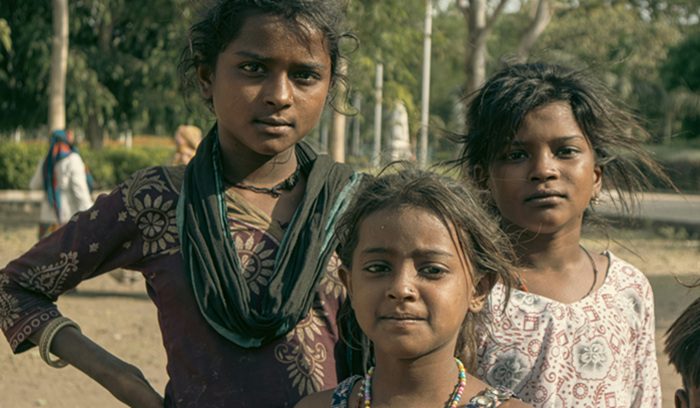
India has launched a free, nationwide HPV vaccination program targeting adolescent girls ages 9 to 14 — a move that could prevent hundreds of thousands of cervical cancer deaths in a country that carries one of the world’s heaviest burdens of the disease. The rollout marks a turning point in India’s public health history, bringing a vaccine that has been available in wealthier countries for nearly two decades to one of the world’s most populous nations at no cost to families.
At a glance
- HPV vaccination India: The government is offering the vaccine free of charge through schools and public health centers, targeting girls between ages 9 and 14 — the window when the vaccine is most effective, before potential exposure to the virus.
- Cervical cancer burden: India accounts for roughly one-fifth of all cervical cancer deaths worldwide. More than 1.2 lakh women die of the disease in India each year, making it the second most common cancer among Indian women.
- Domestic vaccine: The program uses CERVAVAC, a quadrivalent HPV vaccine developed by the Serum Institute of India — the world’s largest vaccine manufacturer by volume — making this one of the few countries to deploy a domestically produced HPV vaccine at national scale.
Why cervical cancer hits India so hard
Cervical cancer is almost entirely preventable, yet it kills women at staggering rates in low- and middle-income countries where screening and vaccination have historically been out of reach. In India, geographic barriers, limited gynecological care infrastructure, and the cost of imported vaccines kept protection unavailable to most.
HPV — human papillomavirus — is the underlying cause of more than 95% of cervical cancer cases. Vaccination before exposure to the virus is highly effective at preventing infection with the strains most likely to cause cancer. Countries that launched national HPV vaccination programs years ago have already begun to see dramatic drops in cervical cancer rates among vaccinated cohorts.
India’s delay in launching a national program was not a failure of knowledge — it was largely a failure of access. The arrival of CERVAVAC, priced far below imported alternatives, changed that calculus and made a free national rollout financially feasible for the first time.
A homegrown solution at global scale
The Serum Institute of India’s role in this program deserves attention. The same institution that supplied much of the world’s COVID-19 vaccine doses during the pandemic produced CERVAVAC specifically to address HPV in lower-income settings. The vaccine targets four HPV strains — including the two responsible for the majority of cervical cancer cases — and was prequalified by the World Health Organization in January 2024 C.E., meaning it meets international standards and could eventually be exported to other countries facing similar burdens.
This is not just a victory for India. It is a potential model for how domestic pharmaceutical innovation can unlock public health programs that were previously too expensive to scale.
What this means for girls and women
The girls receiving this vaccine today are mostly in middle school. They will be the first generation of Indian women to enter adulthood with broad, population-level protection against the virus that causes most cervical cancers. If coverage rates are high — a big but achievable goal — researchers estimate that consistent HPV vaccination programs can reduce cervical cancer incidence by more than 90% over time.
The program is being delivered through existing school health infrastructure, which helps reach girls in rural and semi-urban areas who might not otherwise access a clinic. Community health workers — including members of the Accredited Social Health Activists network, known as ASHAs, who are drawn from the communities they serve — are central to outreach and uptake.
Challenges remain
Reaching every eligible girl in a country of India’s size and complexity is no small task. UNICEF and public health advocates have noted that vaccine hesitancy, incomplete school enrollment among the most marginalized girls, and uneven health infrastructure across states could limit early coverage. The program’s success will depend heavily on how well states implement and communicate the effort — and whether girls who are out of school or from the most disadvantaged communities are reached. Boys, who also carry and transmit HPV, are not included in the current program, which some public health experts view as a missed opportunity for broader herd protection.
India has also been working toward WHO’s global cervical cancer elimination targets, which call for 90% of girls to be fully vaccinated by age 15, 70% of women to be screened by age 35 and 45, and 90% of those with detected disease to receive treatment. Vaccination is only the first pillar — screening and treatment infrastructure will need to grow alongside it.
A milestone for global health equity
For decades, the gap between which countries could protect their populations from preventable diseases and which could not has tracked closely with income. Gavi, the Vaccine Alliance, has worked to close that gap by subsidizing HPV vaccines in lower-income countries, and India’s domestic production now adds a new tool to that effort.
This program will not end cervical cancer overnight. But it sets in motion a generational shift. The girls vaccinated today are the mothers, workers, and community members of the 2040s and 2050s. Protecting them now is one of the most cost-effective public health investments a country can make — and India is making it.
Read more
For more on this story, see: Good News for Humankind — India HPV vaccination
For more from Good News for Humankind, see:
- Ghana establishes a major new marine protected area at Cape Three Points
- Alzheimer’s risk cut in half by drug in landmark prevention trial
- The Good News for Humankind archive on global health
About this article
- 🤖 This article is AI-generated, based on a framework created by Peter Schulte.
- 🌍 It aims to be inspirational but clear-eyed, accurate, and evidence-based, and grounded in care for the Earth, peace and belonging for all, and human evolution.
- 💬 Leave your notes and suggestions in the comments below — I will do my best to review and implement where appropriate.
- ✉️ One verified piece of good news, one insight from Antihero Project, every weekday morning. Subscribe free.