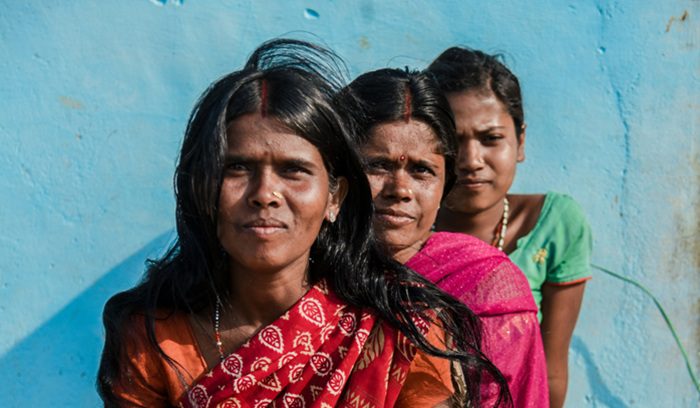
India is sending direct cash payments to 118 million women across the country in a sweeping recognition that unpaid domestic labor — cooking, cleaning, caregiving — has real economic value. The program marks one of the largest government-run cash transfer efforts aimed specifically at women in the world, delivering funds directly into their bank accounts and bypassing traditional gatekeepers.
At a glance
- Women cash transfers: India is distributing payments to 118 million women, making it one of the largest direct benefit programs targeting women globally.
- Unpaid domestic labor: The transfers explicitly recognize household work — historically uncounted in GDP — as labor deserving economic acknowledgment.
- Direct bank deposits: Funds go straight into individual women’s accounts, giving recipients personal financial control and reducing leakage through intermediaries.
Why unpaid work has always mattered
Economists have long argued that unpaid domestic labor is one of the most undervalued forces in any economy. In India, women perform an estimated ten times more unpaid care work than men, according to the International Labour Organization — hours that never appear in national accounts but make all other economic activity possible.
That invisibility has consequences. Women who spend their days on unpaid labor have less time for paid employment, fewer savings, and less bargaining power within households. Cash transfers don’t fully solve that equation, but they do inject direct resources and send a policy signal that this work counts.
India’s women’s economic participation rate has been a persistent concern for development economists. Direct transfers create what researchers call a “liquidity floor” — a baseline of financial independence that can shift household dynamics and enable longer-term investment in education and health.
How the program works
The payments flow through India’s well-established Direct Benefit Transfer architecture, which links government schemes to Aadhaar biometric identification and Jan Dhan bank accounts. That infrastructure, built over the past decade, has made it technically possible to reach more than 100 million recipients with far less administrative cost than older subsidy systems.
State governments have played a significant role alongside the central government. Several Indian states — including Maharashtra, Karnataka, and Madhya Pradesh — have introduced their own women’s cash transfer schemes in recent years, some explicitly framing the payments as compensation for domestic labor. The result is a layered system where federal and state programs together reach a historically unprecedented number of women.
Transfers are deposited directly into women’s own accounts, a design choice that matters. Research from multiple cash transfer programs globally shows that when women control funds directly, households spend more on food, children’s education, and health care.
Recognition, not just relief
What distinguishes this initiative from older social assistance programs is the framing. Rather than positioning payments purely as poverty relief, Indian policymakers have tied the transfers to an acknowledgment that household labor is productive work. That rhetorical shift — small as it may sound — has practical implications for how domestic labor is counted, measured, and eventually compensated in the future.
Some economists argue that cash transfers alone are insufficient without parallel investments in childcare infrastructure, paid leave policy, and women’s workforce participation. Others note that means-testing and program eligibility criteria can exclude the women who need support most. Those are real tensions that India’s program designers will need to address as the scheme matures.
Still, reaching 118 million women with direct payments in a country of India’s scale and administrative complexity is a significant operational achievement — and a data point that other large democracies are watching.
Read more
For more on this story, see: Good News for Humankind
For more from Good News for Humankind, see:
- Indigenous land rights and COP30: 160 million hectares recognized
- Ghana creates marine protected area at Cape Three Points
- The Good News for Humankind archive on global health
About this article
- 🤖 This article is AI-generated, based on a framework created by Peter Schulte.
- 🌍 It aims to be inspirational but clear-eyed, accurate, and evidence-based, and grounded in care for the Earth, peace and belonging for all, and human evolution.
- 💬 Leave your notes and suggestions in the comments below — I will do my best to review and implement where appropriate.
- ✉️ One verified piece of good news, one insight from Antihero Project, every weekday morning. Subscribe free.