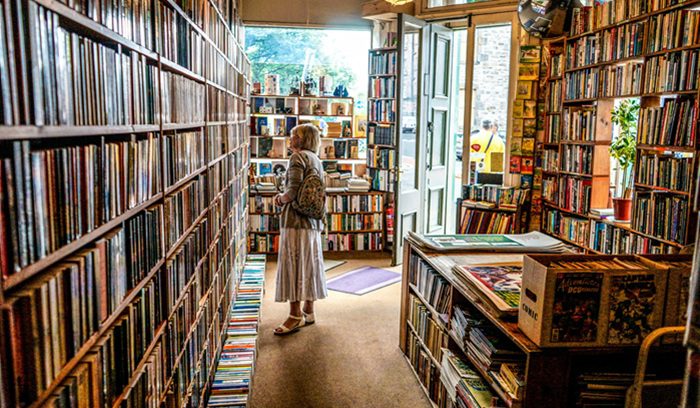
After two decades of watching independent bookstores disappear across the United States, something unexpected has happened: they’re coming back. The number of independent bookstores in the U.S. has grown by roughly 70% since 2020, reversing a long slide that had cut the industry nearly in half. The American Booksellers Association now counts about 3,200 member stores — up from just 1,889 in 2019.
At a glance
- Independent bookstores: U.S. membership in the American Booksellers Association has grown from 1,900 stores in 2020 to approximately 3,200 — a 70% increase in five years.
- Bookshop.org: The online retail alternative to Amazon, launched in January 2020, has returned nearly $47 million to independent bookstores since its founding, with more than 80% of profits going back to local shops.
- Amazon market share: Bookshop.org currently holds about 2% of Amazon’s online book sales market share, up from near zero — with a stated goal of reaching 10%.
From 5,000 stores to 1,889 — and back again
The collapse of independent bookselling in America was real and steep. In 1995 — just one year after Amazon launched — the American Booksellers Association had more than 5,000 member stores. By 2019, that number had fallen to fewer than 1,900. More than half of the country’s independent bookstores had closed in under 25 years.
Andy Hunter, founder and CEO of Bookshop.org, watched that decline closely. “I was watching as half of the bookstores in the country went out of business as Amazon grew,” he told Fast Company. He launched Bookshop.org in January 2020 as a direct response — an e-commerce platform designed to give independent stores a share of online book sales without forcing readers to choose between convenience and community.
Then the pandemic hit, and everything accelerated. Stores that had resisted building an online presence suddenly had no choice. “If we had even waited a month, we wouldn’t have been able to make the difference that we did when everybody went to lockdown,” Hunter said. The timing, by weeks, may have saved hundreds of stores.
How Bookshop.org works — and why it matters
The model is straightforward. Readers shop on Bookshop.org and can designate a specific local store to receive the profit from their purchase, or contribute to a shared earnings pool distributed among independent bookstores nationwide. More than 80 cents of every profit dollar goes back to those stores.
Since 2020, Bookshop.org has channeled nearly $47 million to independent booksellers. That’s a meaningful number for businesses Hunter describes as “not a high-margin business” but “a high-love business.” Many stores operate on thin margins and depend on peak seasons to survive quieter stretches of the year.
The platform has also shifted how some major organizations and publications handle book recommendations. Many have moved away from Amazon affiliate links and now route readers to Bookshop.org instead — a cultural shift Hunter sees as significant. “People have absorbed the message that they should support independent bookstores when they buy books,” he said.
Independent Bookstore Day and the community behind it
Independent Bookstore Day, held annually on the last Saturday of April, began as a local California event in 2012, conceived by writer and editor Samantha Schoech. It has since grown into a national celebration — and a financial lifeline for stores that need a mid-year boost.
Events vary by store: author readings, exclusive merchandise, special editions, giveaways, and community gatherings. In San Diego, local indie stores banded together to create a bookstore crawl, complete with a stamped passport and prizes. Hunter himself plans to spend the day visiting favorite Brooklyn stores, including Word and Greenlight — stores he knows personally, including Word’s founder Christine Onorati, who he credits with inspiring him to build Bookshop.org in the first place.
A long way to go, but further than anyone expected
Hunter is realistic about what Bookshop.org can and cannot do. He is not trying to defeat Amazon — he knows the scale gap is enormous. His stated goal is to help independent bookstores capture roughly 10% of Amazon’s online book sales market share. Right now, Bookshop.org sits at about 2%. “A lot of people didn’t even think we could ever get 1%,” he noted.
The broader shift in consumer behavior — people becoming more intentional about where they spend money, especially since the pandemic and amid ongoing cost-of-living pressures — has worked in the industry’s favor. “People are really galvanizing around bookstores as a force for good in our culture,” Hunter said.
Still, the recovery is uneven. Not every region has seen the same growth, and rising rents and operating costs remain real pressures for many stores. The 70% growth figure reflects opened stores outpacing closures — but individual shops still face the same structural challenges that have always made bookselling difficult. The comeback is real. It is also fragile.
What has changed, perhaps most durably, is the infrastructure. Independent booksellers now have an online sales channel they didn’t have five years ago, a national celebration that drives foot traffic once a year, and a growing share of readers who have decided that where they buy a book is part of what it means to read one. That is not nothing. After 20 years of decline, it may be exactly enough.
Read more
For more on this story, see: Fast Company
For more from Good News for Humankind, see:
- U.K. cancer death rates are down to their lowest level on record
- Renewables now make up at least 49% of global power capacity
- The Good News for Humankind archive on the United States
About this article
- 🤖 This article is AI-generated, based on a framework created by Peter Schulte.
- 🌍 It aims to be inspirational but clear-eyed, accurate, and evidence-based, and grounded in care for the Earth, peace and belonging for all, and human evolution.
- 💬 Leave your notes and suggestions in the comments below — I will do my best to review and implement where appropriate.
- ✉️ One verified piece of good news, one insight from Antihero Project, every weekday morning. Subscribe free.