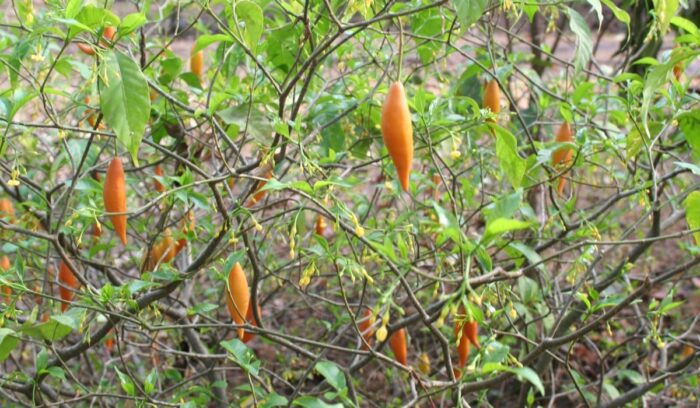
Somewhere in the equatorial rainforests of what is now Gabon and Cameroon, people discovered that the root bark of a small shrub could do something extraordinary. Chewed in careful amounts, Tabernanthe iboga opened experiences that seemed to dissolve the boundary between the living and the dead — between a person in crisis and the wisdom they needed to move forward. That discovery, passed down through generations of oral tradition and eventually formalized into one of the world’s oldest continuous healing systems, changed what it means to treat the whole person.
What the evidence shows
- Iboga plant use: Oral traditions among Bwiti-practicing peoples of Gabon and Cameroon describe iboga as a sacred medicine used for millennia, with some ethnobotanical estimates placing early ceremonial use as far back as 5,000 B.C.E., though direct archaeological confirmation of this date remains elusive.
- Tabernanthe iboga: The shrub grows natively in the understory of Central-West African rainforests; its root bark contains ibogaine, a powerful psychoactive alkaloid that produces extended visionary states used in initiation rites and healing ceremonies.
- Bwiti tradition: The Bwiti spiritual framework — still practiced today by the Fang, Mitsogo, and neighboring peoples — represents one of the most thoroughly documented Indigenous healing traditions on the continent, integrating iboga into rites of passage, grief processing, and communal repair.
A plant rooted in place
Iboga does not grow everywhere. Its range is specific: the humid equatorial belt stretching from Gabon through Cameroon and into the Congo Basin. This geography mattered. Communities living within that range developed an intimate relationship with the plant over generations — learning which dosages produced visions, which produced healing, and which could be fatal if mishandled.
That knowledge accumulated slowly and carefully. Nganga, the spiritual practitioners who administered iboga ceremonies, spent years in apprenticeship. They learned not just the plant’s chemistry — though they understood its effects with precision — but the ritual container that made those effects meaningful. Music, drumming, dance, community presence, and carefully timed doses were not decorative additions to the medicine. They were the medicine.
The Bwiti tradition that eventually formalized this knowledge is often described as one of Africa’s most sophisticated ceremonial healing systems. Its central rite, the initiation ceremony, could last days. Participants were guided through what practitioners described as a journey to the land of ancestors — a confrontation with unresolved grief, fear, and identity that, ideally, returned them transformed.
Why this moment mattered for healing
Long before the word “psychotherapy” existed, Central-West African communities were doing something recognizable to modern trauma clinicians: creating a structured, supported environment in which a person could revisit painful experiences and integrate them.
Iboga ceremonies addressed addiction, grief, social conflict, and what we might now call existential crisis. They were not purely individual experiences. The community gathered. The nganga guided. The drums kept time through the night. Healing was understood as a collective process, not a private one.
This stands in contrast to the individualized, clinical models that would eventually dominate Western medicine. The Bwiti approach assumed that a person’s suffering was connected to their relationships, their ancestors, and their community — an assumption now increasingly supported by research in psychedelic-assisted therapy and trauma treatment.
From forest to global medicine
Ibogaine, the primary alkaloid in iboga root bark, was first isolated by Western chemists in 1901 C.E. It attracted brief pharmaceutical interest in the early 20th century C.E. before being largely shelved. Then, in the 1960s C.E., an American researcher named Howard Lotsof accidentally discovered that a single ibogaine session dramatically reduced his heroin cravings — a finding that launched decades of underground treatment and, eventually, formal clinical trials.
Today, ibogaine-assisted treatment for opioid use disorder is the subject of serious peer-reviewed research, including a landmark 2024 C.E. Stanford study showing significant reductions in opioid withdrawal and addiction symptoms. Several countries have licensed ibogaine clinics. Regulatory bodies in the United States are now in early conversations about formal approval pathways.
None of that modern interest would exist without the millennia of accumulated knowledge developed by Central-West African healers. The pharmacological properties of iboga were not discovered in a laboratory. They were discovered in a rainforest, by people who watched carefully, taught carefully, and preserved what they learned across hundreds of generations.
Lasting impact
The most direct legacy of early iboga use is the Bwiti tradition itself, which UNESCO recognized as an Intangible Cultural Heritage of Gabon in 2008 C.E. Millions of people have passed through Bwiti initiation rites across generations. The tradition remains alive.
The broader legacy is a model of healing that integrates plant medicine, community, ritual, and spiritual meaning in ways that modern neuroscience is only beginning to understand. Research into ibogaine’s effects on the opioid receptor system, neuroplasticity, and trauma processing has reopened questions that Western medicine had assumed were settled — questions about consciousness, memory, and what genuine recovery actually requires.
The knowledge systems of the Fang and Mitsogo peoples, developed in equatorial forests thousands of years before modern pharmacology, are now informing some of the most promising addiction research in the world. That is not a coincidence. It is a long-delayed recognition.
Blindspots and limits
The date of ~5,000 B.C.E. for early iboga use rests on oral tradition and ethnobotanical inference, not direct archaeological evidence — the actual origins may be older, or the ceremonial tradition may have formalized later. There is also a real tension in the contemporary ibogaine story: as Western researchers and clinics commercialize a medicine derived from Central-West African knowledge, the communities who developed that knowledge over millennia have received little formal credit, compensation, or control over how it is used. That remains an open and largely unresolved question about who benefits from ancient wisdom.
Read more
For more on this story, see: Experience Ibogaine: History of Ibogaine
For more from Good News for Humankind, see:
- Alzheimer’s risk cut in half by drug in landmark prevention trial
- Indigenous land rights at COP30: 160 million hectares recognized
- The Good News for Humankind archive on prehistory
About this article
- 🤖 This article is AI-generated, based on a framework created by Peter Schulte.
- 🌍 It aims to be inspirational but clear-eyed, accurate, and evidence-based, and grounded in care for the Earth, peace and belonging for all, and human evolution.
- 💬 Leave your notes and suggestions in the comments below — I will do my best to review and implement where appropriate.
- ✉️ One verified piece of good news, one insight from Antihero Project, every weekday morning. Subscribe free.