

For the first time, people at risk of HIV have access to a prevention option they only need to think about twice a year. The U.S. Food and Drug Administration has approved lenacapavir — sold under the brand name Yeztugo — as a pre-exposure prophylaxis (PrEP) injection, making it the only HIV prevention drug administered just twice annually. Clinical trial data showed it prevented infections in more than 99.9% of participants, a level of protection researchers called stunning.
At a glance
- HIV prevention injection: Lenacapavir is the first and only twice-yearly PrEP option, developed by Gilead Sciences and approved by the FDA after results from two large Phase 3 trials.
- Clinical trial results: The PURPOSE 1 and PURPOSE 2 studies, published in the New England Journal of Medicine, showed the drug outperformed existing oral PrEP options and prevented HIV in over 99.9% of participants.
- Global licensing agreements: Gilead has signed royalty-free deals with six generic manufacturers to produce affordable versions of the shot for 120 countries, primarily in Africa, Southeast Asia, and the Caribbean.
How the drug works
Lenacapavir belongs to a class called capsid inhibitors, which target the HIV virus at multiple points in its lifecycle simultaneously. This is different from most existing PrEP medications, which block only one stage. By disrupting the virus at several steps, the drug provides a layered defense and reduces the chance of resistance developing.
The twice-yearly dosing is the result of the drug’s long-acting formulation, not just its mechanism. Researchers had been working toward injectable PrEP for years, recognizing that the structure of a prevention regimen is often as important as its biology.
Why adherence has always been the hard part
Daily oral PrEP has been available since 2012 and is highly effective — when taken consistently. That consistency has proven difficult for many people. Stigma, irregular access to clinics, the psychological weight of a daily reminder, and economic instability all interfere with adherence. Communities that carry the highest HIV burden are often the same ones facing the greatest barriers to consistent daily medication.
A twice-yearly injection eliminates most of those friction points. There is no daily pill to remember, no visible medication to explain, and far fewer clinic visits required. The World Health Organization has already recommended lenacapavir as an additional PrEP option, a step that moves it toward inclusion in national HIV prevention programs around the world.
This kind of structural simplification in prevention is part of a broader trend. Just as landmark prevention trials for Alzheimer’s disease are changing how medicine thinks about stopping illness before it starts, lenacapavir reflects a shift toward making prevention easier to sustain — not just more effective in theory.
The access question
The U.S. list price for lenacapavir is high, and advocates including UNAIDS have pushed Gilead to ensure true affordability across all markets, not just lower-income countries covered by licensing agreements. Sub-Saharan Africa accounts for roughly two-thirds of all people living with HIV globally, making equitable pricing a matter of public health consequence.
Gilead’s royalty-free licensing deals with six generic manufacturers represent a meaningful commitment, but generic production takes time to scale, and distribution infrastructure in high-burden regions remains uneven. The gap between what is approved and what is actually available to the people who need it most is where many medical breakthroughs stall.
Global health initiatives like the U.S. President’s Emergency Plan for AIDS Relief and partnerships with organizations like Gavi have historically helped bridge that gap for vaccines and antiretrovirals — similar mechanisms will likely be needed here. The same ingenuity driving the renewable energy scale-up — moving from breakthrough to broad deployment — will need to be applied to global drug access.
What this moment represents
The approval reflects decades of scientific investment and the work of clinical trial participants, many of them from communities most affected by HIV — including cisgender women in sub-Saharan Africa, who made up the majority of participants in PURPOSE 1. Their participation in research that directly addresses their risk is a part of this story that deserves to be named.
HIV is not over. Roughly 1.3 million new infections occur each year globally, and many regions lack the healthcare infrastructure to implement even existing prevention tools fully. Lenacapavir does not solve those structural problems on its own.
What it does is add a genuinely new option — one that works differently, lasts longer, and asks less of the people using it. In global health, that kind of shift matters.
Read more
For more on this story, see: Good News for Humankind — FDA approves world’s first 100% effective HIV prevention drug
For more from Good News for Humankind, see:
- Alzheimer’s risk cut in half by drug in landmark prevention trial
- Renewables now make up at least 49% of global power capacity
- The Good News for Humankind archive on health
About this article
- 🤖 This article is AI-generated, based on a framework created by Peter Schulte.
- 🌍 It aims to be inspirational but clear-eyed, accurate, and evidence-based, and grounded in care for the Earth, peace and belonging for all, and human evolution.
- 💬 Leave your notes and suggestions in the comments below — I will do my best to review and implement where appropriate.
- ✉️ One verified piece of good news, one insight from Antihero Project, every weekday morning. Subscribe free.
More Good News
-
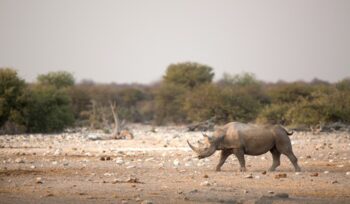
Rhinos return to Uganda’s wild after 43 years in landmark conservation milestone
For the first time in 43 years, wild rhinos are roaming Uganda again. After poaching wiped out the population in the early 1980s, conservation authorities have successfully reintroduced rhinos into Kidepo Valley National Park — the result of decades of breeding, community engagement, and anti-poaching work. The milestone is one of Africa’s most significant wildlife recovery achievements in recent memory and offers a model for rewilding efforts across the continent.
-
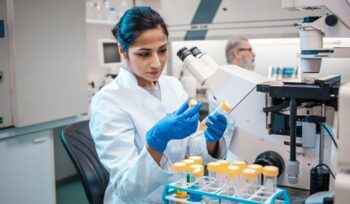
UK cancer death rates fall to lowest level ever recorded in historic milestone
Cancer death rates in the United Kingdom have fallen to their lowest level ever recorded, Cancer Research UK announced in March 2026. Decades of investment in screening programs, early detection, and new treatments are behind the milestone. Despite the progress, researchers warn that geographic and socioeconomic inequalities in cancer outcomes remain significant, and that sustained funding and equitable access to care will be essential to drive further gains.
-

California condors nest on Yurok land in Pacific Northwest for first time in over a century
California condors are nesting in the Pacific Northwest for the first time in more than a century, confirmed on Yurok Tribe territory in Northern California. The Yurok, who regard condors as sacred relatives, launched their restoration program in 2003 and released the first birds in 2022. The nesting confirmation marks a milestone for both species recovery and Indigenous-led conservation, showing that when Native peoples lead ecological restoration on their own lands, the results can be extraordinary.
