

Guatemala has made a huge step to protect one of the world’s most vital rainforests. The government permanently closed the Xan oil field inside Laguna del Tigre National Park. This move signals a major shift in national priorities. The former oil field, which produced nearly 90% of Guatemala’s oil, will now be used entirely for conservation. This positive change protects the Maya Biosphere Reserve, a crucial tropical forest north of the Amazon.
This decision ends decades of environmental debate. Operating an oil field inside a protected area always led to concerns about water and wildlife contamination. The concession expired, and the government chose not to renew it. This successful transition shows that nations can choose long-term conservation over fossil fuel revenue. The government is reclaiming the park for its intended purpose: biodiversity protection.
A New Security and Conservation Hub
The former oil facility is now being repurposed as a permanent base for security and conservation forces. The Guatemalan Ministry of National Defense and the National Civil Police will run this hub together. Their main job is to stop illegal activities that cause rapid forest loss. These crimes include illegal cattle ranching, logging, and drug trafficking.
Converting the oil infrastructure into a security command post addresses threats directly. This visible security presence strengthens protections across the entire Maya Biosphere Reserve. It also improves cooperation with neighboring countries like Mexico and Belize to protect the wider Maya Forest corridor. This action is vital for tackling organized crime that damages these fragile ecosystems.
Investing in a Sustainable Future
Guatemala is doing more than just stopping extraction; it is committing new funds to conservation. The government is dedicating 6.5 million to a special conservation fund for the reserve. This money will help local organizations and communities with restoration and sustainable livelihood projects. This signals a strong, long-term national investment in ecological health.
The country is also moving its energy focus toward clean sources like solar and hydropower. This shift provides long-term energy security without harming fragile environments. Local groups have praised this plan. It gives communities an active role in stewardship. By dedicating national funds and securing regional support, Guatemala is building a strong, resilient financial model for the future. You can review the latest energy investment trends in Latin America from the IEA Latin America energy outlook.
A Model for Ecological Governance
The closure of the Xan oil field is a major change in national direction. It is a choice to prioritize the stability of natural assets over short-term financial gains. This is a powerful model for good governance globally. Protecting the Maya Biosphere Reserve ensures the survival of rare species and vital ecosystems. It also guarantees essential services like clean water and carbon storage for future generations.
This pioneering action shows that governments can make hard choices for a more sustainable future. It proves that political commitment and dedicated resources can achieve profound environmental goals. The reserve is crucial for global biodiversity; UNESCO considers the wider Maya Forest corridor a key site for global preservation. The involvement of regional partners like the Global Environment Facility (GEF) shows the collaboration involved. The willingness to invest in local communities gives hope that this conservation win will be lasting.
More Good News
-

Alzheimer’s risk cut in half by drug in landmark prevention trial
A clinical trial from Washington University in St. Louis and published in The Lancet Neurology found that long-term high-dose treatment with the antibody drug gantenerumab reduced Alzheimer’s risk by roughly 50% in people with dominantly inherited Alzheimer’s disease — a rare genetic form caused by mutations that make the disease near-certain. The results are statistically uncertain and apply to less than 1% of all Alzheimer’s cases, but they provide the first evidence that removing amyloid plaques before symptoms appear can meaningfully change the course of the disease.
-

Marie-Louise Eta becomes the first female head coach in men’s top-flight European football
Marie-Louise Eta, 34, was appointed head coach of Bundesliga side Union Berlin on April 12, 2026, becoming the first woman to hold the top coaching position at a men’s club in any of Europe’s Big Five leagues — the Premier League, La Liga, Serie A, Ligue 1, and Bundesliga. A Champions League winner as a player with Turbine Potsdam in 2010, Eta had already broken barriers as the first female assistant coach in the Bundesliga in 2023. She takes charge for the final five matches of the season as Union Berlin fights to secure top-flight survival, after which she was…
-
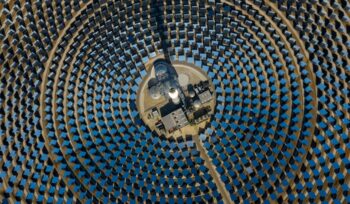
Renewables now make up at least 49% of global power capacity
Renewable energy reached 49.4% of total global installed power capacity by end of 2025, up from 46.3% in 2024, according to the International Renewable Energy Agency’s Renewable Capacity Statistics 2026. The world added 692 gigawatts of new renewable capacity last year — the largest annual addition ever recorded — with solar alone contributing 511 gigawatts. Africa recorded its highest renewable expansion on record, and the Middle East its fastest-ever growth. IRENA Director-General Francesco La Camera noted that countries investing in renewables are absorbing the current Middle East energy crisis with measurably less economic damage than fossil-fuel-dependent economies.
-

Global suicide rate has fallen by 40% since 1995
A landmark study published in The Lancet Public Health by researchers at the Institute for Health Metrics and Evaluation at the University of Washington found that the global age-standardized suicide mortality rate fell nearly 40% between 1990 and 2021 — from 15 deaths per 100,000 people to nine. The decline was driven by measurable interventions including restrictions on toxic pesticides, expanded mental health services, and national prevention strategies. Female suicide rates fell more than 50% globally over the period. Roughly 740,000 people still die by suicide each year, and rates have risen in parts of Latin America and North America,…
-
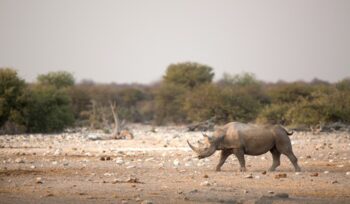
Rhinos are reintroduced back into Uganda’s wild after 43 years
The Uganda Wildlife Authority havetranslocated the first southern white rhinos to Kidepo Valley National Park — 43 years after the last rhino in the park was killed by poachers in 1983. The animals came from Ziwa Rhino Sanctuary, a breeding program established in 2005 with just six individuals that has grown Uganda’s total rhino population to 61. Four more rhinos will follow by May, with a separate group already relocated to Ajai Wildlife Reserve in January 2026. The reintroduction restores a key grazing species to one of Africa’s most remote savannah ecosystems and makes Kidepo the only national park in…