In 2006 C.E., a single day of volunteering in Israel quietly set something much larger in motion. What began as one woman’s invitation to her employees became a recurring global event that would eventually draw millions of people across more than 100 countries into a shared act of purposeful giving.
Key facts
- Good Deeds Day: Shari Arison, Israeli-American billionaire and philanthropist, launched the first Good Deeds Day in Israel in 2006 C.E., inviting employees of her business group to spend the day volunteering in their communities.
- Global reach: The event grew steadily year over year, eventually mobilizing participants in 108 countries and involving millions of volunteers performing acts of service ranging from food drives to environmental cleanups to visits with isolated elderly people.
- Founding vision: Arison drew on her philosophy that individual acts of goodness, multiplied across communities, could shift social culture — a concept she described as “doing good” as a way of life rather than an occasional gesture.
The woman behind the idea
Shari Arison inherited leadership of the Arison Group following the death of her father, Ted Arison, the founder of Carnival Cruise Lines. She became one of Israel’s wealthiest individuals and one of its most prominent philanthropists.
But her interest in Good Deeds Day was not primarily about money. It was about behavior — specifically, the idea that goodness was contagious. If enough people saw their neighbors volunteering, donating, planting, cooking, building, or simply showing up for someone in need, they might conclude that this was just what people do.
The first event was small by design. Arison gathered employees from her own business network and set them loose on community projects around Israel. There were no grand ceremonies. The point was the doing.
How a local event became a global one
The growth of Good Deeds Day followed no single strategy. It spread through nonprofits, schools, corporations, and faith communities that adopted the concept independently, each adapting it to their own context. By the time the Good News Network reported on its 108-country reach, the event had become one of the world’s largest single-day volunteering initiatives.
Participating organizations spanned continents and cultures. In some countries, the day fell on the Jewish calendar date of Purim — a holiday with deep roots in the tradition of giving gifts and charity. In others, organizers set their own date to match local needs. The core idea remained consistent: choose a day, do something good, and make it visible enough that others feel invited to join.
Research on prosocial behavior supports the underlying intuition. Studies from the Greater Good Science Center at UC Berkeley have found that performing acts of kindness increases wellbeing for both the giver and the recipient, and that witnessing generosity increases the likelihood that observers will act generously themselves — a phenomenon sometimes called “elevation.”
Lasting impact
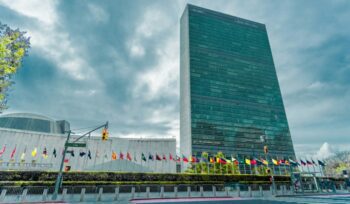
Good Deeds Day helped establish a model that dozens of similar initiatives have since followed: a designated, collective, visible day of service that frames volunteering as a communal norm rather than an individual duty. The United Nations International Volunteer Day, observed annually on December 5, shares some of this spirit, though it predates Arison’s initiative by decades.
More broadly, the event contributed to a growing body of evidence that large-scale behavior change does not require top-down mandates. It can emerge from invitation, visibility, and social proof. When millions of people in 108 countries volunteer on the same day, the message to everyone watching is simple: this is something humans do.
The official Good Deeds Day organization continues to coordinate the event internationally, providing resources for schools, businesses, and community groups to run their own projects. Its reach into Eastern Europe, sub-Saharan Africa, and Southeast Asia reflects how the concept traveled well beyond its Israeli and Western origins.
Blindspots and limits
One-day volunteering events draw genuine criticism from community organizers and social scientists who point out that sustained, skilled, and locally-led service tends to produce more durable results than high-visibility single-day bursts. There is also a risk that corporate participation, in particular, can function as reputation management rather than genuine community investment.
Good Deeds Day does not resolve those tensions, and its organizers have acknowledged the importance of connecting one-day participants to longer-term commitments. Whether that bridge is consistently built depends largely on local implementation — a variable the central organization cannot fully control.
Still, the impulse behind the event — that goodness is worth making visible, worth celebrating, worth doing together — is not nothing. Research published by the American Psychological Association consistently finds that people who volunteer regularly report higher life satisfaction and stronger social connection. A day that introduces someone to that experience for the first time is not a small thing.
Read more
For more on this story, see: Good News Network
For more from Good News for Humankind, see:
- Global suicide rate has fallen by 40% since 1995
- Indigenous land rights recognized for 160 million hectares ahead of COP30
- The Good News for Humankind archive on global health
About this article
- 🤖 This article is AI-generated, based on a framework created by Peter Schulte.
- 🌍 It aims to be inspirational but clear-eyed, accurate, and evidence-based, and grounded in care for the Earth, peace and belonging for all, and human evolution.
- 💬 Leave your notes and suggestions in the comments below — I will do my best to review and implement where appropriate.
- ✉️ One verified piece of good news, one insight from Antihero Project, every weekday morning. Subscribe free.