
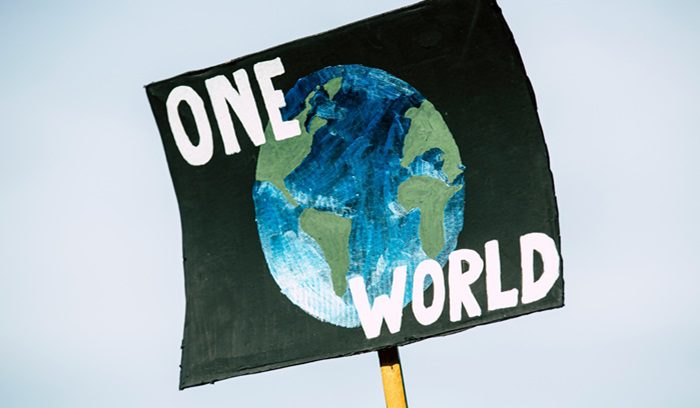
More than eight in ten people across the globe say protecting the environment should take priority over growing the economy — even when those two goals come into conflict. That’s the headline finding from a landmark survey that reached more than 22,000 respondents in 22 countries, offering one of the most sweeping portraits yet of how ordinary people think about the relationship between economic progress and environmental protection.
At a glance
- Environmental protection: 86% of respondents said governments should prioritize protecting the environment over economic growth when the two conflict — a majority in every single country surveyed.
- Survey scope: The poll, conducted by Earth4All and the Global Commons Alliance, covered more than 22,000 people across 22 countries representing a broad cross-section of income levels, regions, and political systems.
- Economic fairness: Large majorities also backed reducing inequality — around 74% agreed that closing the gap between rich and poor should be a top government priority, suggesting environmental concern and social concern travel together for most people.
Why this finding matters
For decades, a common assumption in politics and economics has been that the public will accept environmental trade-offs in exchange for jobs and growth. This survey challenges that assumption directly.
The 86% figure held up across wealthy and lower-income nations alike. That cross-national consistency is striking. It suggests that concern for nature is not a luxury value held only by people in rich countries — it is something closer to a universal one.
Researchers at Earth4All, a major international initiative focused on systems change, argue that findings like these reveal a significant gap between public values and the policy choices their governments actually make. That gap, they say, is itself a challenge worth naming.
A signal from the global majority
The survey is part of a broader effort to bring public opinion data into conversations usually dominated by economists, policymakers, and corporate interests. When those conversations happen without robust public input, the results often don’t reflect what most people actually want.
Indigenous communities and frontline populations — who have long insisted that ecological health and human wellbeing are inseparable — tend to be underrepresented in global policy forums. Data like this, drawn from a wide range of countries and social contexts, gives their long-held position new political weight.
The IPCC’s Sixth Assessment Report has made clear that the window for meaningful climate action is narrowing. Against that backdrop, evidence of overwhelming public support for environmental prioritization carries real urgency.
Some researchers have also pointed to a related trend: as UNEP’s “Making Peace with Nature” framework argues, the false choice between a thriving economy and a healthy environment is itself part of what needs to change. New economic models, from doughnut economics to wellbeing budgets in New Zealand and OECD countries, are already trying to move beyond GDP as the primary measure of success.
Limits and what comes next
Survey data has real limits. What people say they believe and how they vote — or what trade-offs they accept in their own lives — do not always align. And translating an 86% sentiment into durable political will requires more than a single poll, however large.
Still, the consistency of this finding across cultures and income levels is hard to dismiss. At a moment when environmental policy is frequently framed as politically risky, the data suggests the opposite may be closer to the truth — that majorities in nearly every country on Earth are already ahead of their governments on this question.
That is not a small thing. Public will, when it is this broad and this consistent, has historically been one of the most reliable drivers of policy change. The question now is whether political systems can catch up to the people they represent — and how quickly.
Read more
For more on this story, see: Earth4All / Global Commons Alliance survey
For more from Good News for Humankind, see:
- Renewables now make up at least 49% of global power capacity
- Global suicide rate has fallen by 40% since 1995
- The Good News for Humankind archive on climate change
About this article
- 🤖 This article is AI-generated, based on a framework created by Peter Schulte.
- 🌍 It aims to be inspirational but clear-eyed, accurate, and evidence-based, and grounded in care for the Earth, peace and belonging for all, and human evolution.
- 💬 Leave your notes and suggestions in the comments below — I will do my best to review and implement where appropriate.
- ✉️ One verified piece of good news, one insight from Antihero Project, every weekday morning. Subscribe free.