

The worldwide transition to electric vehicles (EVs) has achieved undeniable momentum, with global sales surging by 27% in 2025. This impressive growth, which is set to push total sales past the 20 million mark by year-end, demonstrates that the electrification of transportation is now an unstoppable, market-driven phenomenon. This progress is particularly significant because it has continued despite substantial policy rollbacks and political opposition in key markets like the United States. The sustained success confirms that consumer demand, technological advancements, and economic realities are now the primary drivers of this fundamental global shift.
The Economic Tipping Point
The primary factor fueling this surge is the dramatic reduction in cost. The declining cost of lithium-ion batteries is continually breaking price barriers, making EVs increasingly competitive with traditional internal combustion engine (ICE) vehicles. This improving economic viability means that electric cars are moving from a niche market to a mass-market reality. Furthermore, global investment in clean energy continues to dominate, with capital flows outpacing fossil fuel spending by significant margins. This investment provides the stability needed for automakers to scale production and introduce a wider range of affordable models across all segments. This economic tipping point is accelerating the shift faster than many previous forecasts predicted.
A Diverse and Resilient Global Market
The resilience of the 27% growth rate is due to the healthy diversification of the global market. While the United States market faced challenges due to policy uncertainty and the phase-out of incentives, massive growth in Asia and continued strong adoption in Europe have maintained the global upward trajectory. China remains the undisputed leader, consistently accounting for over half of all global new EV sales and driving unprecedented manufacturing scale. Crucially, EV adoption is also accelerating rapidly in emerging economies across Southeast Asia and Latin America, where sales volumes jumped by over 60% in the last year. This widespread adoption across diverse economic systems confirms that the global EV transition is deeply entrenched and increasingly impervious to regional political friction.
Profound Health and Environmental Co-Benefits
The surging adoption of EVs is delivering immediate and tangible positive impacts on public health and the environment. As electric vehicles replace gasoline- and diesel-powered vehicles, they eliminate tailpipe emissions of harmful air pollutants like particulate matter and nitrogen oxides. Studies have consistently shown that this reduction in ambient air pollution directly leads to avoided premature deaths, reduced hospitalizations for respiratory and cardiovascular diseases, and significant savings in environmental and health care costs. This benefit is particularly acute in dense urban areas and disadvantaged communities that have historically borne the brunt of traffic-related pollution. The growth of clean transport, therefore, is not merely a climate action measure; it is a public health triumph that saves lives and improves air quality globally.
A Secure Future for Transport
The automotive industry is now fully committed to this electrified future, securing its long-term viability and competitiveness. Automakers that quickly pivoted to large-scale EV production are gaining market share and establishing themselves as leaders in the next era of transportation. Furthermore, the push toward electrification extends beyond passenger vehicles. Sales of electric heavy-duty trucks and buses are also soaring, particularly in China. This trend in commercial transport is critical because heavy-duty vehicles, while small in number, are responsible for a disproportionate share of transport CO2 emissions. The investment in electric charging infrastructure across Europe and the rapid commercialization of next-generation batteries, such as solid-state technology, underscore the deep, structural nature of this transformation. The global market is signaling strongly that the future of transport is electric, creating stability and innovation across the entire automotive supply chain.
- For more information on the cost trends of the electrification transition, the BloombergNEF Electric Vehicle Outlook provides detailed analysis on battery prices and market growth.
- The IEA Global EV Outlook provides comprehensive data on these regional adoption patterns and forecasts.
- Research from the National Institutes of Health confirms the climate and health co-benefits of vehicle electrification.
- The American Lung Association also provides excellent resources on the health imperatives driving the zero-emission vehicle transition.
More Good News
-

Alzheimer’s risk cut in half by drug in landmark prevention trial
A clinical trial from Washington University in St. Louis and published in The Lancet Neurology found that long-term high-dose treatment with the antibody drug gantenerumab reduced Alzheimer’s risk by roughly 50% in people with dominantly inherited Alzheimer’s disease — a rare genetic form caused by mutations that make the disease near-certain. The results are statistically uncertain and apply to less than 1% of all Alzheimer’s cases, but they provide the first evidence that removing amyloid plaques before symptoms appear can meaningfully change the course of the disease.
-

Marie-Louise Eta becomes the first female head coach in men’s top-flight European football
Marie-Louise Eta, 34, was appointed head coach of Bundesliga side Union Berlin on April 12, 2026, becoming the first woman to hold the top coaching position at a men’s club in any of Europe’s Big Five leagues — the Premier League, La Liga, Serie A, Ligue 1, and Bundesliga. A Champions League winner as a player with Turbine Potsdam in 2010, Eta had already broken barriers as the first female assistant coach in the Bundesliga in 2023. She takes charge for the final five matches of the season as Union Berlin fights to secure top-flight survival, after which she was…
-
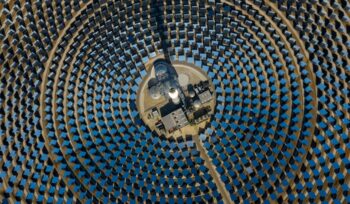
Renewables now make up at least 49% of global power capacity
Renewable energy reached 49.4% of total global installed power capacity by end of 2025, up from 46.3% in 2024, according to the International Renewable Energy Agency’s Renewable Capacity Statistics 2026. The world added 692 gigawatts of new renewable capacity last year — the largest annual addition ever recorded — with solar alone contributing 511 gigawatts. Africa recorded its highest renewable expansion on record, and the Middle East its fastest-ever growth. IRENA Director-General Francesco La Camera noted that countries investing in renewables are absorbing the current Middle East energy crisis with measurably less economic damage than fossil-fuel-dependent economies.
-

Global suicide rate has fallen by 40% since 1995
A landmark study published in The Lancet Public Health by researchers at the Institute for Health Metrics and Evaluation at the University of Washington found that the global age-standardized suicide mortality rate fell nearly 40% between 1990 and 2021 — from 15 deaths per 100,000 people to nine. The decline was driven by measurable interventions including restrictions on toxic pesticides, expanded mental health services, and national prevention strategies. Female suicide rates fell more than 50% globally over the period. Roughly 740,000 people still die by suicide each year, and rates have risen in parts of Latin America and North America,…
-
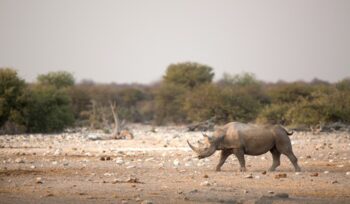
Rhinos are reintroduced back into Uganda’s wild after 43 years
The Uganda Wildlife Authority havetranslocated the first southern white rhinos to Kidepo Valley National Park — 43 years after the last rhino in the park was killed by poachers in 1983. The animals came from Ziwa Rhino Sanctuary, a breeding program established in 2005 with just six individuals that has grown Uganda’s total rhino population to 61. Four more rhinos will follow by May, with a separate group already relocated to Ajai Wildlife Reserve in January 2026. The reintroduction restores a key grazing species to one of Africa’s most remote savannah ecosystems and makes Kidepo the only national park in…