

Ghana has enacted groundbreaking legislation, known as the Fisheries and Aquaculture Act 2025 (Act 1146), designed to restore fish populations, safeguard small-scale fishing communities, and curb illegal, unregulated, and unreported (IUU) fishing practices. The law was signed on August 19, 2025, by President John Dramani Mahama, following parliamentary approval in July 2025 (Mongabay; Maritime Executive).
Expansion of the Inshore Exclusive Zone (IEZ)
A cornerstone of the new law is the expansion of Ghana’s Inshore Exclusive Zone (IEZ) from 6 to 12 nautical miles (approximately 11 to 22 kilometers) off the coast. This change establishes a protected area reserved exclusively for artisanal fisherfolk, shielding vital breeding grounds from intrusion by industrial trawlers. The zone expansion is expected to benefit around 120,000 small-scale fishers and is aimed at reversing the near-collapse of vital pelagic fish stocks such as sardinella, anchovies, and mackerel (Mongabay; Mongabay short report).
Stronger Enforcement and Monitoring Measures
In addition to the zone expansion, the legislation introduces mandatory electronic monitoring systems for industrial fishing vessels to ensure compliance and improve transparency. It also enforces tougher penalties against IUU fishing violations, reinforcing Ghana’s commitment to sustainable fishing practices. The Environmental Justice Foundation (EJF) praised the law as a “historic advance” that protects livelihoods, promotes food security, and lays the groundwork for marine ecosystems to recover (EJF Statement).
Enhancing Food Security and Fisheries Management
Fish makes up over 60 percent of the animal protein consumed in Ghana, so replenishing fish stocks is vital to national nutrition and public health. The government expects the new law to support food stability as well as economic resilience for coastal and rural communities. The Fisheries and Aquaculture Act also includes provisions for instituting an independent Fisheries Commission to better manage marine resources according to international standards and avoid further trade sanctions like the EU “yellow card” issued over IUU concerns (Mongabay; ICSF report).
Support from Fishing Communities and NGOs
Artisanal fishers and their associations have welcomed the law enthusiastically. The Canoe and Fishing Gear Association of Ghana (CaFGOAG) expressed gratitude, stating that fishing communities feel heard and empowered. They praised Minister Emelia Arthur and emphasized the need for strict enforcement and participatory monitoring to make the law effective (Ghana Business News). Fisheries Minister Emelia Arthur’s leadership was also highlighted as essential in steering the bill through parliament and into law.
Implications for Trade and Environmental Governance
Protecting artisanal fishing zones and strengthening fisheries governance also impacts Ghana’s seafood export markets. With exports worth over $425 million annually, ensuring sustainability and regulatory compliance is critical to maintaining market access, particularly with the European Union. The law’s robust regulatory framework seeks to mitigate future sanctions and enhance confidence in Ghana’s marine exports (Maritime Executive; B&FT Online).
Looking Forward
Ghana’s Fisheries and Aquaculture Act is a milestone in fisheries management, offering a comprehensive strategy to protect small-scale fishers, revitalize marine ecosystems, and ensure long-term food security. The success of this legislation now depends on strong, transparent enforcement, community engagement, and continued investment in fisheries science and coastal infrastructure.
By placing artisanal communities at the heart of policy, Ghana is setting a bold example for sustainability in West Africa and demonstrating how inclusive governance can drive ecological restoration and social resilience.
More Good News
-

Alzheimer’s risk cut in half by drug in landmark prevention trial
A clinical trial from Washington University in St. Louis and published in The Lancet Neurology found that long-term high-dose treatment with the antibody drug gantenerumab reduced Alzheimer’s risk by roughly 50% in people with dominantly inherited Alzheimer’s disease — a rare genetic form caused by mutations that make the disease near-certain. The results are statistically uncertain and apply to less than 1% of all Alzheimer’s cases, but they provide the first evidence that removing amyloid plaques before symptoms appear can meaningfully change the course of the disease.
-

Marie-Louise Eta becomes the first female head coach in men’s top-flight European football
Marie-Louise Eta, 34, was appointed head coach of Bundesliga side Union Berlin on April 12, 2026, becoming the first woman to hold the top coaching position at a men’s club in any of Europe’s Big Five leagues — the Premier League, La Liga, Serie A, Ligue 1, and Bundesliga. A Champions League winner as a player with Turbine Potsdam in 2010, Eta had already broken barriers as the first female assistant coach in the Bundesliga in 2023. She takes charge for the final five matches of the season as Union Berlin fights to secure top-flight survival, after which she was…
-

Renewables now make up at least 49% of global power capacity
Renewable energy reached 49.4% of total global installed power capacity by end of 2025, up from 46.3% in 2024, according to the International Renewable Energy Agency’s Renewable Capacity Statistics 2026. The world added 692 gigawatts of new renewable capacity last year — the largest annual addition ever recorded — with solar alone contributing 511 gigawatts. Africa recorded its highest renewable expansion on record, and the Middle East its fastest-ever growth. IRENA Director-General Francesco La Camera noted that countries investing in renewables are absorbing the current Middle East energy crisis with measurably less economic damage than fossil-fuel-dependent economies.
-

Global suicide rate has fallen by 40% since 1995
A landmark study published in The Lancet Public Health by researchers at the Institute for Health Metrics and Evaluation at the University of Washington found that the global age-standardized suicide mortality rate fell nearly 40% between 1990 and 2021 — from 15 deaths per 100,000 people to nine. The decline was driven by measurable interventions including restrictions on toxic pesticides, expanded mental health services, and national prevention strategies. Female suicide rates fell more than 50% globally over the period. Roughly 740,000 people still die by suicide each year, and rates have risen in parts of Latin America and North America,…
-
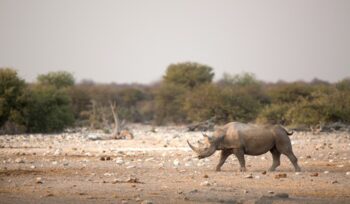
Rhinos are reintroduced back into Uganda’s wild after 43 years
The Uganda Wildlife Authority havetranslocated the first southern white rhinos to Kidepo Valley National Park — 43 years after the last rhino in the park was killed by poachers in 1983. The animals came from Ziwa Rhino Sanctuary, a breeding program established in 2005 with just six individuals that has grown Uganda’s total rhino population to 61. Four more rhinos will follow by May, with a separate group already relocated to Ajai Wildlife Reserve in January 2026. The reintroduction restores a key grazing species to one of Africa’s most remote savannah ecosystems and makes Kidepo the only national park in…