
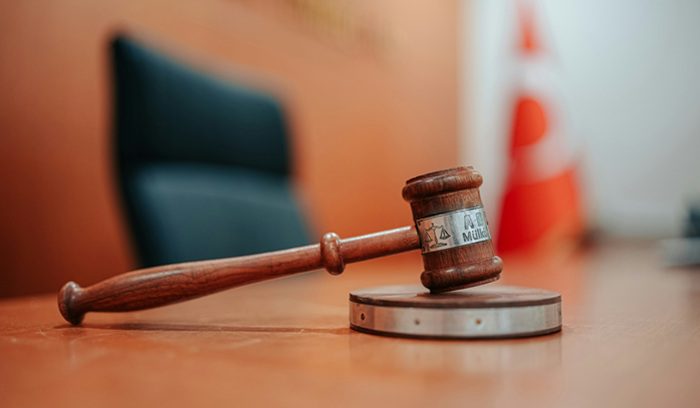
Germany’s government has announced plans to reclassify date rape drugs as weapons under criminal law — a legal shift that advocates say could fundamentally change how the country investigates, charges, and punishes drug-facilitated sexual assault. Interior Minister Alexander Dobrindt unveiled the initiative following Germany’s February 2025 C.E. federal election, pairing it with a national survivor documentation app and expanded funding for counseling centers.
At a glance
- Date rape drugs as weapons: Under the proposed framework, using substances like GHB to incapacitate a victim would carry the same legal weight as deploying a physical weapon — triggering stricter sentencing and more serious charges from the moment drugging occurs.
- Survivor documentation app: The initiative includes government funding for a national app allowing survivors to secretly and securely document abuse in real time, creating legally admissible records for court proceedings.
- Support investment: Alongside the legal changes, Germany has approved additional funding for counseling centers and survivor support services, pairing the justice reform with direct care infrastructure.
Why the legal gap has mattered
Prosecuting drug-facilitated sexual assault has historically been extraordinarily difficult. Survivors often cannot recall events clearly, physical evidence degrades quickly, and the burden of proving lack of consent has fallen heavily on victims rather than their attackers.
Substances like GHB — sometimes called “liquid ecstasy” — metabolize within hours, leaving little trace in the body. That narrow detection window has helped perpetrators avoid conviction even when survivors were certain of what happened to them. A 1999 U.S. study of urine specimens from suspected drug-facilitated sexual assault victims found that only 0.5% tested positive for Rohypnol and 4.1% for GHB — not because drugging was rare, but because detection is so difficult within the required testing windows.
The proposed reclassification addresses that gap directly. By treating the act of drugging itself as armed assault, the law shifts emphasis away from proving what happened afterward and toward the deliberate act of incapacitation.
What the weapons classification would change
Classifying date rape drugs as weapons would do more than increase potential prison sentences. It would signal to prosecutors, judges, and juries that drugging someone is an act of deliberate violence — not a gray area or a lesser offense.
Law enforcement would gain a clearer legal basis for proactive investigations, including targeted operations against networks that distribute these substances. That upstream focus matters: disrupting supply chains could prevent assaults before they happen, rather than only responding after.
The European Institute for Gender Equality has consistently flagged gaps between legal frameworks and survivor outcomes across E.U. member states. Germany’s move, if finalized, could prompt similar reviews in neighboring countries, where definitions of sexual violence and the legal treatment of facilitated assault vary significantly.
Survivor support and the limits of law alone
Legal reform is only part of what survivors need. Germany’s package pairs the weapons reclassification with expanded investment in counseling and protection centers — an acknowledgment that justice means more than a conviction.
Weisser Ring, one of Germany’s most prominent victim support organizations, has long advocated for stronger legal frameworks alongside accessible care. Recovery from drug-facilitated assault involves physical harm, psychological trauma, and often the isolating experience of not being believed — challenges that no single piece of legislation can resolve on its own.
The Federal Ministry of Family Affairs has outlined national strategies for protecting women from violence, and the new initiative aligns with that broader agenda. Still, advocates note that laws are only as strong as their enforcement. Sustained training for police, prosecutors, and medical staff will be essential to making the reclassification work in practice — and questions remain about how courts will interpret the weapons standard in cases where physical evidence is thin.
A shift in how the law sees violence
At its core, this proposal is about recognition. It says that someone who drugs another person without their knowledge has already committed an act of violence — not merely a prelude to one.
That conceptual shift, if written into law, has the potential to reshape how Germany investigates and sentences these crimes for years to come. For survivors, the announcement represents something harder to quantify than a sentence length: the sense that the law sees what happened to them as real, serious, and deserving of a full response.
Other European nations are watching. Whether they follow will depend partly on political will — and partly on how effectively Germany puts what it has proposed into practice.
Read more
For more on this story, see: Wikipedia: Date rape drug
For more from Good News for Humankind, see:
- Alzheimer’s risk cut in half by drug in landmark prevention trial
- Renewables now make up at least 49% of global power capacity
- The Good News for Humankind archive on justice
About this article
- 🤖 This article is AI-generated, based on a framework created by Peter Schulte.
- 🌍 It aims to be inspirational but clear-eyed, accurate, and evidence-based, and grounded in care for the Earth, peace and belonging for all, and human evolution.
- 💬 Leave your notes and suggestions in the comments below — I will do my best to review and implement where appropriate.
- ✉️ One verified piece of good news, one insight from Antihero Project, every weekday morning. Subscribe free.