
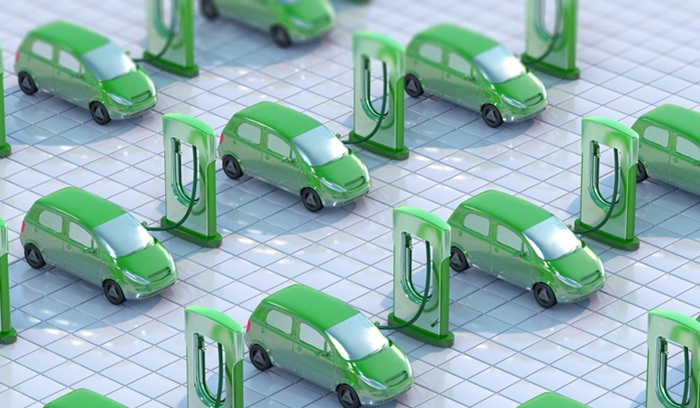
For one month at the close of 2025 C.E., something happened that the European auto industry had been building toward for years: fully electric cars outsold petrol vehicles across the European Union. Data from the European Automobile Manufacturers Association show battery-electric vehicles claiming 22.6 percent of all new car registrations in December, narrowly edging out petrol cars at 22.5 percent. It is the first time in history that electric car sales have topped petrol in a monthly snapshot across the bloc.
At a glance
- Electric car sales: Battery-electric vehicles reached 22.6 percent of new E.U. car registrations in December 2025 C.E., surpassing petrol cars at 22.5 percent for the first time on record.
- Hybrid vehicles: Hybrids led all powertrain categories at 44 percent of new car sales, showing that consumers across Europe are already moving away from pure fossil-fuel vehicles even before committing fully to electric.
- Electrified vehicles overall: When EVs, hybrids, and plug-in hybrids are counted together, electrified powertrains now represent the large majority of new cars sold monthly across the E.U.
How electric car sales crossed this threshold
Just a few years ago, petrol vehicles commanded well over half of all new car sales in Europe. Their fall to 22.5 percent of the market is a sharper reversal than most analysts anticipated this soon.
Three forces converged to make it happen. First, falling prices: competition among manufacturers has pushed entry-level EV prices significantly closer to those of conventional cars, removing the cost premium that long kept buyers away. Second, improved range: modern battery-electric cars routinely exceed 250 miles on a single charge, making daily use practical for the vast majority of drivers. Third, charging infrastructure has expanded rapidly, with the European Environment Agency tracking hundreds of thousands of public charging stations now operating across the bloc.
Range anxiety — for years the single most cited barrier to EV adoption — is fading as charging points become as routine as petrol stations in many cities and along major highways.
E.U. climate policy and the auto industry
The December 2025 C.E. figures don’t exist in isolation. The E.U.’s “Fit for 55” package, targeting at least a 55 percent reduction in net greenhouse gas emissions by 2030, set firm expectations for automakers: electrify or face significant financial penalties. The data suggest that policy is working faster than its architects expected.
The International Council on Clean Transportation has documented how binding vehicle standards have reshaped manufacturing priorities across European carmakers, accelerating investment in battery production and EV supply chains. Those investments are now showing up as vehicles in showrooms and on roads.
Urban air quality stands to benefit as well. Cities including Paris, Amsterdam, and Oslo have already recorded measurable drops in nitrogen dioxide levels as older petrol and diesel vehicles are replaced. Europe’s goal of climate neutrality by 2050 looks more reachable with the automotive sector finally shifting at scale.
What the hybrid majority tells us
The fact that hybrid vehicles led the market at 44 percent adds important nuance. Many European consumers are using hybrids as a bridge — cutting fuel consumption while keeping a combustion engine as a backup while charging infrastructure continues to mature. That is not a sign of hesitation so much as a staged transition.
Several E.U. member states have set their own deadlines for ending fossil-fuel vehicle sales, and the E.U. has established 2035 as the continent-wide cutoff for new petrol and diesel car sales. The International Energy Agency projects that global EV adoption will keep accelerating through the end of the decade, with Europe among the leading markets.
Still, the transition is uneven. EV uptake remains much stronger in northern and western E.U. countries than in eastern member states, where lower average incomes and thinner charging networks make the switch harder. Closing that gap will require targeted investment and policy support beyond what the market alone will deliver.
A turning point that took more than a century
Electric cars are not a new idea. The U.S. Department of Energy traces their origins to the 1800s, and by 1900 C.E. electric vehicles made up roughly a third of all cars on American roads. It was cheap gasoline and the mass-produced Model T that pushed them aside for a century. The December 2025 C.E. milestone is, in one sense, a very long comeback.
Whether it holds and accelerates will depend on continued policy support, battery supply chain development, and whether charging access reaches drivers in lower-income regions across the continent. But for now, the numbers mark a moment the European auto market has been moving toward for years — and one that arrived ahead of schedule.
Read more
For more on this story, see: U.S. Department of Energy — History of the electric car
For more from Good News for Humankind, see:
- Alzheimer’s risk cut in half by drug in landmark prevention trial
- Indigenous land rights and 160 million hectares at COP30
- The Good News for Humankind archive on climate change
About this article
- 🤖 This article is AI-generated, based on a framework created by Peter Schulte.
- 🌍 It aims to be inspirational but clear-eyed, accurate, and evidence-based, and grounded in care for the Earth, peace and belonging for all, and human evolution.
- 💬 Leave your notes and suggestions in the comments below — I will do my best to review and implement where appropriate.
- ✉️ One verified piece of good news, one insight from Antihero Project, every weekday morning. Subscribe free.
More Good News
-

More than 50 nations attend world-first conference on phasing out fossil fuels
Fossil fuel phaseout talks just crossed a real threshold: for the first time, more than 50 nations sat down together specifically to plan a way off coal, oil, and gas. The two-day gathering in Santa Marta, Colombia, brought together an unusually wide mix — major producers like Australia, Norway, and Canada alongside Pacific island nations like Tuvalu and Vanuatu, with Europe and emerging economies in between. No binding deals were expected, but the recommendations will feed into a voluntary roadmap being shaped under Brazil’s COP30 leadership. It’s a small, hopeful shift: producers and consumers finally talking openly about a transition…
-

Singapore stops sourcing and breeding dolphins
Resorts World Sentosa, home to more than 20 Indo-Pacific bottlenose dolphins, is halting both wild sourcing and captive breeding at its Singapore oceanarium. The resort is now assembling an independent expert panel to figure out what’s next for the animals in its care, including a 7-year-old named Kenzo. It’s a meaningful shift from one of Asia’s most prominent entertainment venues, and one animal welfare groups have pushed toward for over a decade. With Mexico, Canada, and France already banning cetacean captivity for entertainment, this quiet decision in Singapore signals that the tide is turning across Asia too, reshaping what travelers…
-

The Bahamas officially eliminates mother-to-child transmission of HIV
The Bahamas just became the 12th country or territory in the Americas certified by the World Health Organization for eliminating mother-to-child HIV transmission — meaning babies born there now enter the world free of the virus by design, not by luck. The country built this through a quietly powerful idea: every pregnant woman, regardless of nationality or legal status, gets HIV screening at her first prenatal visit and again later in pregnancy, with treatment and follow-up offered free. Reaching that standard across more than 700 scattered islands took years of coordination between nurses, doctors, and public clinics. More than half…
