
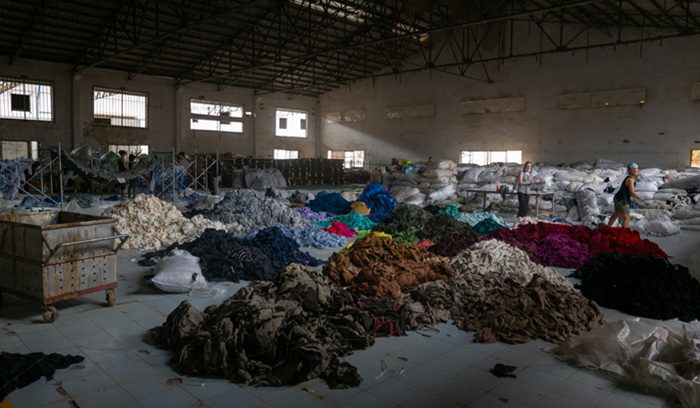
Every year, the global fashion industry produces roughly 92 million tonnes of textile waste — and a significant share of it was never worn at all. Now the European Union has moved to close one of the industry’s most indefensible loopholes: the routine destruction of unsold garments. Under rules adopted as part of the Ecodesign for Sustainable Products Regulation, large fashion companies operating in E.U. markets are prohibited from incinerating or landfilling clothing and accessories that simply didn’t sell.
At a glance
- EU textile waste ban: Large fashion companies — defined as those with more than 250 employees or over €150 million in annual turnover — are now banned from destroying unsold textile products in E.U. markets.
- Phase-in period: Medium-sized enterprises get until 2030 C.E. to comply, giving smaller businesses time to adapt their inventory and logistics models before the rule fully applies to them.
- Scale of the problem: The European Parliament estimates that E.U. consumers throw away around 11 kilograms of textiles per person each year, with much of the waste driven by overproduction in the fast fashion sector.
Why brands were burning clothes in the first place
It sounds counterintuitive, but destroying unsold inventory has long been a deliberate business strategy. For luxury and mid-range brands alike, flooding discount markets with excess stock risks diluting brand value and undercutting full-price sales. Incineration was often cheaper and tidier than donation logistics — and in many places, perfectly legal.
High-profile cases brought the practice into the open. In 2018 C.E., British fashion house Burberry acknowledged burning £28 million worth of unsold goods in a single year. The backlash was swift, and the company pledged to stop — but the industry-wide practice continued largely unchecked. The E.U. rule changes that calculus for any brand that wants access to the bloc’s 450 million consumers.
What happens to the clothes instead
The regulation pushes companies toward a hierarchy of better options: first, repair and reuse; then resale through secondary markets; then donation to charities and textile recovery organizations; and only as a last resort, recycling. Destruction is now off the table for large operators.
This creates real pressure on brands to produce more accurately — ordering closer to actual demand rather than inflating production runs as a hedge. It also opens commercial space for the growing resale and recommerce sector, which has been expanding rapidly across Europe. Platforms connecting surplus stock with discount buyers, social enterprises, and textile recyclers stand to benefit as brands seek compliant exit routes for unsold goods.
The European Commission’s broader textiles strategy frames this rule as one piece of a larger shift — toward clothing that is designed to last, easier to repair, and made from materials that can be recovered at end of life. Mandatory ecodesign requirements for textiles, covering durability, recyclability, and recycled content, are being developed alongside the destruction ban.
A turning point — with work still ahead
Advocates in the sustainable fashion space have welcomed the rule, but they note it is not a complete solution. The regulation covers destruction of finished goods, but it does not yet address overproduction itself — brands can still make far more than they expect to sell, as long as they find an alternative to the incinerator. Enforcement also depends on accurate reporting: companies must disclose how much unsold stock they generate and what happens to it, but independent verification mechanisms are still being worked out.
There is also the question of what “donation” means in practice. Textile donations to the Global South have long been a mixed story — secondhand clothing markets in Ghana and elsewhere have faced criticism for overwhelming local textile industries while delivering genuine value to some consumers. How E.U. brands route their surplus will matter as much as the fact that they are no longer burning it.
Still, the direction is clear. The E.U. has used its market size to set a new floor for industry behavior — and history suggests that rules adopted in Europe tend to pull global supply chains upward, even in markets where the regulation does not technically apply.
Read more
For more on this story, see: Good News for Humankind
For more from Good News for Humankind, see:
- Alzheimer’s risk cut in half by drug in landmark prevention trial
- Ghana establishes marine protected area at Cape Three Points
- The Good News for Humankind archive on climate
About this article
- 🤖 This article is AI-generated, based on a framework created by Peter Schulte.
- 🌍 It aims to be inspirational but clear-eyed, accurate, and evidence-based, and grounded in care for the Earth, peace and belonging for all, and human evolution.
- 💬 Leave your notes and suggestions in the comments below — I will do my best to review and implement where appropriate.
- ✉️ One verified piece of good news, one insight from Antihero Project, every weekday morning. Subscribe free.