

The Dominican Republic has achieved a historic victory for LGBTQ+ rights. The nation’s Constitutional Court has struck down a ban on same-sex conduct within the police and armed forces. This landmark ruling declares that articles in the military and police justice codes were unconstitutional. This decision marks a significant step forward in ending state-sanctioned discrimination.
The ruling is a powerful affirmation of equality and human dignity. It ensures that officers can no longer be punished simply for who they are. This legal breakthrough aligns the Dominican Republic with international human rights standards.
Ending Decades of Fear and Discrimination
For decades, LGBTQ+ officers in the Dominican Republic served in fear of punishment or dismissal. The challenged laws, specifically Article 210 of the Police Code and Article 260 of the Armed Forces Code, criminalized same-sex acts. These provisions imposed prison sentences of up to two years. The court’s decision effectively removes this threat, allowing officers to serve with dignity and security.
This ruling validates the fundamental rights to privacy and the free development of personality. It sends a clear message that discrimination based on sexual orientation has no place in a modern democracy. By striking down these archaic laws, the court has opened the door for a more inclusive public service sector. You can read more about the specific legal arguments in this Human Rights Watch report.
A Triumph for Civil Society and Advocacy
This victory is a testament to the relentless work of civil society organizations and legal advocates. Groups like Diversidad Dominicana and international partners supported the legal challenge. Their persistent advocacy highlighted the injustice of these discriminatory codes. This success proves that strategic litigation can effectively challenge outdated laws.
The ruling is celebrated as a breakthrough for the broader LGBTQ+ movement in the Caribbean. It demonstrates that local activism, supported by international human rights frameworks, can drive tangible change. This momentum is expected to inspire further legal challenges against other discriminatory practices in the region. The victory for equality is detailed by local news sources.
Aligning with Regional Human Rights Trends
The Dominican Republic’s decision aligns with a growing positive trend across Latin America and the Caribbean. Countries like Peru, Ecuador, and Venezuela have already taken similar steps to decriminalize same-sex conduct in their security forces. This regional shift reinforces the consensus that human rights are universal. It strengthens the legal framework for equality across the Americas.
This progress is crucial for the Dominican Republic’s international standing. It signals a commitment to modernizing its legal system and upholding the rights of all citizens. This alignment with global norms fosters a more just and equitable society. The Inter-American Commission on Human Rights continues to monitor and support these advancements.
A Path Toward Broader Equality
While this ruling is specific to the security forces, its implications are far-reaching. It establishes a strong legal precedent that discrimination based on sexual orientation is unconstitutional. This foundation can be used to challenge other forms of discrimination in employment, healthcare, and family law. It provides a powerful tool for activists seeking comprehensive anti-discrimination legislation.
The decision is a beacon of hope for the LGBTQ+ community in the Dominican Republic. It validates their struggle for recognition and respect. This historic win is a reminder that the pursuit of justice is a long but rewarding journey. Further context on the global fight for decriminalization can be found in reports from the United Nations Independent Expert on Sexual Orientation and Gender Identity.
Resources
- Human Rights Watch on Dominican Republic Court Ruling
- Local News Coverage on Constitutional Court Decision
- Inter-American Commission on Human Rights (IACHR) Official Website
- United Nations Independent Expert on SOGI Reports
More Good News
-

Alzheimer’s risk cut in half by drug in landmark prevention trial
A clinical trial from Washington University in St. Louis and published in The Lancet Neurology found that long-term high-dose treatment with the antibody drug gantenerumab reduced Alzheimer’s risk by roughly 50% in people with dominantly inherited Alzheimer’s disease — a rare genetic form caused by mutations that make the disease near-certain. The results are statistically uncertain and apply to less than 1% of all Alzheimer’s cases, but they provide the first evidence that removing amyloid plaques before symptoms appear can meaningfully change the course of the disease.
-

Marie-Louise Eta becomes the first female head coach in men’s top-flight European football
Marie-Louise Eta, 34, was appointed head coach of Bundesliga side Union Berlin on April 12, 2026, becoming the first woman to hold the top coaching position at a men’s club in any of Europe’s Big Five leagues — the Premier League, La Liga, Serie A, Ligue 1, and Bundesliga. A Champions League winner as a player with Turbine Potsdam in 2010, Eta had already broken barriers as the first female assistant coach in the Bundesliga in 2023. She takes charge for the final five matches of the season as Union Berlin fights to secure top-flight survival, after which she was…
-

Renewables now make up at least 49% of global power capacity
Renewable energy reached 49.4% of total global installed power capacity by end of 2025, up from 46.3% in 2024, according to the International Renewable Energy Agency’s Renewable Capacity Statistics 2026. The world added 692 gigawatts of new renewable capacity last year — the largest annual addition ever recorded — with solar alone contributing 511 gigawatts. Africa recorded its highest renewable expansion on record, and the Middle East its fastest-ever growth. IRENA Director-General Francesco La Camera noted that countries investing in renewables are absorbing the current Middle East energy crisis with measurably less economic damage than fossil-fuel-dependent economies.
-

Global suicide rate has fallen by 40% since 1995
A landmark study published in The Lancet Public Health by researchers at the Institute for Health Metrics and Evaluation at the University of Washington found that the global age-standardized suicide mortality rate fell nearly 40% between 1990 and 2021 — from 15 deaths per 100,000 people to nine. The decline was driven by measurable interventions including restrictions on toxic pesticides, expanded mental health services, and national prevention strategies. Female suicide rates fell more than 50% globally over the period. Roughly 740,000 people still die by suicide each year, and rates have risen in parts of Latin America and North America,…
-
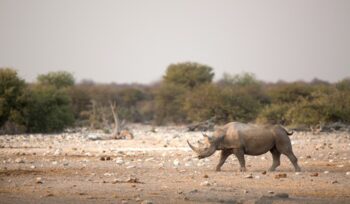
Rhinos are reintroduced back into Uganda’s wild after 43 years
The Uganda Wildlife Authority havetranslocated the first southern white rhinos to Kidepo Valley National Park — 43 years after the last rhino in the park was killed by poachers in 1983. The animals came from Ziwa Rhino Sanctuary, a breeding program established in 2005 with just six individuals that has grown Uganda’s total rhino population to 61. Four more rhinos will follow by May, with a separate group already relocated to Ajai Wildlife Reserve in January 2026. The reintroduction restores a key grazing species to one of Africa’s most remote savannah ecosystems and makes Kidepo the only national park in…