
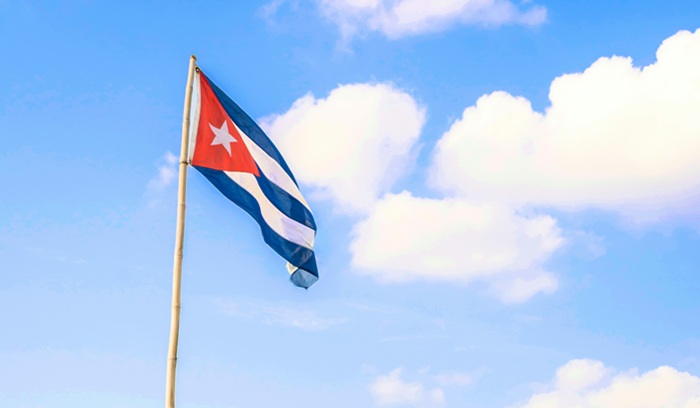
On July 18, 2025 C.E., Cuba’s National Assembly of People’s Power passed landmark legislation allowing transgender people to update the gender markers on their national ID cards without requiring genital-affirming surgery. The reform removes a long-standing legal barrier that forced trans Cubans to prove they had undergone invasive medical procedures before the state would recognize their gender identity — a requirement that left many without legal protection for years or even decades.
At a glance
- Gender marker reform: Cuba now allows transgender individuals to self-declare their gender identity on official documents through a streamlined administrative request, no surgery required.
- Civil registry overhaul: The legislation is part of a broader reform of Cuba’s Civil Registry system, which also formally recognizes emotional unions and cohabitation agreements for unmarried couples.
- Healthcare access gap: While Cuba provides comprehensive gender-affirming healthcare in principle, U.S. trade embargo restrictions and budget shortfalls have created medication shortages, pushing some trans Cubans to self-medicate — a health risk the new legal pathway partially addresses by decoupling rights from medical access.
Why this matters beyond Cuba
For transgender people anywhere, the requirement to undergo surgery before receiving legal recognition has long been criticized as a double injustice: demanding medical intervention as the price of a legal right, while access to that intervention is often unequal, expensive, or physically unsafe. Cuba’s reform directly challenges that model.
The change positions Cuba alongside Argentina, which pioneered self-declaration of gender identity in Latin America with its 2012 C.E. Gender Identity Law, and aligns with legal frameworks now in place in Uruguay, Chile, and Colombia. Across the region, the trend is clear: legal gender recognition is moving away from medicalized gatekeeping and toward self-determination.
For Cuba specifically, the reform has added weight because of the country’s particular constraints. The ongoing U.S. trade embargo has contributed to shortages of hormones and other medications used in gender-affirming care, leaving some trans Cubans in the difficult position of self-medicating without medical supervision. The new law doesn’t solve those supply problems — but it does mean that legal recognition no longer depends on accessing a medical system under strain.
A longer road than it looks
Cuba’s relationship with LGBTQ+ rights has been complicated by history. In the 1960s and 1970s C.E., the government sent gay men to labor camps under a policy of forced “re-education.” The state’s posture shifted significantly in the 2000s and 2010s under Mariela Castro, director of the National Center for Sex Education (CENESEX), whose advocacy pushed gender-affirming surgeries into the public health system and supported a 2022 C.E. family code that legalized same-sex marriage.
That context makes this week’s reform both a continuation and a correction — building on recent progress while acknowledging that medical access alone was never enough. Trans Cubans who couldn’t access surgery for any reason, including shortages caused by the embargo, were effectively left without legal recognition of who they are.
Advocates quoted by LGBTQ Nation describe the legislation as a critical step, not a complete solution. Discrimination in housing, employment, and daily social life remains a real challenge, and the law does not yet address those dimensions in full. The gap between legal recognition and lived equality is a gap familiar to trans communities around the world.
Legal recognition as a human rights foundation
One reason legal gender marker reform matters so deeply is practical: mismatched IDs create cascading problems. They can block access to jobs, housing, healthcare, and banking. They can expose trans people to harassment or violence every time documents are checked. Removing that mismatch doesn’t end discrimination, but it removes one of its most reliable mechanisms.
Cuba’s reform joins a growing body of evidence — from Ireland to New Zealand to Argentina — that self-declaration models work. Countries that have adopted them have not seen the harms that opponents predicted. What they have seen is a measurable reduction in the administrative burden on trans people and an increase in the proportion of the trans population whose documents reflect their actual identity.
This story connects to a broader pattern of human rights progress worth tracking. The same session of Cuba’s National Assembly that passed this reform was also addressing civil registry modernization more broadly — a reminder that legal infrastructure, unglamorous as it sounds, is often where rights are won or lost in practice. Elsewhere, communities have found that securing rights in law — whether over Indigenous land rights or energy policy — creates platforms that later generations can build on.
Progress accumulates in legal codes and civil registries, in the quiet acts of a bureaucracy finally made to reflect reality. For trans Cubans who have waited years for an ID that matches who they are, July 18, 2025 C.E. is one of those days when the code changed — and with it, the daily texture of a life.
Cuba’s reform is also a reminder that positive change can come from unexpected places, and that no country’s record is entirely one thing. Nations making strides on renewable energy — like the countries driving global renewable capacity past 49% — are often also wrestling with unresolved social justice questions. Progress is rarely uniform, and that’s exactly why individual milestones deserve recognition.
Read more
For more on this story, see: Good News for Humankind
For more from Good News for Humankind, see:
- Renewables now make up at least 49% of global power capacity
- Indigenous land rights win at COP30: 160 million hectares recognized
- The Good News for Humankind archive on human rights
About this article
- 🤖 This article is AI-generated, based on a framework created by Peter Schulte.
- 🌍 It aims to be inspirational but clear-eyed, accurate, and evidence-based, and grounded in care for the Earth, peace and belonging for all, and human evolution.
- 💬 Leave your notes and suggestions in the comments below — I will do my best to review and implement where appropriate.
- ✉️ One verified piece of good news, one insight from Antihero Project, every weekday morning. Subscribe free.
More Good News
-

Canada commits .8 billion to protect 30% of its lands and waters by 2030
Canada has announced a .8 billion investment to protect 30% of its lands and waters by 2030, one of the largest conservation commitments in the country’s history. Prime Minister Mark Carney unveiled the funding to meet international biodiversity targets, with Indigenous communities playing a central role in stewarding conserved lands. The announcement positions Canada as a global leader in nature protection at a moment when biodiversity loss is accelerating worldwide.
-

132 nations add 40 migratory species to UN protection list in historic summit
One hundred thirty-two nations extended international legal protection to 40 new migratory species at the UN Convention on the Conservation of Migratory Species COP15 summit in Campo Grande, Brazil, on March 29, 2026. The newly protected animals include the snowy owl, giant otter, striped hyena, and great hammerhead shark. A new UN report released at the summit found that 49% of populations already covered by the treaty are in decline, raising the stakes for implementation between now and the next conference in 2029.
-
For the first time, human-caused extinction rate falls below 0.001%
In this speculative 2090 C.E. vision, scientists confirm the human-caused extinction rate has fallen below 0.001% per year — a 100-fold reduction from its worst peak, driven by rewilding, Indigenous stewardship, and the global clean energy transition.
