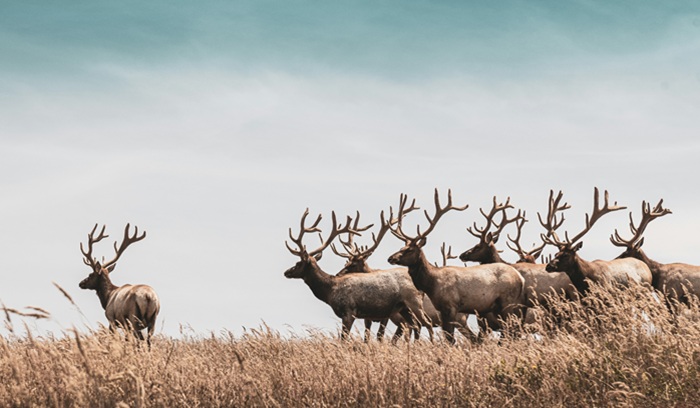
Colorado is constructing what will become the world’s largest wildlife overpass, a breakthrough project designed to reunite fragmented habitats and protect both wildlife and motorists along the busy I-25 corridor. Known as the Greenland Wildlife Overpass, this structure will span six lanes of Interstate 25 between Denver and Colorado Springs, offering elk, pronghorn, mule deer, and other large mammals a safe route across a dangerous stretch of highway (Smithsonian Magazine; Colorado DOT).
Wildlife Overpass Dimensions and Strategic Design
At approximately 200 feet wide and 209 feet long—covering nearly an acre—the overpass connects around 39,000 acres of conserved land in Douglas County with over one million acres of Pike National Forest. Its expansive, gently sloped design, complete with native vegetation, is intentionally crafted to attract large game animals that traditionally avoid enclosed crossings like tunnels (Environment America; Wikipedia: Wildlife crossing).
Why a Wildlife Crossing Is So Critical
This section of I-25 averages one wildlife-vehicle collision per day—highlighting an urgent need for a safer solution. The Greenland Wildlife Overpass, part of an 18-mile network of wildlife crossing infrastructure featuring underpasses and fencing, is projected to reduce such collisions by up to 90 percent. The design addresses the unique behavior of elk and pronghorn, which favor open, natural overpasses over confined passageways (Axios; CPR News).
Construction Milestones, Funding, and Timeline
The $15 million project reached its halfway mark in mid-2025, with piers, girders, and initial structural work completed. Final touches—such as the deck, landscaping, and fencing—are expected to be done by the end of the year, wrapping up in December 2025 and signaling a successful alignment of timing and budget (Colorado DOT news release; BridgeWeb).
Reducing Road Kill and Reconnecting Habitats
Over time, wildlife crossings like this have proven essential for preserving ecological connectivity. Highways disrupt migration routes and isolate populations, but overpasses knit together landscapes and allow free, safe movement. Colorado now boasts over 100 wildlife crossing structures—this new overpass marks its first major step toward large-scale bridging of fractured habitats (Douglas County project overview).
Building Momentum for Wildlife Overpass Solutions Elsewhere
Inspired by successful crossings in Canada and Europe, Colorado’s Greenland overpass stands as a bold demonstration of what’s possible. Following proven success in locations like Banff and Utah, this project offers a scalable blueprint for communities worldwide facing rising threats to wildlife mobility (Pew Article on wildlife crossings).
Investing in Safety, Ecology, and Shared Future
By prioritizing wildlife crossings, Colorado is building infrastructure that lifts both environmental and public safety. This project ensures reliable migration routes for wildlife while minimizing vehicle accidents—a win for nature and people. As development and traffic continue to encroach on natural landscapes, the Greenland Wildlife Overpass serves as a compelling blueprint for how society can weave ecological care into infrastructure design.
More Good News
-

Alzheimer’s risk cut in half by drug in landmark prevention trial
A clinical trial from Washington University in St. Louis and published in The Lancet Neurology found that long-term high-dose treatment with the antibody drug gantenerumab reduced Alzheimer’s risk by roughly 50% in people with dominantly inherited Alzheimer’s disease — a rare genetic form caused by mutations that make the disease near-certain. The results are statistically uncertain and apply to less than 1% of all Alzheimer’s cases, but they provide the first evidence that removing amyloid plaques before symptoms appear can meaningfully change the course of the disease.
-

Marie-Louise Eta becomes the first female head coach in men’s top-flight European football
Marie-Louise Eta, 34, was appointed head coach of Bundesliga side Union Berlin on April 12, 2026, becoming the first woman to hold the top coaching position at a men’s club in any of Europe’s Big Five leagues — the Premier League, La Liga, Serie A, Ligue 1, and Bundesliga. A Champions League winner as a player with Turbine Potsdam in 2010, Eta had already broken barriers as the first female assistant coach in the Bundesliga in 2023. She takes charge for the final five matches of the season as Union Berlin fights to secure top-flight survival, after which she was…
-

Renewables now make up at least 49% of global power capacity
Renewable energy reached 49.4% of total global installed power capacity by end of 2025, up from 46.3% in 2024, according to the International Renewable Energy Agency’s Renewable Capacity Statistics 2026. The world added 692 gigawatts of new renewable capacity last year — the largest annual addition ever recorded — with solar alone contributing 511 gigawatts. Africa recorded its highest renewable expansion on record, and the Middle East its fastest-ever growth. IRENA Director-General Francesco La Camera noted that countries investing in renewables are absorbing the current Middle East energy crisis with measurably less economic damage than fossil-fuel-dependent economies.
-

Global suicide rate has fallen by 40% since 1995
A landmark study published in The Lancet Public Health by researchers at the Institute for Health Metrics and Evaluation at the University of Washington found that the global age-standardized suicide mortality rate fell nearly 40% between 1990 and 2021 — from 15 deaths per 100,000 people to nine. The decline was driven by measurable interventions including restrictions on toxic pesticides, expanded mental health services, and national prevention strategies. Female suicide rates fell more than 50% globally over the period. Roughly 740,000 people still die by suicide each year, and rates have risen in parts of Latin America and North America,…
-
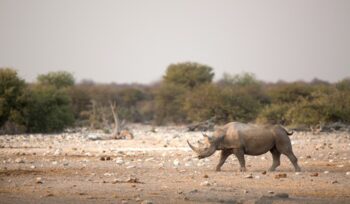
Rhinos are reintroduced back into Uganda’s wild after 43 years
The Uganda Wildlife Authority havetranslocated the first southern white rhinos to Kidepo Valley National Park — 43 years after the last rhino in the park was killed by poachers in 1983. The animals came from Ziwa Rhino Sanctuary, a breeding program established in 2005 with just six individuals that has grown Uganda’s total rhino population to 61. Four more rhinos will follow by May, with a separate group already relocated to Ajai Wildlife Reserve in January 2026. The reintroduction restores a key grazing species to one of Africa’s most remote savannah ecosystems and makes Kidepo the only national park in…