
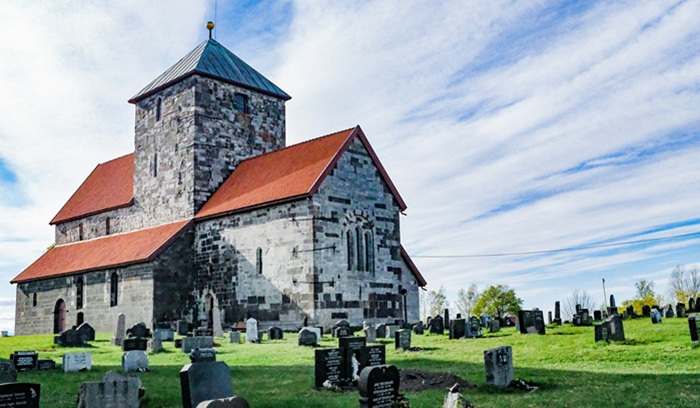
The Church of Norway has achieved a major spiritual and human rights milestone by issuing a formal apology for its past mistreatment of LGBTQ+ people. This historic statement acknowledges decades of institutionalized discrimination and exclusion. This act of repentance is a profound step toward healing and reconciliation, signaling a new era of radical inclusivity.
This decision is the culmination of years of internal debate and sustained advocacy by progressive voices within the church. It affirms that the Church of Norway is committed to becoming a more welcoming and affirming spiritual home for all its members.
A Profound Act of Institutional Repentance
The core positive impact of the apology lies in its institutional recognition of harm. The church acknowledged that its teachings and practices historically contributed to the oppression of LGBTQ+ individuals. This formal admission validates the experiences of generations of faithful members who were marginalized or forced to leave their communities. The apology is an essential prerequisite for genuine healing and restoration of trust.
This act shifts the church’s focus from a stance of condemnation to one of compassion and understanding. It sets an important standard for other global religious bodies facing similar historical reckonings.
Part of a Global Wave of Reconciliation
The Church of Norway’s apology is part of a broader, positive global trend among major denominations. Over the last two decades, several international churches have undertaken similar acts of institutional repentance. For instance, the Episcopal Church in the United States and the United Church of Christ have issued apologies and taken significant steps toward full LGBTQ+ inclusion, including fully embracing marriage equality.
These coordinated efforts signal a hopeful shift within global Christianity toward greater alignment with human rights and equality. The apologies pave the way for healing deep, historical rifts and strengthening the faith community’s role in social justice. This collective movement demonstrates that spiritual traditions can evolve while remaining deeply rooted in compassion.
Strengthening Inclusivity and Faith
The formal apology strengthens the Church of Norway’s commitment to radical inclusivity. It ensures that LGBTQ+ members are now fully welcomed into all aspects of church life, including ordination and marriage rites. The Church of Norway had previously moved toward allowing same-sex marriage ceremonies in its churches, and this apology reinforces that legislative change with emotional and theological support.
This embrace of equality is vital for the spiritual health of the entire congregation. It allows the church to focus on its core mission of ministry and community support. By removing barriers to full participation, the church enhances its own resilience and relevance in a modern society. The Church of Norway’s official website provides statements regarding their recent changes to marriage policy.
A Model for Global Religious Dialogue
This public apology provides an inspiring model for other denominations and religious institutions worldwide. Many faith communities continue to grapple with reconciling traditional teachings with modern human rights and scientific understanding. The Church of Norway’s decision shows that theological evolution and faithfulness are not mutually exclusive concepts.
This action strengthens the church’s position as a progressive voice in international religious forums. It provides positive momentum for dialogue and reform in neighboring countries and within global religious bodies. The commitment to self-reflection sets a positive standard for institutional honesty regarding historical injustices.
Securing Well-being and Social Trust
The reconciliation between the church and the LGBTQ+ community delivers significant social benefits. For individuals of faith, the apology reduces the conflict between their spiritual identity and their sexual or gender identity. This validation is crucial for improving mental health and reducing social isolation. It promotes a sense of belonging for individuals who previously faced rejection from a foundational pillar of their culture.
The church’s commitment to transparency is a positive force for social trust nationwide. It strengthens the bonds between civic institutions and the public they serve. The Norwegian Institute of Public Health (NIPH) tracks the positive mental health impacts of social inclusion. The Norwegian government’s commitment to human rights is detailed on their official site. Furthermore, the global context of faith and sexuality is explored by the World Council of Churches.
Resources
- Church of Norway on Changes to Marriage Policy
- Norwegian Institute of Public Health (NIPH) on Social Inclusion and Health
- Norwegian Government on Human Rights Policy
- World Council of Churches on Faith and Human Sexuality
More Good News
-
Alzheimer’s risk cut in half by drug in landmark prevention trial
A clinical trial from Washington University in St. Louis and published in The Lancet Neurology found that long-term high-dose treatment with the antibody drug gantenerumab reduced Alzheimer’s risk by roughly 50% in people with dominantly inherited Alzheimer’s disease — a rare genetic form caused by mutations that make the disease near-certain. The results are statistically uncertain and apply to less than 1% of all Alzheimer’s cases, but they provide the first evidence that removing amyloid plaques before symptoms appear can meaningfully change the course of the disease.
-

Marie-Louise Eta becomes the first female head coach in men’s top-flight European football
Marie-Louise Eta, 34, was appointed head coach of Bundesliga side Union Berlin on April 12, 2026, becoming the first woman to hold the top coaching position at a men’s club in any of Europe’s Big Five leagues — the Premier League, La Liga, Serie A, Ligue 1, and Bundesliga. A Champions League winner as a player with Turbine Potsdam in 2010, Eta had already broken barriers as the first female assistant coach in the Bundesliga in 2023. She takes charge for the final five matches of the season as Union Berlin fights to secure top-flight survival, after which she was…
-

Renewables now make up at least 49% of global power capacity
Renewable energy reached 49.4% of total global installed power capacity by end of 2025, up from 46.3% in 2024, according to the International Renewable Energy Agency’s Renewable Capacity Statistics 2026. The world added 692 gigawatts of new renewable capacity last year — the largest annual addition ever recorded — with solar alone contributing 511 gigawatts. Africa recorded its highest renewable expansion on record, and the Middle East its fastest-ever growth. IRENA Director-General Francesco La Camera noted that countries investing in renewables are absorbing the current Middle East energy crisis with measurably less economic damage than fossil-fuel-dependent economies.
-

Global suicide rate has fallen by 40% since 1995
A landmark study published in The Lancet Public Health by researchers at the Institute for Health Metrics and Evaluation at the University of Washington found that the global age-standardized suicide mortality rate fell nearly 40% between 1990 and 2021 — from 15 deaths per 100,000 people to nine. The decline was driven by measurable interventions including restrictions on toxic pesticides, expanded mental health services, and national prevention strategies. Female suicide rates fell more than 50% globally over the period. Roughly 740,000 people still die by suicide each year, and rates have risen in parts of Latin America and North America,…
-
Rhinos are reintroduced back into Uganda’s wild after 43 years
The Uganda Wildlife Authority havetranslocated the first southern white rhinos to Kidepo Valley National Park — 43 years after the last rhino in the park was killed by poachers in 1983. The animals came from Ziwa Rhino Sanctuary, a breeding program established in 2005 with just six individuals that has grown Uganda’s total rhino population to 61. Four more rhinos will follow by May, with a separate group already relocated to Ajai Wildlife Reserve in January 2026. The reintroduction restores a key grazing species to one of Africa’s most remote savannah ecosystems and makes Kidepo the only national park in…