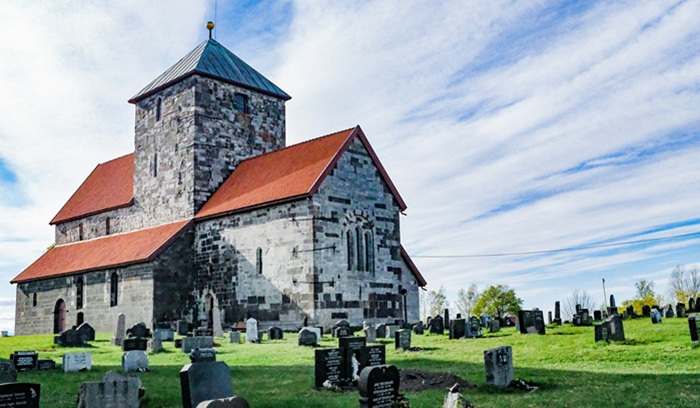
The Church of Norway has issued a formal apology to LGBTQ+ members, acknowledging that its teachings and practices caused real harm to generations of people who sought spiritual belonging and were turned away instead. The statement — delivered by church leadership in 2025 C.E. — names decades of exclusion directly and calls it what it was: institutionalized discrimination. For many who were pushed out of their faith communities, the words land as long-overdue validation.
At a glance
- Church of Norway apology: Church leadership formally acknowledged that its historical teachings and institutional practices caused harm to LGBTQ+ individuals and communities over many decades.
- Same-sex marriage: The church began performing same-sex marriages in 2017 C.E., making it one of the first major Lutheran bodies to do so — the apology now adds theological and emotional reinforcement to that shift.
- Global context: Several major denominations, including the Episcopal Church in the U.S. and the United Church of Christ, have undertaken similar institutional reckonings in recent years, reflecting a broader movement within global Christianity.
Why an apology matters differently than a policy change
Policy changes are meaningful. But they don’t automatically repair what was broken.
When the Church of Norway approved same-sex marriages nearly a decade ago, it changed what the institution would do. This apology addresses what the institution did — and the difference matters enormously to people whose faith lives were shaped by rejection. Formal acknowledgment of harm is a distinct act. It validates individual experience in a way that updated policy language simply cannot.
For LGBTQ+ Norwegians who grew up in the church — who prayed in its pews, were confirmed in its traditions, and were then told they didn’t fully belong — the apology speaks to something that a marriage equality vote could not reach. Research consistently links institutional rejection and religious stigma to elevated rates of depression and anxiety among LGBTQ+ individuals. Formal recognition of that harm is itself a meaningful public health act.
A reckoning rooted in years of internal debate
This didn’t happen quickly.
The Church of Norway has been moving toward this moment through sustained internal advocacy, theological reconsideration, and pressure from both lay members and clergy. The church counts roughly 65% of Norway’s population as members, and as a body long intertwined with national identity and civic life, its posture on inclusion carries cultural weight for millions — including those who no longer attend services but grew up shaped by its teaching.
The internal path toward this apology included decades of synod debates, congregational disagreements, and the persistent work of LGBTQ+ Christians who chose to stay inside the institution and push for change rather than leave it behind. That persistence is a significant part of why this moment arrived. Their decision to remain — and to keep making the argument — is its own kind of courage.
Part of a wider movement in global Christianity
The Church of Norway is not alone in this reckoning, but it is among the most visible institutions to have named its past harm so directly.
Major denominations around the world have undertaken similar processes — some going further, some stopping well short. The Episcopal Church in the U.S. has moved toward full inclusion over many years. The United Church of Christ became one of the first large Protestant denominations to affirm marriage equality. The World Council of Churches has hosted sustained dialogue on faith and human sexuality across its member bodies.
These movements are uneven and contested. Many denominations remain opposed to any shift, and within churches that have moved toward inclusion, significant internal disagreement persists. The Church of Norway’s apology doesn’t resolve those global tensions. But it contributes a clear public statement to a record that faith communities around the world are watching.
When a national church with deep historical roots issues a formal apology rather than a quiet policy update, it signals something about the seriousness of the commitment. Sociological research on institutional accountability suggests that this kind of explicit acknowledgment — rather than silence or vague gestures — strengthens long-term trust between institutions and the communities they serve.
What inclusion looks like in practice
Inclusion in the Church of Norway now extends well beyond marriage ceremonies. LGBTQ+ people can be ordained as clergy, and the church has worked to make clear that full participation — in worship, in leadership, in community life — is available regardless of sexual orientation or gender identity.
Symbolic gestures and structural access are different things. An apology not paired with material change in who gets to lead and who gets to belong risks remaining only symbolic. The Church of Norway has, over the last decade, tried to ensure that both dimensions are present.
Still, the apology will not heal every wound immediately. Not every congregation in Norway has embraced the shift with equal enthusiasm, and for some LGBTQ+ individuals, the harm done by years of exclusion runs deep enough that no institutional statement will fully close it. Reconciliation is a long process, not a single event — and the church has acknowledged as much.
That honesty is part of what makes the apology credible. It doesn’t claim to fix everything. It claims responsibility. And responsibility, offered clearly and publicly, is where repair begins.
Read more
For more on this story, see: Reuters
For more from Good News for Humankind, see:
- Renewables now make up nearly half of global power capacity
- Indigenous land rights get a historic boost at COP30
- The Good News for Humankind archive on human rights
About this article
- 🤖 This article is AI-generated, based on a framework created by Peter Schulte.
- 🌍 It aims to be inspirational but clear-eyed, accurate, and evidence-based, and grounded in care for the Earth, peace and belonging for all, and human evolution.
- 💬 Leave your notes and suggestions in the comments below — I will do my best to review and implement where appropriate.
- ✉️ One verified piece of good news, one insight from Antihero Project, every weekday morning. Subscribe free.
More Good News
-
Poland to recognize same-sex marriages from E.U. states
Same-sex marriages performed elsewhere in the EU must now be formally recognized in Poland, the country’s Supreme Administrative Court ruled — a turning point for a nation that still offers no domestic legal recognition for same-sex unions. Rights groups estimate that 30,000 to 40,000 Polish citizens have married abroad, and many can now see those unions entered into Poland’s civil registry for the first time. The case began with a couple who wed in Germany in 2018 and were turned away by Warsaw officials; when the ruling was read, activists in the courtroom broke into applause. In a country where…
-

More than 50 nations attend world-first conference on phasing out fossil fuels
Fossil fuel phaseout talks just crossed a real threshold: for the first time, more than 50 nations sat down together specifically to plan a way off coal, oil, and gas. The two-day gathering in Santa Marta, Colombia, brought together an unusually wide mix — major producers like Australia, Norway, and Canada alongside Pacific island nations like Tuvalu and Vanuatu, with Europe and emerging economies in between. No binding deals were expected, but the recommendations will feed into a voluntary roadmap being shaped under Brazil’s COP30 leadership. It’s a small, hopeful shift: producers and consumers finally talking openly about a transition…
-

Singapore stops sourcing and breeding dolphins
Resorts World Sentosa, home to more than 20 Indo-Pacific bottlenose dolphins, is halting both wild sourcing and captive breeding at its Singapore oceanarium. The resort is now assembling an independent expert panel to figure out what’s next for the animals in its care, including a 7-year-old named Kenzo. It’s a meaningful shift from one of Asia’s most prominent entertainment venues, and one animal welfare groups have pushed toward for over a decade. With Mexico, Canada, and France already banning cetacean captivity for entertainment, this quiet decision in Singapore signals that the tide is turning across Asia too, reshaping what travelers…