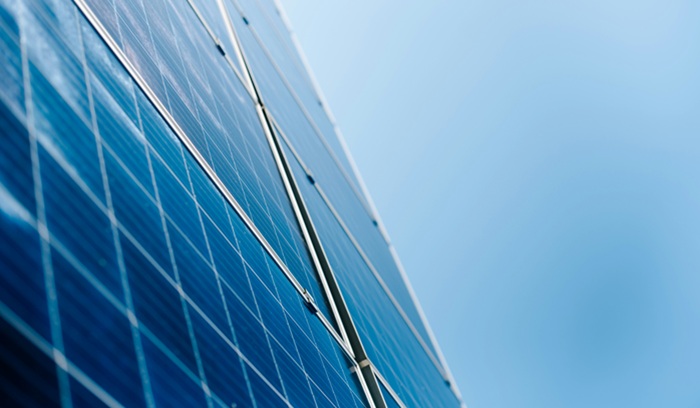
In March 2026 C.E., China shipped a record 68.03 gigawatts of solar cells, panels, and wafers to markets around the world — more than 48% above the previous peak of 45.74 GW set in August 2025 C.E. The surge, documented by U.K.-based energy think tank Ember, came as countries across Asia and Africa scrambled to build out renewable energy capacity in response to a crisis in Middle Eastern oil and gas supply.
At a glance
- Chinese solar exports: China shipped 68.03 GW of solar equipment in March 2026 C.E. — nearly double the 34.07 GW exported in February, before the Middle East energy crisis escalated.
- Regional demand: Asian nations imported 39 GW of Chinese solar equipment in March, while African countries imported 10 GW — a 176% jump from the prior month.
- Clean energy package: Combined exports of solar equipment, batteries, and electric vehicles rose 70% year-on-year and 38% from February, with battery exports especially strong in the E.U., Australia, and India.
A crisis that accelerated a transition
The trigger was stark. A blockade of the Strait of Hormuz, following the war between the United States, Israel, and Iran, disrupted oil and gas flows to countries that had long depended on Middle Eastern energy. Nations that had been debating the pace of their energy transitions suddenly faced a more urgent question: how fast can we build alternatives?
The answer, for many, was solar. Countries across Asia and Africa moved quickly to secure supply from the world’s dominant manufacturer. Fifty countries recorded all-time high imports of Chinese solar equipment in March. Ember’s tracking data confirmed that Chinese solar exports increased in every region except the Middle East itself.
The speed of that response reflects how dramatically solar manufacturing costs have fallen. According to the International Renewable Energy Agency, the cost of utility-scale solar fell more than 90% between 2010 C.E. and 2023 C.E. — making it the cheapest source of new electricity generation in most of the world. When supply disruptions make fossil fuels expensive and unreliable, solar is no longer just the green option. It is the fast and affordable one.
Africa and Asia lead the demand
The most striking numbers came from regions that import large volumes of refined oil and gas from the Middle East. Asian countries doubled their solar imports from February to March, reaching 39 GW. Africa’s imports jumped 176%, reaching 10 GW.
For many African nations, this moment carries particular weight. The International Energy Agency has long noted that Africa holds the world’s largest solar resource yet has historically had among the lowest installed capacity. A combination of falling costs and supply-chain pressure is now shifting that balance. Indigenous manufacturing capacity across the continent remains limited, and most of that 10 GW represents imports — but it is infrastructure that will generate clean power for decades.
In Asia, nations from South Asia to Southeast Asia accelerated procurement. Many of these countries have set ambitious renewable targets but had been moving gradually. The energy crisis compressed that timeline.
Batteries and EVs joined the wave
Solar panels were not the only clean energy technology moving at scale. Chinese customs data showed that combined exports of solar equipment, batteries, and electric vehicles rose 38% from February to March 2026 C.E. and 70% compared to the same month in 2025 C.E.
Ember highlighted battery exports in particular, noting strong flows to the E.U., Australia, and India — all countries with large-scale energy storage projects underway. Bloomberg NEF has projected that global energy storage capacity will grow roughly 15 times over by 2030 C.E., and the March data suggests that trajectory may be pulling forward faster than expected.
A complicated picture
The record exports are not a simple story of smooth progress. One significant factor in the March surge was a policy change: the Chinese government suspended its export VAT rebate system for the solar industry, effective in April 2026 C.E. Chinese manufacturers rushed to ship product before the policy took hold, inflating the monthly figures. Some portion of March’s record reflects a one-time acceleration rather than a new baseline.
The broader context is also complicated. For years, governments in Europe, the United States, and elsewhere struggled with what they described as Chinese solar panels flooding their markets at prices that undercut domestic manufacturers. That tension has not disappeared. The same competitive pricing that makes Chinese solar accessible to nations in the Global South is also the pricing that has drawn trade complaints and tariffs elsewhere.
And the underlying trigger — a war and a blockade that cut off energy supply to millions of people — is not a cause for celebration. The human cost of the conflict is real and ongoing. What the data shows is that even in crisis, human ingenuity and industrial capacity can redirect toward solutions at remarkable speed.
Read more
For more on this story, see: Seoul Economic Daily — China’s solar exports hit record high in March amid Middle East crisis
For more from Good News for Humankind, see:
- U.K. cancer death rates fall to their lowest level on record
- Marie-Louise Eta becomes the first female head coach in men’s top-flight European football
- The Good News for Humankind archive on solar energy
About this article
- 🤖 This article is AI-generated, based on a framework created by Peter Schulte.
- 🌍 It aims to be inspirational but clear-eyed, accurate, and evidence-based, and grounded in care for the Earth, peace and belonging for all, and human evolution.
- 💬 Leave your notes and suggestions in the comments below — I will do my best to review and implement where appropriate.
- ✉️ One verified piece of good news, one insight from Antihero Project, every weekday morning. Subscribe free.
More Good News
-

Alaska judge permanently shields Tongass old-growth forests from logging
The Tongass National Forest just won a major day in court, with a federal judge ruling in March 2026 that the U.S. Forest Service is not legally required to ramp up logging to meet timber industry demand. The decision protects the world’s largest temperate old-growth rainforest — home to roughly a third of what remains of this ecosystem globally, along with wild salmon runs, brown bears, and trees older than 800 years. Tribal nations, fishing crews, and tourism operators stood alongside federal defenders in the case, a reminder that the forest’s value reaches far beyond timber. Wins like this give…
-
China plans to double its already massive clean energy supply by 2035
China’s new climate pledge to the United Nations sets a target of 3,600 gigawatts of wind and solar power by 2035 — more than the entire electricity-generating capacity of the United States today, and roughly double what China has already built. The commitment is woven into the country’s next Five-Year Plan, which directs state banks, provinces, and manufacturers to move in the same direction. Because China makes about 80% of the world’s solar panels, every factory it scales up makes clean energy cheaper for buyers in Africa, Southeast Asia, Latin America, and everywhere else. That ripple effect is what makes…
-

Doctors hail first breakthrough in asthma and COPD treatment in 50 years
Benralizumab, a single injection given during an asthma or COPD attack, outperformed the steroid pills that have been the only emergency option since the 1970s. In a King’s College London trial of 158 patients, those who got the shot had four times fewer treatment failures over 90 days, along with easier breathing and fewer follow-up visits. Because steroids carry real risks with repeated use — diabetes, osteoporosis, and more — a genuine alternative could change daily life for millions of people who live in fear of the next flare-up. After a half-century of stalled progress on diseases that claim 3.8…