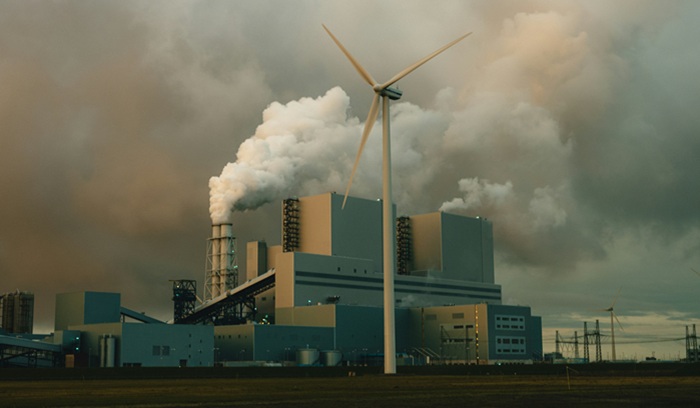
China’s carbon dioxide emissions dropped in 2024 for the first time on record, even as the country’s electricity demand continued to grow — a landmark shift that climate scientists say may mark the long-awaited peak of the world’s largest source of greenhouse gas pollution. The decline, driven by an extraordinary expansion of solar and wind energy, suggests China’s energy transition has reached a tipping point that many analysts thought was still years away.
- China’s CO2 emissions fell in 2024 despite rising electricity demand, according to analysis by climate researchers tracking energy data.
- Solar and wind power additions in China were so large that they outpaced growth in electricity consumption, allowing fossil fuel use to decline.
- If the trend holds, China’s emissions peak — a milestone critical to global climate targets — may already have arrived.
How China’s CO2 emissions fell while the lights stayed on
For years, China’s rising energy appetite made an emissions peak seem distant. The country burns more coal than the rest of the world combined, and its economy’s hunger for electricity has only grown. But in 2024, something changed. Renewable energy capacity grew so fast that it filled the gap left by reduced fossil fuel generation, keeping the grid running while cutting emissions at the same time.
Solar installations in China have broken global records for several years running. The country added more solar capacity in 2023 alone than the entire United States has installed in its history. Wind energy expanded rapidly alongside it. Together, these sources now produce enough electricity to displace coal and gas at the margins, and analysts say the displacement is only growing.
The result is a decoupling that climate models long projected but rarely observed in a major economy at this scale. China’s electricity use rose, its economy kept moving, and its carbon emissions still went down. That combination — growth without carbon — is the central goal of the global energy transition.
China CO2 emissions peak and what it means for global climate targets
Under the Paris Agreement, China pledged to reach peak CO2 emissions before 2030 and achieve carbon neutrality by 2060. If 2024 marks the true peak, China would be hitting that milestone up to six years early. That matters enormously for global temperature projections, since China accounts for roughly 30 percent of all annual CO2 emissions worldwide.
Analysts at Carbon Brief, which tracks China’s energy and climate data closely, have noted that the decline in emissions aligns with a structural shift rather than a temporary dip caused by economic slowdown. Construction activity — a major driver of coal demand — has fallen as China’s property sector contracts, but the renewables boom is the more durable force. Even if construction recovers, the renewable energy capacity now installed means the grid does not need to burn as much coal to meet demand.
That structural change is what distinguishes this moment from previous short-term dips. In 2015 and 2016, China’s emissions fell briefly, then rebounded. Researchers at Global Energy Monitor say the scale of current renewable deployment makes a sustained decline far more plausible this time around.
The clean energy buildout behind the numbers
China’s solar and wind expansion has been staggering in scale. The country installed more than 280 gigawatts of new solar capacity in 2023 alone and added enormous wind capacity alongside it. By some measures, China is now installing more clean energy every two years than Europe has built in total over decades of effort.
Electric vehicle adoption has also reshaped energy demand. Chinese consumers bought more electric vehicles than the rest of the world combined in 2023, reducing oil consumption in transportation and shifting energy use toward a grid that is rapidly decarbonizing. The International Energy Agency’s World Energy Outlook identified China as the single largest driver of global clean energy growth through the 2020s.
None of this erases the enormous scale of China’s remaining fossil fuel infrastructure. Coal plants continue to operate, and new ones have been approved. The emissions decline is real, but the path to carbon neutrality by 2060 still requires retiring that fossil fuel base on a vast scale. Still, the direction of travel has shifted in a way that was not visible even three years ago.
More clean energy progress worth following
China’s emissions milestone fits into a broader pattern of accelerating global energy change. Renewables are now the fastest-growing source of electricity worldwide, as documented in our coverage of renewables reaching nearly half of global power capacity — a threshold that would have seemed impossible a decade ago. And the communities most affected by fossil fuel pollution and climate disruption are increasingly winning rights to shape what comes next, as shown in recent reporting on Indigenous land rights victories heading into COP30. These stories are connected: the faster emissions fall, the more land, ecosystems, and communities get protected from the worst climate outcomes. You can read more coverage like this in the Good News for Humankind archive, sign up for the Good News newsletter, or explore the Antihero Project for deeper context on how systems change.
Sourcing
This story was generated by AI based on a template created by Peter Schulte. It was originally reported by New Scientist.
More Good News
-

COP30 pledges recognition of 160 million hectares of Indigenous land rights
At the COP30 World Leaders Summit in Belém, Brazil in November 2025, 15 governments pledged to formally recognize Indigenous land rights over 160 million hectares by 2030 — an area the size of Iran — through the Intergovernmental Land Tenure Commitment. Brazil committed at least 59 million hectares. More than 35 donors renewed a $1.8 billion Forest and Land Tenure Pledge. The Tropical Forest Forever Facility secured nearly $7 billion, with 20% directed to Indigenous peoples. It was the largest Indigenous participation in COP history.
-

Ghana declares its first marine protected area to rescue depleted fish stocks
Ghana has declared its first marine protected area near Cape Three Points, targeting fish stocks decimated by decades of overfishing. The Ghana marine protected area marks a historic shift for a nation where millions depend on the sea for food and income — and could signal broader change across the Gulf of Guinea.
-

U.S. researchers cut Alzheimer’s risk by half in first-ever prevention trial
For the first time, U.S. researchers have clinical evidence that an Alzheimer’s prevention trial can reduce dementia risk by roughly half. A Washington University study published in The Lancet Neurology found that clearing amyloid plaques before symptoms appear — in people with a near-certain genetic form of the disease — produced a 50% risk reduction in key subgroups. The drug used is no longer available, but the findings have launched a new confirmatory trial at 18 sites worldwide.