
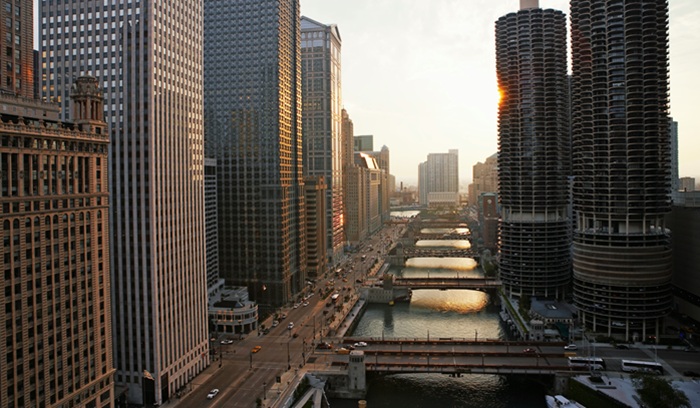
Chicago’s once-polluted river is finally showing signs of vibrant life and renewed public trust. Long associated with industrial waste and neglect, the Chicago River has been transformed through decades of cleanup, policy changes, and community action. Kayakers who once avoided the water now report spotting wildlife and enjoying clearer, healthier waterways.
Signs of a Healthier Ecosystem
Conservation teams from the Shedd Aquarium regularly kayak the river to document changes. They’ve observed an increasing number of fish species, turtles, and birds, along with social media-famous residents like “Chonkosaurus,” a massive snapping turtle that has become a symbol of recovery. These sightings underscore improvements in water quality and habitat restoration that have allowed wildlife to thrive in an urban setting.
Chicago Prepares for First Open-Water Swim in a Century
One of the clearest signs of renewed public confidence is the planned 2025 open-water swim in downtown Chicago—the first such event in nearly 100 years. Organized by the nonprofit A Long Swim, the event will take participants from the Dearborn Street Bridge to Lake Street. It also doubles as a fundraiser for swim education programs for underrepresented youth. As Axios Chicago reported, Mayor Brandon Johnson described the swim as proof of the city’s decades-long environmental work paying off.
What Sparked the Cleanup
The revival has been powered by several key forces:
- National policies like the Clean Water Act curbed industrial pollution.
- Local groups such as Friends of the Chicago River organized volunteer cleanups, riverbank restoration, and advocacy for stricter standards.
- Infrastructure upgrades, including improved sewage treatment, cut harmful runoff.
- Innovative projects like the “Wild Mile” floating wetlands added new habitat and green space in the river corridor.
These efforts combined to make the river safer, healthier, and more accessible.
A Model for Urban Waterway Renewal
Chicago’s transformation is inspiring other cities to reimagine their waterways. Groups like American Rivers highlight the Chicago River’s revival as a case study in how long-term planning and civic partnerships can turn degraded rivers into community assets. The return of fish, turtles, and beavers—along with the upcoming public swim—shows that the river is no longer simply a backdrop to the city but a vital part of its future.
Looking Forward
Challenges remain, especially during heavy rains when stormwater can overflow into the river. Yet the trajectory is clear: the Chicago River has shifted from being one of the nation’s most polluted waterways to a recovering urban ecosystem. Its story is a reminder that with persistence, investment, and imagination, even the most damaged rivers can be brought back to life.
More Good News
-

Alzheimer’s risk cut in half by drug in landmark prevention trial
A clinical trial from Washington University in St. Louis and published in The Lancet Neurology found that long-term high-dose treatment with the antibody drug gantenerumab reduced Alzheimer’s risk by roughly 50% in people with dominantly inherited Alzheimer’s disease — a rare genetic form caused by mutations that make the disease near-certain. The results are statistically uncertain and apply to less than 1% of all Alzheimer’s cases, but they provide the first evidence that removing amyloid plaques before symptoms appear can meaningfully change the course of the disease.
-

Marie-Louise Eta becomes the first female head coach in men’s top-flight European football
Marie-Louise Eta, 34, was appointed head coach of Bundesliga side Union Berlin on April 12, 2026, becoming the first woman to hold the top coaching position at a men’s club in any of Europe’s Big Five leagues — the Premier League, La Liga, Serie A, Ligue 1, and Bundesliga. A Champions League winner as a player with Turbine Potsdam in 2010, Eta had already broken barriers as the first female assistant coach in the Bundesliga in 2023. She takes charge for the final five matches of the season as Union Berlin fights to secure top-flight survival, after which she was…
-

Renewables now make up at least 49% of global power capacity
Renewable energy reached 49.4% of total global installed power capacity by end of 2025, up from 46.3% in 2024, according to the International Renewable Energy Agency’s Renewable Capacity Statistics 2026. The world added 692 gigawatts of new renewable capacity last year — the largest annual addition ever recorded — with solar alone contributing 511 gigawatts. Africa recorded its highest renewable expansion on record, and the Middle East its fastest-ever growth. IRENA Director-General Francesco La Camera noted that countries investing in renewables are absorbing the current Middle East energy crisis with measurably less economic damage than fossil-fuel-dependent economies.
-

Global suicide rate has fallen by 40% since 1995
A landmark study published in The Lancet Public Health by researchers at the Institute for Health Metrics and Evaluation at the University of Washington found that the global age-standardized suicide mortality rate fell nearly 40% between 1990 and 2021 — from 15 deaths per 100,000 people to nine. The decline was driven by measurable interventions including restrictions on toxic pesticides, expanded mental health services, and national prevention strategies. Female suicide rates fell more than 50% globally over the period. Roughly 740,000 people still die by suicide each year, and rates have risen in parts of Latin America and North America,…
-
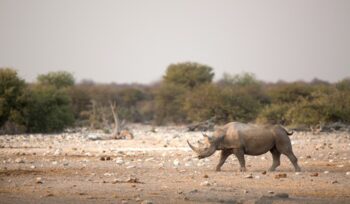
Rhinos are reintroduced back into Uganda’s wild after 43 years
The Uganda Wildlife Authority havetranslocated the first southern white rhinos to Kidepo Valley National Park — 43 years after the last rhino in the park was killed by poachers in 1983. The animals came from Ziwa Rhino Sanctuary, a breeding program established in 2005 with just six individuals that has grown Uganda’s total rhino population to 61. Four more rhinos will follow by May, with a separate group already relocated to Ajai Wildlife Reserve in January 2026. The reintroduction restores a key grazing species to one of Africa’s most remote savannah ecosystems and makes Kidepo the only national park in…