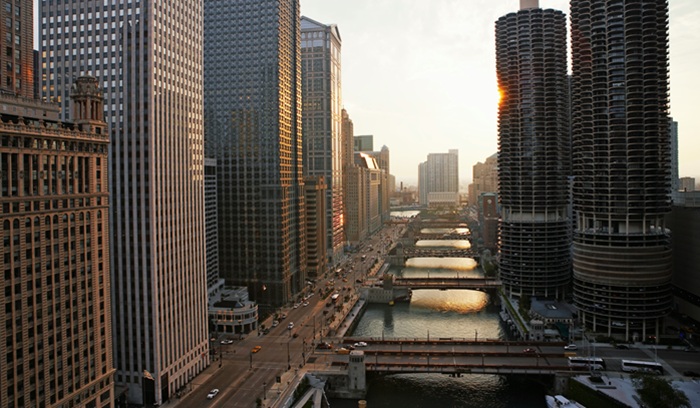
At a glance
- Chicago River cleanup: Decades of policy changes, infrastructure upgrades, and community organizing have transformed one of America’s most polluted urban waterways into a recovering ecosystem where fish, turtles, and beavers now live.
- Open-water swim: The nonprofit A Long Swim is organizing the first public swim in the Chicago River in nearly a century, planned for 2025 C.E. in downtown Chicago, doubling as a fundraiser for youth swim education in underrepresented communities.
- Wildlife return: Conservation teams from the Shedd Aquarium regularly kayak the river and have documented increasing numbers of fish species, turtles, and birds — including “Chonkosaurus,” a now-famous snapping turtle that has become a local symbol of recovery.
How the river got here
The Chicago River’s turnaround didn’t happen by accident. It took a specific combination of national policy, local organizing, and creative infrastructure work — and it took a long time. The Clean Water Act was the starting point. Passed in 1972 C.E., the federal law curbed the industrial pollution that had made the river toxic for much of the 20th century. Chicago had actually reversed the river’s flow in 1900 C.E. to push sewage away from Lake Michigan — a feat of engineering that also pushed problems downstream for generations. Local groups filled the gap between federal policy and ground-level change. Friends of the Chicago River organized volunteer cleanups, pushed for stricter standards, and worked to restore riverbanks that had been hardened with concrete. Infrastructure upgrades improved sewage treatment and cut harmful stormwater runoff. And innovative projects like the “Wild Mile” — a stretch of floating wetlands and green space along the North Branch — added new habitat directly in the river corridor. Together, these efforts shifted what was possible.Wildlife is moving back in
Conservation teams from the Shedd Aquarium now kayak the river regularly to document what’s returned. The list keeps growing: more fish species, native turtles, great blue herons, beavers. Kayakers who once avoided the water report clearer conditions and more wildlife than they expected to find in the middle of a major American city. The most famous resident is Chonkosaurus — a massive snapping turtle spotted repeatedly near the river’s edge, photographed endlessly, and celebrated on social media as a living symbol of the comeback. It’s the kind of story that’s hard to manufacture. The turtle just showed up, because the river had become worth showing up for. That shift in perception matters as much as the ecological data. When a city’s residents start treating a waterway as something worth visiting, photographing, and swimming in, the river has crossed a threshold that cleanup metrics alone can’t capture.A model other cities are watching
American Rivers, one of the country’s leading river conservation organizations, has highlighted the Chicago River as a case study in long-term urban waterway revival. The lesson it points to: degraded rivers can recover, but it requires sustained investment, civic partnerships, and patience across political cycles. Other cities are paying attention. Urban rivers across the U.S. and beyond face similar histories — industrial contamination, concrete channeling, decades of neglect. Chicago’s experience suggests a template, though every river and every city will face its own variables. The open-water swim, in that sense, is more than a local event. It’s a signal to other communities that recovery is achievable, and that the end goal isn’t just cleaner water on paper — it’s a river people actually want to be in.What remains unresolved
The Chicago River’s story is a real success, but it isn’t finished. Heavy rain events still cause stormwater to overflow into the river, temporarily spiking pollution and forcing advisories. The city’s aging combined sewer system — which handles both sewage and stormwater in the same pipes — remains a structural challenge that no amount of riverbank restoration fully fixes. Progress in urban ecology often works this way. Metrics improve, wildlife returns, public confidence grows — and hard infrastructure problems persist underneath. Chicago’s trajectory is genuinely encouraging. The remaining gaps are a reminder that environmental recovery is a process, not a destination. Still, the direction is clear. A river that once caught fire in an era of industrial carelessness — the Chicago Tribune documented the river’s notorious pollution history across decades — is now home to snapping turtles and soon, human swimmers. That arc took generations to bend. It bent. For more on how sustained civic effort reshapes the systems we live inside, see the Good News for Humankind archive on clean energy and environment, and how renewables now make up at least 49% of global power capacity — another story about long timelines and measurable results.Read more
For more from Good News for Humankind, see:
- Renewables now make up at least 49% of global power capacity
- Alzheimer’s risk cut in half by drug in landmark prevention trial
- The Good News for Humankind archive on clean energy and environment
About this article
- 🤖 This article is AI-generated, based on a framework created by Peter Schulte.
- 🌍 It aims to be inspirational but clear-eyed, accurate, and evidence-based, and grounded in care for the Earth, peace and belonging for all, and human evolution.
- 💬 Leave your notes and suggestions in the comments — I will do my best to review and implement where appropriate and possible.
- 📬 One verified piece of good news, one insight from Antihero Project, every weekday morning. Subscribe free.
More Good News
-
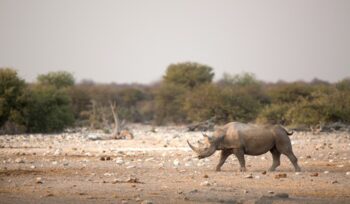
Rhinos return to Uganda’s wild after 43 years in landmark conservation milestone
For the first time in 43 years, wild rhinos are roaming Uganda again. After poaching wiped out the population in the early 1980s, conservation authorities have successfully reintroduced rhinos into Kidepo Valley National Park — the result of decades of breeding, community engagement, and anti-poaching work. The milestone is one of Africa’s most significant wildlife recovery achievements in recent memory and offers a model for rewilding efforts across the continent.
-
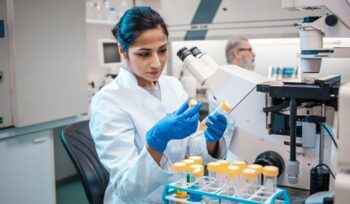
UK cancer death rates fall to lowest level ever recorded in historic milestone
Cancer death rates in the United Kingdom have fallen to their lowest level ever recorded, Cancer Research UK announced in March 2026. Decades of investment in screening programs, early detection, and new treatments are behind the milestone. Despite the progress, researchers warn that geographic and socioeconomic inequalities in cancer outcomes remain significant, and that sustained funding and equitable access to care will be essential to drive further gains.
-
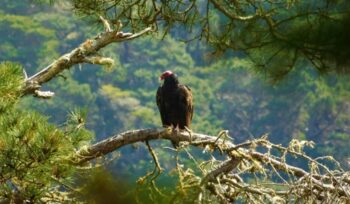
California condors nest on Yurok land in Pacific Northwest for first time in over a century
California condors are nesting in the Pacific Northwest for the first time in more than a century, confirmed on Yurok Tribe territory in Northern California. The Yurok, who regard condors as sacred relatives, launched their restoration program in 2003 and released the first birds in 2022. The nesting confirmation marks a milestone for both species recovery and Indigenous-led conservation, showing that when Native peoples lead ecological restoration on their own lands, the results can be extraordinary.