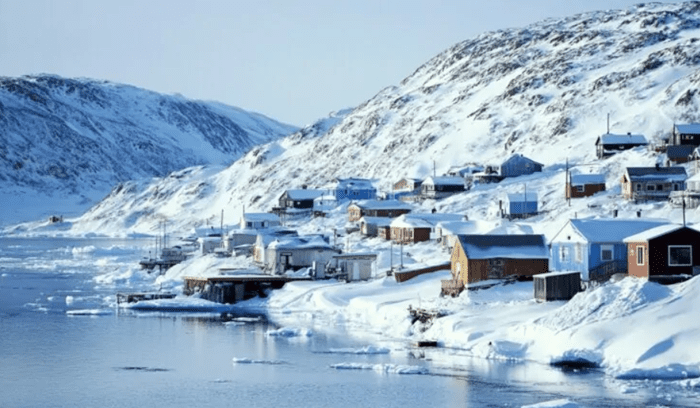
The Canadian government has committed $500 million to Inuit communities across the country, with a centerpiece announcement that will reshape higher education in the Arctic: federal funding for Inuit Nunangat University, the first university conceived, governed, and run by Inuit people. The announcement marks a turning point in Canada’s relationship with one of its most historically marginalized Indigenous peoples.
At a glance
- Inuit-led university: Inuit Nunangat University will be the first post-secondary institution in Canada designed and governed entirely by Inuit, offering programs grounded in Inuit Qaujimajatuqangit — the body of Inuit knowledge, values, and ways of understanding the world.
- Historic funding commitment: The $500 million package supports a range of priorities identified by Inuit Tapiriit Kanatami, the national organization representing roughly 70,000 Inuit across four regions of Canada’s Arctic.
- Community-driven design: Unlike previous government-designed programs for northern communities, this initiative was shaped by Inuit leadership and reflects decades of advocacy for self-determined education and social services.
Why a university changes everything
For generations, Inuit students seeking higher education have had to leave their communities, their families, and their language behind. Travel to southern cities is expensive and disorienting. Dropout rates have been high. The result has been a steady drain of talent and a persistent gap in educational attainment between Inuit and the broader Canadian population.
An Inuit-governed university in Inuit Nunangat — the Inuit homeland spanning Nunavut, Nunavik, Nunatsiavut, and the Inuit Nunangat portion of the Northwest Territories — would change that equation entirely. Students could pursue degrees without losing their connection to land, community, or the Inuktut language. Curricula could incorporate Indigenous knowledge alongside conventional academic disciplines, producing graduates equipped to lead in law, health, environmental science, and governance in ways that are relevant to Arctic realities.
Inuit Tapiriit Kanatami has long championed the university as a vehicle for self-determination. Its president has described education grounded in Inuit identity as essential — not supplementary — to the community’s future.
Part of a broader $500 million commitment
The university funding sits within a larger package that addresses housing, mental health, food security, and other urgent needs in Inuit communities. These regions consistently rank among the most underserved in Canada on nearly every social indicator — a direct legacy of colonization, forced relocations, and the residential school system that separated children from their families and cultures for much of the 20th century.
The scale of the commitment reflects pressure from Inuit leaders who have spent years pushing the federal government to move beyond symbolic gestures. Canada’s calls to action from the Truth and Reconciliation Commission and the National Inquiry into Missing and Murdered Indigenous Women and Girls have both underscored the need for structural investments, not just apologies.
Inuit Qaujimajatuqangit at the center
What makes Inuit Nunangat University distinctive is not just its location or its governance — it is its intellectual foundation. Inuit Qaujimajatuqangit, often abbreviated IQ, encompasses principles of collaboration, respect for the environment, and knowledge transmitted across generations through oral tradition and lived practice on the land and ice.
Embedding IQ into university life means the institution won’t simply replicate a southern academic model in a northern setting. It will generate new knowledge and new graduates shaped by an ancient and sophisticated way of knowing the world. Indigenous education leaders across Canada have pointed to this kind of self-determined institution as essential to closing opportunity gaps that government-managed schools have consistently failed to address.
The United Nations Declaration on the Rights of Indigenous Peoples, which Canada has endorsed, explicitly protects Indigenous peoples’ rights to establish and control their own educational institutions. Inuit Nunangat University would be a concrete expression of that right.
Still a long road ahead
Funding announcements, even large ones, do not automatically produce institutions. Inuit Nunangat University will require sustained support through planning, accreditation, faculty recruitment, and construction in one of the world’s most logistically challenging environments. Some advocates have noted that past federal commitments to northern communities have moved slowly from announcement to reality, and that accountability mechanisms will be essential to ensure this one does not stall.
The gap in educational outcomes between Inuit and non-Indigenous Canadians is deep and was not created overnight. Closing it will take more than a single university — it will take sustained political will and resources across multiple generations.
But the founding of an Inuit-led university is a milestone that generations of Inuit educators and leaders have worked toward. It signals that the question is no longer whether Inuit deserve their own institutions, but how quickly those institutions can be built.
Read more
For more on this story, see: Good News for Humankind
For more from Good News for Humankind, see:
- Indigenous land rights milestone: 160 million hectares recognized ahead of COP30
- Ghana establishes new marine protected area at Cape Three Points
- The Good News for Humankind archive on indigenous rights
About this article
- 🤖 This article is AI-generated, based on a framework created by Peter Schulte.
- 🌍 It aims to be inspirational but clear-eyed, accurate, and evidence-based, and grounded in care for the Earth, peace and belonging for all, and human evolution.
- 💬 Leave your notes and suggestions in the comments below — I will do my best to review and implement where appropriate.
- ✉️ One verified piece of good news, one insight from Antihero Project, every weekday morning. Subscribe free.