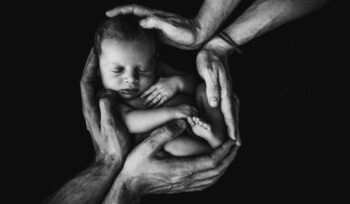
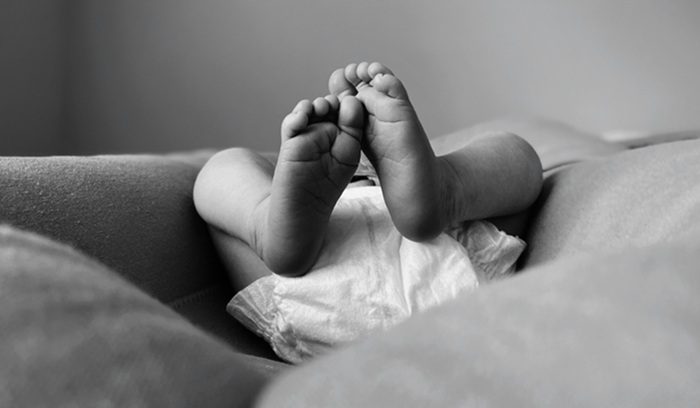
California will send every newborn home from the hospital with 400 free diapers — making it the first state in the country to offer the benefit universally, regardless of income. Governor Gavin Newsom announced the California free diaper program on a Friday in May 2026 C.E., framing it as a straightforward investment in the health and stability of new families across the state.
At a glance
- California free diaper program: Each family discharged from a participating hospital after a birth will receive 400 diapers in newborn and infant sizes — roughly five to six weeks’ worth at the rate newborns typically go through them.
- Golden State Start: The diapers are manufactured under this label by Baby2Baby, a nonprofit that built its own production system capable of making diapers at 80% below retail price, stretching the state’s budget considerably further.
- Hospital rollout: The first year covers 65 to 75 hospitals that together handle about a quarter of California births and largely serve low-income patients, with a statewide expansion planned after that.
Why diapers matter as a health issue
It sounds like a small thing. It isn’t.
Diapers cost around $100 per child per month, according to the Center on Budget and Policy Priorities. For families already stretched thin, that expense can force a difficult choice: buy diapers, or buy food. Some parents leave diapers on longer than recommended, or attempt to reuse disposable ones. Both practices raise the risk of diaper rash and urinary tract infections in infants whose immune systems are still developing.
California’s health secretary, Kim Johnson, put it plainly: the first days home with a newborn should be about connection and joy, not financial stress. Getting 400 diapers into a parent’s hands before they leave the delivery ward removes one pressure point at the most vulnerable early moment of a child’s life.
How the program works — and what it costs
California set aside $7.4 million in last year’s budget to launch the initiative. This year’s budget proposal adds another $12.5 million to carry it through the fiscal year ending June 2027 C.E.
The partnership with Baby2Baby is central to keeping costs manageable. The nonprofit, whose co-CEOs Kelly Sawyer Patricof and Norah Weinstein both spoke at the announcement, built its own manufacturing capability specifically to drive down unit costs. That infrastructure means the state gets far more diapers per dollar than it would through standard retail purchasing channels.
The program sits alongside a broader set of family-support policies Newsom has pushed in recent years, including free school meals for students and universal preschool. The diaper initiative extends that logic — that basic material stability early in life has long-run value for children and for the state.
Where California fits in the national picture
Two other states moved first on diapers, though in a more limited way. In 2024 C.E., Tennessee and Delaware both launched programs offering free diapers to families enrolled in Medicaid. Tennessee provides 100 diapers per month from pharmacies for children under two. Delaware’s pilot, made permanent in 2024 C.E., offers up to 80 diapers and a pack of wipes per week in the first 12 weeks of life.
California’s Medicaid system currently covers diapers only for enrollees aged five and older with a documented medical need — newborns aren’t included. The new program sidesteps that gap entirely by making the benefit universal at the point of hospital discharge, regardless of insurance status or income.
That universality is the meaningful distinction. It removes the administrative burden of eligibility screening and ensures no family is left out because paperwork wasn’t completed in the haze of a first week with a newborn.
What remains to be worked out
The first-year rollout covers only a fraction of the state’s hospitals, and Newsom’s office has not specified a timeline or target for full statewide coverage. Families who give birth at hospitals outside the initial group won’t benefit yet — a gap that will matter most in the period before expansion reaches more facilities.
Still, the structure is in place, the funding is allocated, and a model has been built that other states can examine. Baby2Baby’s manufacturing approach, in particular, offers a template for keeping costs low enough that a universal diaper benefit becomes fiscally plausible even in states with tighter budgets than California’s.
Read more
For more on this story, see: The Guardian
For more from Good News for Humankind, see:
- Renewables now make up at least 49% of global power capacity
- Marie-Louise Eta becomes the first female head coach in men’s top-flight European football
- The Good News for Humankind archive on United States
About this article
- 🤖 This article is AI-generated, based on a framework created by Peter Schulte.
- 🌍 It aims to be inspirational but clear-eyed, accurate, and evidence-based, and grounded in care for the Earth, peace and belonging for all, and human evolution.
- 💬 Leave your notes and suggestions in the comments below — I will do my best to review and implement where appropriate.
- ✉️ One verified piece of good news, one insight from Antihero Project, every weekday morning. Subscribe free.