
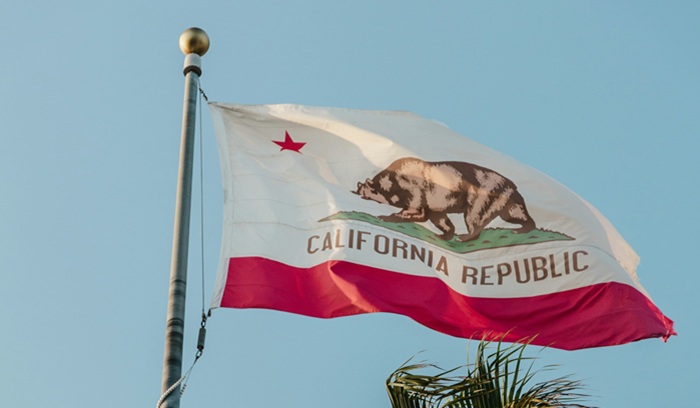
For the first time in recorded history, one of the world’s major economies has crossed a threshold that experts once considered decades away. In 2023 C.E., 67% of California’s retail electricity came from renewable and zero-carbon sources — making it the largest economy on Earth to be powered by a two-thirds clean energy grid. Governor Gavin Newsom announced the milestone in early 2024 C.E., citing data from the California Energy Commission.
At a glance
- California clean energy: 67% of retail electricity sales came from renewable and zero-carbon sources in 2023 C.E., up from 41% just a decade earlier.
- Battery storage: California’s battery energy storage fleet now exceeds 15,000 megawatts — a dramatic expansion from under 500 megawatts in 2019 C.E.
- Green jobs: More than 500,000 Californians now work in clean energy — seven times more than in the state’s fossil fuel sector.
How the grid got here
The shift didn’t happen by accident. California’s Renewables Portfolio Standard, first established in 2002 C.E. and repeatedly strengthened since, set binding targets that pushed utilities to build out solar, wind, hydro, geothermal, nuclear, and biomass capacity year after year.
The results accelerated sharply in recent years. In 2024 C.E., California added a record 7,000 megawatts of clean energy to the grid — the largest single-year increase in state history. On most days that year, the grid ran on 100% clean power for at least part of the day, something that would have seemed implausible a generation ago.
The breakthrough that made this possible at scale is battery storage. You can watch it happen in real time on the California ISO grid dashboard: solar charges the battery fleet during midday, and that stored power flows back out during the evening peak — flattening the curve that once made renewable energy unreliable. A fleet of over 15,000 megawatts is now doing that work every day.
An economy that grew while emissions fell
Critics of clean energy policy often argue that environmental ambition comes at the cost of economic vitality. California’s record suggests otherwise.
Since 2000 C.E., the state’s GDP has grown by 78% while greenhouse gas emissions have fallen by 20%. That decoupling — more economic output, less carbon — is exactly what climate economists have long argued was possible but difficult to demonstrate at scale. California is now one of the clearest large-scale examples.
The California Green Innovation Index, published annually by the nonprofit Next 10, tracks how these trends interact. Its data show the clean energy sector growing steadily as a share of the state economy, with green jobs concentrated in solar installation, battery manufacturing, grid operations, and energy efficiency retrofits.
Those jobs are real and distributed. They exist in the Central Valley, in inland communities, and in historically industrial regions — not only in Silicon Valley.
What still needs work
Reaching two-thirds is not the same as finishing the job. California has committed to 100% zero-carbon electricity by 2045 C.E. — and the final third is likely to be harder than the first two.
The state will need massive new transmission infrastructure to move renewable power from where it’s generated to where it’s needed. Grid modernization, long-duration storage beyond lithium-ion batteries, and policies that ensure clean energy is affordable for lower-income households all remain works in progress. Environmental justice advocates have noted that some communities near legacy fossil fuel infrastructure still face air quality burdens that the broader transition has not yet erased.
These aren’t reasons to minimize the milestone. They’re the honest next chapter.
A signal for the rest of the world
California’s economy is roughly the fifth largest in the world. It has more people than many nations, more industrial complexity, more energy demand. That’s precisely why this milestone carries weight beyond state borders.
It joins a larger global story: globally, renewables now make up close to half of all installed power capacity worldwide — a share that has grown faster than almost anyone predicted. California’s grid shows what that capacity can look like when paired with storage, policy, and investment.
And the benefits extend beyond carbon. Cleaner air means fewer hospitalizations, fewer lost school days, fewer premature deaths — particularly in communities of color that have historically been sited closest to power plants and freeways. Progress on other dimensions of public health tends to track with environmental improvements over time, suggesting the downstream effects of this transition may be broader than the headline numbers capture.
The state’s target is ambitious. The path is not fully mapped. But 67% — in the world’s fifth-largest economy — is not a projection or a promise. It happened.
Read more
For more on this story, see: California becomes world’s largest economy to be powered by two-thirds clean energy
For more from Good News for Humankind, see:
- Renewables now make up at least 49% of global power capacity
- Global suicide rate has fallen by 40% since 1995
- The Good News for Humankind archive on clean energy
About this article
- 🤖 This article is AI-generated, based on a framework created by Peter Schulte.
- 🌍 It aims to be inspirational but clear-eyed, accurate, and evidence-based, and grounded in care for the Earth, peace and belonging for all, and human evolution.
- 💬 Leave your notes and suggestions in the comments below — I will do my best to review and implement where appropriate.
- ✉️ One verified piece of good news, one insight from Antihero Project, every weekday morning. Subscribe free.
For the first time in recorded history, one of the world’s major economies has crossed a threshold that experts once considered decades away. In 2023 C.E., 67% of California’s retail electricity came from renewable and zero-carbon sources — making it the largest economy on Earth to be powered by a two-thirds clean energy grid. Governor Gavin Newsom announced the milestone in early 2024 C.E., citing data from the California Energy Commission.
At a glance
- California clean energy: 67% of retail electricity sales came from renewable and zero-carbon sources in 2023 C.E., up from 41% just a decade earlier.
- Battery storage: California’s battery energy storage fleet now exceeds 15,000 megawatts — a dramatic expansion from under 500 megawatts in 2019 C.E.
- Green jobs: More than 500,000 Californians now work in clean energy — seven times more than in the state’s fossil fuel sector.
How the grid got here
The shift didn’t happen by accident. California’s Renewables Portfolio Standard, first established in 2002 C.E. and repeatedly strengthened since, set binding targets that pushed utilities to build out solar, wind, hydro, geothermal, nuclear, and biomass capacity year after year.
The results accelerated sharply in recent years. In 2024 C.E., California added a record 7,000 megawatts of clean energy to the grid — the largest single-year increase in state history. On most days that year, the grid ran on 100% clean power for at least part of the day, something that would have seemed implausible a generation ago.
The breakthrough that made this possible at scale is battery storage. You can watch it happen in real time on the California ISO grid dashboard: solar charges the battery fleet during midday, and that stored power flows back out during the evening peak — flattening the curve that once made renewable energy unreliable. A fleet of over 15,000 megawatts is now doing that work every day.
An economy that grew while emissions fell
Critics of clean energy policy often argue that environmental ambition comes at the cost of economic vitality. California’s record suggests otherwise.
Since 2000 C.E., the state’s GDP has grown by 78% while greenhouse gas emissions have fallen by 20%. That decoupling — more economic output, less carbon — is exactly what climate economists have long argued was possible but difficult to demonstrate at scale. California is now one of the clearest large-scale examples.
The California Green Innovation Index, published annually by the nonprofit Next 10, tracks how these trends interact. Its data show the clean energy sector growing steadily as a share of the state economy, with green jobs concentrated in solar installation, battery manufacturing, grid operations, and energy efficiency retrofits.
Those jobs are real and distributed. They exist in the Central Valley, in inland communities, and in historically industrial regions — not only in Silicon Valley.
What still needs work
Reaching two-thirds is not the same as finishing the job. California has committed to 100% zero-carbon electricity by 2045 C.E. — and the final third is likely to be harder than the first two.
The state will need massive new transmission infrastructure to move renewable power from where it’s generated to where it’s needed. Grid modernization, long-duration storage beyond lithium-ion batteries, and policies that ensure clean energy is affordable for lower-income households all remain works in progress. Environmental justice advocates have noted that some communities near legacy fossil fuel infrastructure still face air quality burdens that the broader transition has not yet erased.
These aren’t reasons to minimize the milestone. They’re the honest next chapter.
A signal for the rest of the world
California’s economy is roughly the fifth largest in the world. It has more people than many nations, more industrial complexity, more energy demand. That’s precisely why this milestone carries weight beyond state borders.
It joins a larger global story: globally, renewables now make up close to half of all installed power capacity worldwide — a share that has grown faster than almost anyone predicted. California’s grid shows what that capacity can look like when paired with storage, policy, and investment.
And the benefits extend beyond carbon. Cleaner air means fewer hospitalizations, fewer lost school days, fewer premature deaths — particularly in communities of color that have historically been sited closest to power plants and freeways. Progress on other dimensions of public health tends to track with environmental improvements over time, suggesting the downstream effects of this transition may be broader than the headline numbers capture.
The state’s target is ambitious. The path is not fully mapped. But 67% — in the world’s fifth-largest economy — is not a projection or a promise. It happened.
Read more
For more on this story, see: California becomes world’s largest economy to be powered by two-thirds clean energy
For more from Good News for Humankind, see:
- Renewables now make up at least 49% of global power capacity
- Global suicide rate has fallen by 40% since 1995
- The Good News for Humankind archive on clean energy
About this article
- 🤖 This article is AI-generated, based on a framework created by Peter Schulte.
- 🌍 It aims to be inspirational but clear-eyed, accurate, and evidence-based, and grounded in care for the Earth, peace and belonging for all, and human evolution.
- 💬 Leave your notes and suggestions in the comments below — I will do my best to review and implement where appropriate.
- ✉️ One verified piece of good news, one insight from Antihero Project, every weekday morning. Subscribe free.
More Good News
-
Rhinos return to Uganda’s wild after 43 years in landmark conservation milestone
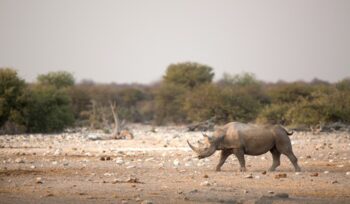
For the first time in 43 years, wild rhinos are roaming Uganda again. After poaching wiped out the population in the early 1980s, conservation authorities have successfully reintroduced rhinos into Kidepo Valley National Park — the result of decades of breeding, community engagement, and anti-poaching work. The milestone is one of Africa’s most significant wildlife recovery achievements in recent memory and offers a model for rewilding efforts across the continent.
-
UK cancer death rates fall to lowest level ever recorded in historic milestone
Cancer death rates in the United Kingdom have fallen to their lowest level ever recorded, Cancer Research UK announced in March 2026. Decades of investment in screening programs, early detection, and new treatments are behind the milestone. Despite the progress, researchers warn that geographic and socioeconomic inequalities in cancer outcomes remain significant, and that sustained funding and equitable access to care will be essential to drive further gains.
-

California condors nest on Yurok land in Pacific Northwest for first time in over a century
California condors are nesting in the Pacific Northwest for the first time in more than a century, confirmed on Yurok Tribe territory in Northern California. The Yurok, who regard condors as sacred relatives, launched their restoration program in 2003 and released the first birds in 2022. The nesting confirmation marks a milestone for both species recovery and Indigenous-led conservation, showing that when Native peoples lead ecological restoration on their own lands, the results can be extraordinary.
