
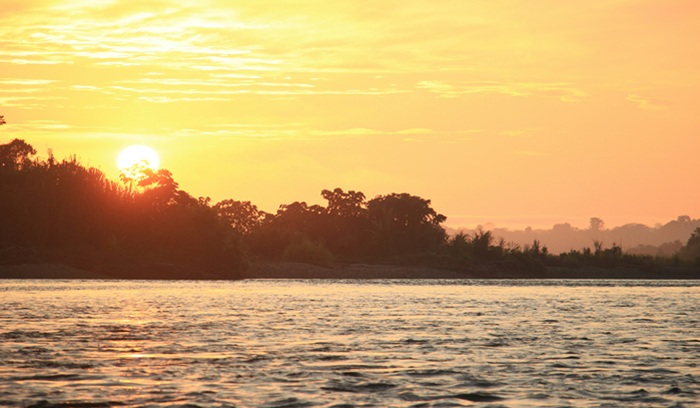
Brazil has achieved a major victory for environmental law and the Amazon ecosystem. Government enforcement teams successfully dismantled and destroyed hundreds of illegal gold mining dredges and associated infrastructure. This large-scale operation represents a serious, sustained crackdown on illegal mining activities. It provides crucial protection for the forest, vital waterways, and Indigenous communities.
This decisive action reinforces Brazil’s commitment to curbing illegal deforestation and environmental crime. It sends a strong signal that the government is prioritizing the long-term health of the Amazon.
A Triumph for Environmental Law Enforcement
The core good news of this operation is the success of coordinated law enforcement. Federal police, environmental agencies, and the armed forces worked together to target sophisticated mining operations. These illegal miners often operate in remote, protected territories, including Indigenous lands. Dismantling hundreds of dredges—which are large, motorized rafts used to vacuum riverbeds for gold—removes the primary tool of destruction.
This persistent enforcement action is essential for restoring the rule of law in the Amazon. It demonstrates that the government is effectively using its resources to protect national heritage. This successful operation disrupts the criminal networks that finance the illegal gold trade.
Protecting Waterways from Toxic Mercury
The crackdown is a massive win for public health and aquatic life. Illegal gold mining relies on mercury to separate gold from sediment. This practice releases the highly toxic neurotoxin directly into rivers. Mercury contaminates the entire food chain, posing severe health risks to downstream communities that rely on fish for protein.
By destroying the dredges, the government is removing the source of this mercury contamination. This action immediately begins the slow, necessary healing process for the Amazon’s waterways. Protecting these rivers is vital for the health and food security of Indigenous peoples who live along them. The long-term health benefits of reducing mercury exposure are substantial. You can find more information on the health impacts of mercury from the World Health Organization (WHO).
Restoring Indigenous Lands and Biodiversity
The enforcement operation focused heavily on removing invaders from legally protected Indigenous Territories. This action upholds tribal sovereignty and protects the land rights of Indigenous communities. The removal of illegal miners allows these communities to resume traditional stewardship of their ancestral lands. Their traditional knowledge is crucial for the long-term ecological recovery of the forest.
Illegal mining destroys riparian habitat and causes massive soil erosion. Removing the illegal structures allows the forest and riverbanks to begin regeneration. This restoration of habitat is key to supporting the immense biodiversity of the Amazon. Brazil’s commitment to protecting these territories is a powerful affirmation of human rights and environmental justice. The Articulação dos Povos Indígenas do Brasil (APIB) advocates for the protection of these rights.
A Foundation for Sustainable Development
This large-scale crackdown is a critical component of Brazil’s national commitment to climate action. Reducing deforestation and restoring degraded lands are essential for meeting the nation’s climate goals. This positive momentum enhances Brazil’s standing as a leader in environmental policy. It proves that decisive action can reverse environmentally destructive trends.
The success attracts international support and investment into sustainable economic alternatives. This includes ecotourism, sustainable forestry, and agroforestry projects that benefit local populations. The Brazilian Ministry of Environment and Climate Change provides policy updates on these enforcement actions. The UN Food and Agriculture Organization (FAO) supports sustainable livelihood alternatives to illegal mining.
Resources
- World Health Organization (WHO) on Mercury and Health
- Articulação dos Povos Indígenas do Brasil (APIB) Official Website
- Brazilian Ministry of Environment and Climate Change on Amazon Enforcement
- UN Food and Agriculture Organization (FAO) on Sustainable Livelihoods
More Good News
-

Alzheimer’s risk cut in half by drug in landmark prevention trial
A clinical trial from Washington University in St. Louis and published in The Lancet Neurology found that long-term high-dose treatment with the antibody drug gantenerumab reduced Alzheimer’s risk by roughly 50% in people with dominantly inherited Alzheimer’s disease — a rare genetic form caused by mutations that make the disease near-certain. The results are statistically uncertain and apply to less than 1% of all Alzheimer’s cases, but they provide the first evidence that removing amyloid plaques before symptoms appear can meaningfully change the course of the disease.
-

Marie-Louise Eta becomes the first female head coach in men’s top-flight European football
Marie-Louise Eta, 34, was appointed head coach of Bundesliga side Union Berlin on April 12, 2026, becoming the first woman to hold the top coaching position at a men’s club in any of Europe’s Big Five leagues — the Premier League, La Liga, Serie A, Ligue 1, and Bundesliga. A Champions League winner as a player with Turbine Potsdam in 2010, Eta had already broken barriers as the first female assistant coach in the Bundesliga in 2023. She takes charge for the final five matches of the season as Union Berlin fights to secure top-flight survival, after which she was…
-
Renewables now make up at least 49% of global power capacity
Renewable energy reached 49.4% of total global installed power capacity by end of 2025, up from 46.3% in 2024, according to the International Renewable Energy Agency’s Renewable Capacity Statistics 2026. The world added 692 gigawatts of new renewable capacity last year — the largest annual addition ever recorded — with solar alone contributing 511 gigawatts. Africa recorded its highest renewable expansion on record, and the Middle East its fastest-ever growth. IRENA Director-General Francesco La Camera noted that countries investing in renewables are absorbing the current Middle East energy crisis with measurably less economic damage than fossil-fuel-dependent economies.
-

Global suicide rate has fallen by 40% since 1995
A landmark study published in The Lancet Public Health by researchers at the Institute for Health Metrics and Evaluation at the University of Washington found that the global age-standardized suicide mortality rate fell nearly 40% between 1990 and 2021 — from 15 deaths per 100,000 people to nine. The decline was driven by measurable interventions including restrictions on toxic pesticides, expanded mental health services, and national prevention strategies. Female suicide rates fell more than 50% globally over the period. Roughly 740,000 people still die by suicide each year, and rates have risen in parts of Latin America and North America,…
-
Rhinos are reintroduced back into Uganda’s wild after 43 years
The Uganda Wildlife Authority havetranslocated the first southern white rhinos to Kidepo Valley National Park — 43 years after the last rhino in the park was killed by poachers in 1983. The animals came from Ziwa Rhino Sanctuary, a breeding program established in 2005 with just six individuals that has grown Uganda’s total rhino population to 61. Four more rhinos will follow by May, with a separate group already relocated to Ajai Wildlife Reserve in January 2026. The reintroduction restores a key grazing species to one of Africa’s most remote savannah ecosystems and makes Kidepo the only national park in…