

For the first time in medical history, surgeons have successfully transplanted a human bladder into a living patient — a milestone that took four years of development and opens a new chapter in organ transplantation. The patient, 41-year-old Oscar Larrainzar, a father of four from California, had previously lost his bladder and both kidneys to cancer treatment and end-stage kidney disease. He has since been taken off dialysis.
At a glance
- Bladder transplant: Surgeons simultaneously transplanted one donor kidney and a donor bladder into Larrainzar in early May 2025 C.E., the first procedure of its kind ever completed successfully.
- Surgical team: The operation was performed by Dr. Inderbir Gill of the University of Southern California Institute of Urology and Dr. Nima Nassiri of the UCLA Institute of Urology, who collaborated for over four years to develop the technique.
- Clinical trial: The team plans to expand the work through a formal clinical trial at UCLA Health, aiming to refine the procedure and identify which patients are most likely to benefit.
Why this matters for patients
When a bladder is removed, surgeons typically repurpose a section of intestine to reroute urine — a solution that works but often brings a cascade of complications, including chronic infections, kidney stress, and digestive disruption. For many patients, these secondary problems become nearly as debilitating as the original condition.
The search for a better option has driven researchers around the world for years. A transplanted bladder, sourced from a human donor, offers the possibility of more natural function with fewer downstream effects. That possibility is now no longer theoretical.
“Transplantation is a life-saving and life-enhancing treatment option for many conditions affecting major organs, and now the bladder can be added to the list,” said Dr. Gill, who serves as executive director of the USC Institute of Urology.
Four years in the making
The procedure did not happen quickly. Gill and Nassiri spent more than four years developing and refining the surgical technique before attempting it on a human patient. That kind of deliberate, iterative preparation is a hallmark of responsible surgical innovation — and it shows in the outcome.
“This first attempt at bladder transplantation has been over four years in the making,” Nassiri said. “For the appropriately selected patient, it is exciting to be able to offer a new potential option.”
The surgery itself involved transplanting both a donor kidney and a donor bladder together — a complexity that required solving problems no surgical team had solved before. The fact that Larrainzar’s body accepted both organs, and that he is no longer dependent on dialysis, is being described by the team as a historic moment in medicine.
What remains unknown
Doctors say they are “satisfied” with Larrainzar’s recovery so far, but significant questions remain. How his new bladder will perform over years, not just weeks, is still unclear. How long he will need immune-suppression medication — which carries its own risks — is also unknown.
This is the honest edge of medical progress: a genuine first that carries real hope and real uncertainty in equal measure. The surgical team is treating this milestone not as an endpoint but as a starting point, which is why the planned clinical trial at UCLA Health matters. Structured data from multiple patients will help define which people are most likely to benefit and how to minimize complications.
The procedure joins a broader acceleration in surgical medicine. Cancer outcomes are also shifting: U.K. cancer death rates have fallen to their lowest level on record, reflecting decades of research investment paying off at scale. Progress in transplantation science and cancer treatment increasingly reinforce each other, as more patients survive cancer long enough to need — and benefit from — reconstructive and restorative procedures like this one.
A new category of transplant
Organ transplantation has saved millions of lives since the first successful kidney transplant in 1954 C.E. Heart, liver, lung, and pancreas transplants followed over the following decades, each representing a moment when medicine crossed a threshold that once seemed impossible. The bladder is now on that list.
For patients living with nonfunctioning or surgically removed bladders, that addition is more than symbolic. It represents a potential path away from permanent workarounds and toward restored function — something that, before May 2025 C.E., had never been offered to a single human being.
The USC Institute of Urology and UCLA Institute of Urology have not announced a timeline for the next procedures, but the clinical trial framework suggests additional surgeries are being planned carefully and deliberately — the same approach that made this first one work. Advances like this one, alongside the broader expansion of clean energy and human wellbeing captured in stories like renewables now making up nearly half of global power capacity, reflect what sustained investment in human ingenuity can produce.
Oscar Larrainzar is home recovering. His four children have their father back — off dialysis, and with a bladder no surgeon had ever successfully transplanted before his.
Read more
For more on this story, see: The Guardian
For more from Good News for Humankind, see:
- U.K. cancer death rates are down to their lowest level on record
- Renewables now make up at least 49% of global power capacity
- The Good News for Humankind archive on health
About this article
- 🤖 This article is AI-generated, based on a framework created by Peter Schulte.
- 🌍 It aims to be inspirational but clear-eyed, accurate, and evidence-based, and grounded in care for the Earth, peace and belonging for all, and human evolution.
- 💬 Leave your notes and suggestions in the comments below — I will do my best to review and implement where appropriate.
- ✉️ One verified piece of good news, one insight from Antihero Project, every weekday morning. Subscribe free.
More Good News
-
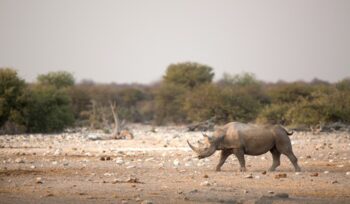
Rhinos return to Uganda’s wild after 43 years in landmark conservation milestone
For the first time in 43 years, wild rhinos are roaming Uganda again. After poaching wiped out the population in the early 1980s, conservation authorities have successfully reintroduced rhinos into Kidepo Valley National Park — the result of decades of breeding, community engagement, and anti-poaching work. The milestone is one of Africa’s most significant wildlife recovery achievements in recent memory and offers a model for rewilding efforts across the continent.
-
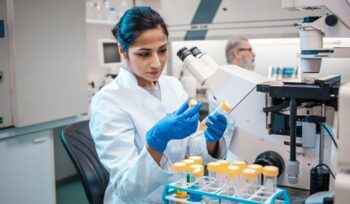
UK cancer death rates fall to lowest level ever recorded in historic milestone
Cancer death rates in the United Kingdom have fallen to their lowest level ever recorded, Cancer Research UK announced in March 2026. Decades of investment in screening programs, early detection, and new treatments are behind the milestone. Despite the progress, researchers warn that geographic and socioeconomic inequalities in cancer outcomes remain significant, and that sustained funding and equitable access to care will be essential to drive further gains.
-

California condors nest on Yurok land in Pacific Northwest for first time in over a century
California condors are nesting in the Pacific Northwest for the first time in more than a century, confirmed on Yurok Tribe territory in Northern California. The Yurok, who regard condors as sacred relatives, launched their restoration program in 2003 and released the first birds in 2022. The nesting confirmation marks a milestone for both species recovery and Indigenous-led conservation, showing that when Native peoples lead ecological restoration on their own lands, the results can be extraordinary.
