
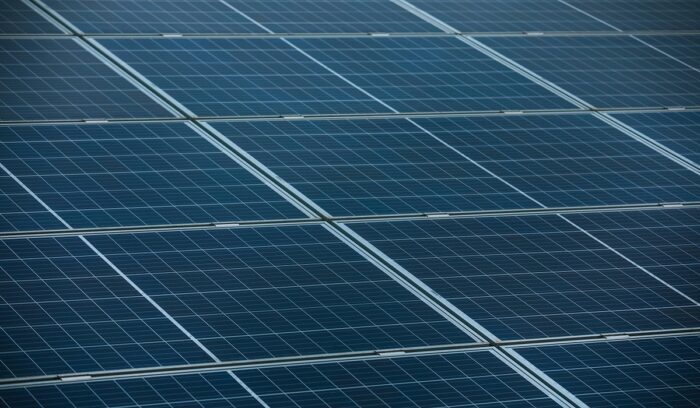
On a spring morning in 1954 C.E., three researchers at Bell Telephone Laboratories in Murray Hill, New Jersey, held up a strip of silicon in sunlight and watched it produce electricity. It wasn’t the first time anyone had harnessed the sun’s energy — but it was the first time someone had done it well enough to matter. Daryl Chapin, Calvin Fuller, and Gerald Pearson had just demonstrated a silicon photovoltaic cell efficient enough to power real devices, crossing a threshold that earlier experiments had never reached.
Key findings
- Silicon solar cell: The Bell Labs device converted about 6% of incoming sunlight into electricity — roughly 25 times more efficient than earlier selenium-based photovoltaic cells, which had hovered near 0.5%.
- Photovoltaic efficiency: Fuller’s expertise in semiconductor doping allowed the team to create the critical p-n junction inside silicon that made the efficiency leap possible, a technique still fundamental to solar manufacturing today.
- Solar power history: The New York Times called the invention “the beginning of a new era, leading eventually to the realization of one of mankind’s most cherished dreams — the harnessing of the almost limitless energy of the sun.”
How three researchers cracked the problem
The photovoltaic effect had been known since 1839 C.E., when French physicist Edmond Becquerel first observed that light could generate electrical current in certain materials. For over a century, the effect remained a curiosity. Selenium cells produced so little electricity that practical applications were essentially impossible.
What changed in 1954 C.E. was a combination of the right material, the right expertise, and the right institutional environment. Chapin was a physicist studying humidity’s effect on magnets. Pearson was a semiconductor specialist who accidentally noticed that a silicon device he was testing produced current when exposed to light. He brought the observation to Fuller, who understood how to precisely control silicon’s electrical properties by introducing trace amounts of other elements — a process called doping.
Together, the three built a working cell and demonstrated it publicly on April 25, 1954 C.E. The device powered a small radio transmitter. The moment was quiet, almost understated — but the implications were enormous.
What made silicon the right material
Silicon isn’t the most obvious choice for harvesting sunlight. It’s the same element that makes up most of the Earth’s crust — cheap, abundant, and not especially exotic. But its semiconductor properties make it exceptionally well-suited to photovoltaics. When photons from sunlight strike a silicon atom, they can knock electrons loose. With the right internal structure — the p-n junction Fuller helped engineer — those electrons flow in one direction, creating usable electric current.
The 6% efficiency the team achieved in 1954 C.E. was striking enough that Bell Labs quickly began exploring practical applications. Within three years, silicon solar cells were powering the first U.S. satellite, Vanguard 1, launched in 1958 C.E. Space, where replacing batteries or fuel was impossible, became the first major market for photovoltaic technology — and it proved the concept beyond any doubt.
The global path from laboratory to rooftop
Solar cell development after 1954 C.E. was neither fast nor smooth. For decades, silicon photovoltaics were expensive enough that their use was confined largely to satellites, remote telecommunications equipment, and niche scientific instruments. The cost per watt remained prohibitively high for most of the 20th century.
Progress came from multiple directions simultaneously. Researchers in the U.S., Japan, Germany, and later China each contributed advances in manufacturing efficiency, cell design, and materials science. Japan’s commitment to solar research in the 1970s C.E. following the oil crisis, and Germany’s feed-in tariff policies in the early 2000s C.E., both played significant roles in accelerating commercial adoption. China’s massive scaling of manufacturing in the 2010s C.E. drove the cost of solar panels down by more than 90% within a decade.
By 2023 C.E., solar power had become the cheapest source of electricity in history, according to the International Energy Agency. The IEA’s World Energy Outlook reported that solar capacity additions were outpacing every other energy source. None of that trajectory was guaranteed in 1954 C.E. — but it traces back directly to what happened in that New Jersey laboratory.
Lasting impact
The silicon solar cell gave humanity access to a power source that is inexhaustible on any timescale relevant to civilization. Sunlight reaches every part of the Earth’s surface, which means the technology is inherently decentralized. Communities far from electrical grids — across sub-Saharan Africa, South and Southeast Asia, and the Pacific — have used solar power to access electricity for the first time, without waiting for infrastructure that may never arrive.
The International Renewable Energy Agency has documented how falling solar costs are reshaping energy access in the Global South, where millions of households now run on small-scale solar systems. The technology Chapin, Fuller, and Pearson developed has become one of the most widely deployed energy tools in human history.
Modern silicon solar cells routinely achieve efficiencies above 22%, with experimental designs exceeding 29%. The U.S. National Renewable Energy Laboratory maintains a running chart of solar cell efficiency records — a document that reads like a steady rebuttal to anyone who ever suggested the technology had hit its ceiling.
Blindspots and limits
The 1954 C.E. breakthrough happened inside one of the best-funded private research institutions in the world, and its early applications — primarily satellites and military communications — served the interests of wealthy governments before they served ordinary people. Manufacturing solar panels also requires energy, water, and materials including silver and polysilicon, whose extraction carries environmental costs that vary significantly by location and supply chain.
Cost parity with fossil fuels took decades longer than early optimists predicted, and the transition to solar-powered economies remains deeply uneven — with richer nations installing panels at scale while poorer ones often lack the financing infrastructure to follow suit at comparable speed, despite having some of the world’s highest solar resources.
Read more
For more on this story, see: EnergySage — The history and invention of solar panel technology
For more from Good News for Humankind, see:
- Turkish scientists develop “bumpy” solar panel concept that can harvest up to 66% more energy
- Wind and solar power more than a third of Brazil’s electricity for the first time
- The Good News for Humankind archive on renewable energy
- Clean energy milestones: the breakthroughs powering a fossil-free future
About this article
- 🤖 This article is AI-generated, based on a framework created by Peter Schulte.
- 🌍 It aims to be inspirational but clear-eyed, accurate, and evidence-based, and grounded in care for the Earth, peace and belonging for all, and human evolution.
- 💬 Leave your notes and suggestions in the comments below — I will do my best to review and implement where appropriate.
- ✉️ One verified piece of good news, one insight from Antihero Project, every weekday morning. Subscribe free.


