
Virginia has passed legislation granting nurse-midwives the authority to practice independently — without a physician supervision requirement — marking a significant shift in how the state delivers maternal care. The move is expected to expand access to qualified providers, particularly in rural communities where obstetric deserts have left many women without nearby options during pregnancy and birth.
At a glance
- Autonomous midwifery practice: The new Virginia law removes the requirement that certified nurse-midwives operate under physician oversight, allowing them to provide the full scope of services their training qualifies them for.
- Rural access: In many rural Virginia counties, a nurse-midwife may be the only available maternity care provider — meaning this law could directly determine whether women receive any prenatal or birth care at all.
- National trend: Virginia joins a growing number of states updating their laws to reflect the full practice authority standards endorsed by the American Association of Nurse Practitioners and other major health organizations.
Years of advocacy behind one law
The passage of this legislation was not sudden. Midwifery advocates, professional organizations, and individual practitioners spent years making the case that certified nurse-midwives — who complete graduate-level clinical training — are equipped to manage low-risk pregnancies and births independently. Their persistence reflects a wider movement to align state licensing law with what the evidence says these practitioners can safely do.
The United States faces a well-documented maternal health crisis, with outcomes that lag behind peer nations and disparities that fall sharply along racial lines. Black women in the U.S. are significantly more likely to experience pregnancy-related complications and death than white women — a gap rooted in systemic inequities in access to care. Expanding the pool of qualified, independent providers is one concrete response to that crisis.
A more efficient division of care
Supporters of the law argue it creates a smarter, more collaborative healthcare model rather than a competitive one. When nurse-midwives can independently handle low-risk pregnancies, physicians are freed to concentrate on high-risk cases that genuinely require their specialized expertise. The result is a more functional system — each provider working at the top of their training.
This matters most in communities where the alternative to a nurse-midwife is no care at all. Maternity care deserts — counties with no hospitals offering obstetric care and no obstetric providers — affect millions of Americans. Virginia’s rural counties are not immune. For those communities, autonomous midwifery practice is not an abstract policy question. It is a question of whether a pregnant woman has anyone to call.
What the research says about outcomes
The evidence on midwifery care is encouraging. Studies consistently show that midwife-led care for low-risk pregnancies is associated with lower rates of medical intervention, high patient satisfaction, and comparable or better outcomes for mothers and newborns. The World Health Organization has identified midwifery as a critical component of global strategies to improve maternal and newborn health.
Virginia’s law is expected to improve birth outcomes, reduce some of the cost burden on the healthcare system, and give women more genuine choice about who provides their care. Those are meaningful gains — though the law’s real-world impact will depend heavily on implementation, on whether the supply of practicing nurse-midwives grows to meet demand, and on whether insurance reimbursement keeps pace with expanded scope of practice. Equity in who benefits will require ongoing attention.
For more on how health systems are improving outcomes and other milestones in medical progress, Good News for Humankind continues to track the evidence.
Read more
For more on this story, see: Virginia.gov
For more from Good News for Humankind, see:
- U.K. cancer death rates fall to their lowest level on record
- Alzheimer’s risk cut in half by drug in landmark prevention trial
- The Good News for Humankind archive on health
About this article
- 🤖 This article is AI-generated, based on a framework created by Peter Schulte.
- 🌍 It aims to be inspirational but clear-eyed, accurate, and evidence-based, and grounded in care for the Earth, peace and belonging for all, and human evolution.
- 💬 Leave your notes and suggestions in the comments below — I will do my best to review and implement where appropriate.
- ✉️ One verified piece of good news, one insight from Antihero Project, every weekday morning. Subscribe free.
More Good News
-

Canada commits .8 billion to protect 30% of its lands and waters by 2030
Canada has announced a .8 billion investment to protect 30% of its lands and waters by 2030, one of the largest conservation commitments in the country’s history. Prime Minister Mark Carney unveiled the funding to meet international biodiversity targets, with Indigenous communities playing a central role in stewarding conserved lands. The announcement positions Canada as a global leader in nature protection at a moment when biodiversity loss is accelerating worldwide.
-
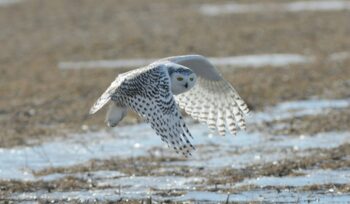
132 nations add 40 migratory species to UN protection list in historic summit
One hundred thirty-two nations extended international legal protection to 40 new migratory species at the UN Convention on the Conservation of Migratory Species COP15 summit in Campo Grande, Brazil, on March 29, 2026. The newly protected animals include the snowy owl, giant otter, striped hyena, and great hammerhead shark. A new UN report released at the summit found that 49% of populations already covered by the treaty are in decline, raising the stakes for implementation between now and the next conference in 2029.
-
For the first time, human-caused extinction rate falls below 0.001%
In this speculative 2090 C.E. vision, scientists confirm the human-caused extinction rate has fallen below 0.001% per year — a 100-fold reduction from its worst peak, driven by rewilding, Indigenous stewardship, and the global clean energy transition.