Australia is directing $125 million toward renewable energy projects across Pacific island nations, aiming to cut their dependence on imported fossil fuels while strengthening the energy security of some of the world’s most climate-vulnerable communities. The funding was announced at the COP29 climate summit in Baku, Azerbaijan.
At a glance
- REnew Pacific program: A $75 million investment will deliver off-grid and community-scale renewable energy to remote and rural parts of the Pacific, supporting access to clean water, food security, education, healthcare, and reliable communications.
- Energy transition partnership: The remaining $50 million flows through the Australia-Pacific Partnership for Energy Transition, funding grid studies, feasibility work, energy modelling, and university collaborations to build long-term capacity.
- Pacific climate goals: Pacific island nations have long called for meaningful financial support to meet their climate targets — countries that contribute the least to global emissions but face some of the most severe consequences, including rising seas and intensifying storms.
Why Pacific energy access matters
For many Pacific island communities, unreliable or nonexistent electricity is not an abstract policy problem. It shapes daily life in tangible ways — whether a health clinic can refrigerate vaccines, whether a school can run after dark, whether a family can pump clean water.
Diesel generators have long filled the gap, but they are expensive, polluting, and dependent on supply chains that stretch thousands of kilometers. A single fuel price spike can destabilize household budgets and public services alike.
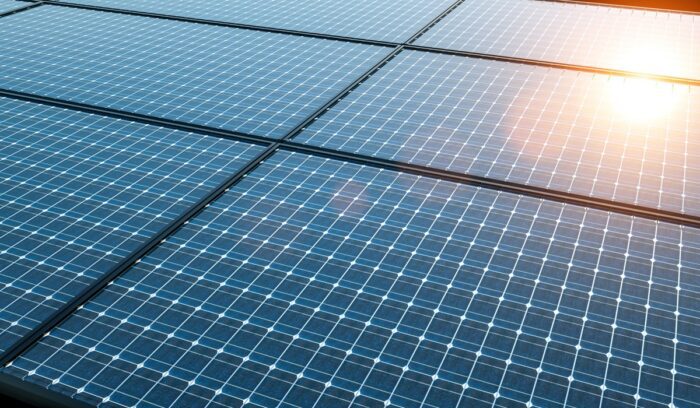
Off-grid and community-scale solar, paired with battery storage, offers a direct alternative. It is increasingly cost-competitive, locally maintainable, and far less exposed to global commodity markets. The REnew Pacific component of this investment targets precisely these smaller-scale systems — the kind that can power a village clinic or a fishing cooperative’s cold storage, not just a capital city grid.
Australia’s return to climate diplomacy in the Pacific
Australia’s relationship with Pacific nations on climate has been complicated. For years, Pacific leaders publicly criticized Canberra for its continued support of fossil fuel exports and for what many described as inadequate domestic climate ambition. The election of the Albanese government in 2022 C.E. shifted the tone considerably, with accelerated domestic emissions targets and a renewed emphasis on Pacific partnerships.
Foreign Minister Penny Wong framed the investment as part of a broader effort to restore Australia’s credibility in the region. “Supporting Pacific nations’ transition to renewable energy and away from imported fossil fuels will enhance economic resilience, improve energy security and help them meet their climate goals,” she said.
The announcement arrived alongside several other climate finance commitments from Canberra during the COP29 week, including a $126 million climate program targeting vulnerable regions and a finance facility designed to unlock up to $17 billion in climate-related lending through a development bank.
The bigger picture at COP29
The Baku summit was shaped by a central tension: developing nations need enormous sums to adapt to climate change and build clean energy systems, yet much of the finance on offer comes in the form of loans — adding to debt burdens many countries are already struggling to manage. Pacific nations were among those calling for grants and genuine support rather than financing that simply shifts the problem forward.
Climate finance experts released a report at COP29 estimating that developing countries will need $1.3 trillion annually by the 2030s to meet their climate needs. Against that backdrop, $125 million is a meaningful but modest contribution — and Australia’s own 2035 national climate target remains unannounced, with Prime Minister Anthony Albanese declining at the summit to commit to releasing it before the next federal election.
Still, the Pacific-focused investment represents a concrete step toward what Pacific leaders have consistently asked for: practical support that improves lives now while building resilience for the future.
There is also a geopolitical dimension worth noting. China has significantly expanded its Pacific engagement in recent years, and Australia’s climate investments are widely understood as part of a broader effort to strengthen regional ties and demonstrate that Canberra is a reliable partner.
What comes next
Australia and the Pacific are also exploring a joint bid to host COP31, with the Australian state of South Australia and Turkey both in the running. A government spokesperson confirmed the joint effort is under way, though details remain in process.
Implementation of the $125 million will unfold over time, and the real test will be whether the off-grid projects funded through REnew Pacific reach the remote communities they are designed to serve — and whether the capacity-building work under the energy transition partnership translates into lasting infrastructure rather than consultant reports. Coordinating delivery across dozens of small island nations with different governance structures and geographic challenges is genuinely difficult work.
For the Pacific communities waiting on cleaner, more reliable power, the measure of success will be simple: lights on, water running, clinics stocked.
Read more
For more on this story, see: AAP News
For more from Good News for Humankind, see:
- Indigenous land rights and the road to COP30
- Renewables now make up at least 49% of global power capacity
- The Good News for Humankind archive on Australia
About this article
- 🤖 This article is AI-generated, based on a framework created by Peter Schulte.
- 🌍 It aims to be inspirational but clear-eyed, accurate, and evidence-based, and grounded in care for the Earth, peace and belonging for all, and human evolution.
- 💬 Leave your notes and suggestions in the comments below — I will do my best to review and implement where appropriate.
- ✉️ One verified piece of good news, one insight from Antihero Project, every weekday morning. Subscribe free.