At a glance
- Australia emissions target: The government has committed to reducing greenhouse gases 62–70% below 2005 levels by 2035, exceeding its current obligations under the Paris Agreement.
- Net Zero Plan: A comprehensive roadmap covers six economic sectors — energy, transport, agriculture, industry, buildings, and land — with five decarbonization priorities guiding each one.
- Economic modeling: Treasury analysis released alongside the plan projects that the transition will support growth, hold electricity prices lower than an unplanned shift away from fossil fuels would, and generate new employment across trade, technical, and professional fields.
What the plan actually does
The 2035 target is not a standalone number. It sits inside a Net Zero Plan that maps a path across six key economic sectors, including energy, transport, and agriculture. Five core priorities run through every sector: expanding clean electricity, improving efficiency and electrification, scaling up clean fuel use, accelerating emerging technologies, and increasing carbon removals. That structure matters. It tells industries, investors, and workers what to expect — and when. The Australian Government Department of Climate Change, Energy, the Environment and Water has published detailed sectoral roadmaps alongside the main plan. That level of specificity is relatively rare in national climate commitments and gives the target more credibility than a headline number alone. Still, credibility isn’t the same as certainty. The Climate Council has noted that the lower end of the range — 62% — may not be sufficient to keep Australia aligned with a 1.5°C pathway, and that strong policy follow-through will determine whether the ambition on paper becomes real-world action.The jobs and economic case
Governments often frame climate action as a cost. Australia’s plan does the opposite. Treasury modeling projects that shifting to a net zero economy will support economic growth rather than undermine it. The transition is expected to keep electricity prices lower than a disorderly, unplanned exit from fossil fuels would produce. Researchers at the University of Sydney have pointed to evidence that clean energy investment generates more jobs per dollar than fossil fuel industries — with particular demand in trade, technical, and professional roles. That doesn’t mean the transition will be painless for every community. Regions that depend heavily on coal and gas exports face real adjustment challenges, and the plan’s success will partly depend on how well governments and industries manage that shift. This connects to a broader global trend. Renewables now make up at least 49% of global power capacity, and countries that move early on clean energy are increasingly positioned to benefit from that shift rather than resist it.Energy security and climate resilience
Australia’s reliance on fossil fuels has left it exposed to volatile global commodity markets. A homegrown renewable grid changes that equation. Generating energy domestically from sun and wind reduces dependence on international supply chains and price swings. The plan also addresses adaptation — recognizing that some climate impacts are already locked in. Australia has experienced some of the most visible climate-driven disasters of the past decade: the 2019–2020 Black Summer bushfires, repeated flooding across Queensland and New South Wales, and intensifying heatwaves. The Net Zero Plan frames both mitigation and adaptation as urgent and inseparable. Every fraction of a degree of warming prevented now reduces the severity of what communities will face later.Australia’s role on the global stage
The timing of the announcement carries weight. Australia is seeking to co-host the COP31 climate conference with Pacific Island nations — a region facing existential risk from rising seas. Arriving at that conference with a strengthened Nationally Determined Contribution sends a signal to other major economies that ambition is still rising, not plateauing. The Paris Agreement requires countries to regularly increase their climate commitments. Australia’s new target does that — and does it by a substantial margin. Whether other large emitters respond in kind remains to be seen. But in a moment when global climate diplomacy has faced significant headwinds, a commitment of this scale from a major fossil fuel exporter carries real symbolic and practical weight. The path ahead is long. The plan is detailed. And the scrutiny will be intense — which is exactly how it should be.Read more
For more from Good News for Humankind, see:
- Renewables now make up at least 49% of global power capacity
- Alzheimer’s risk cut in half by drug in landmark prevention trial
- The Good News for Humankind archive on clean energy
- Source: Australia vows to cut emissions by at least 62% by 2035
About this article
- 🤖 This article is AI-generated, based on a framework created by Peter Schulte.
- 🌍 It aims to be inspirational but clear-eyed, accurate, and evidence-based, and grounded in care for the Earth, peace and belonging for all, and human evolution.
- 💬 Leave your notes and suggestions in the comments — I will do my best to review and implement where appropriate and possible.
- 📬 One verified piece of good news, one insight from Antihero Project, every weekday morning. Subscribe free.
More Good News
-
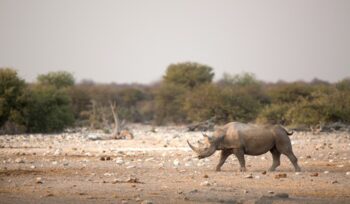
Rhinos return to Uganda’s wild after 43 years in landmark conservation milestone
For the first time in 43 years, wild rhinos are roaming Uganda again. After poaching wiped out the population in the early 1980s, conservation authorities have successfully reintroduced rhinos into Kidepo Valley National Park — the result of decades of breeding, community engagement, and anti-poaching work. The milestone is one of Africa’s most significant wildlife recovery achievements in recent memory and offers a model for rewilding efforts across the continent.
-

UK cancer death rates fall to lowest level ever recorded in historic milestone
Cancer death rates in the United Kingdom have fallen to their lowest level ever recorded, Cancer Research UK announced in March 2026. Decades of investment in screening programs, early detection, and new treatments are behind the milestone. Despite the progress, researchers warn that geographic and socioeconomic inequalities in cancer outcomes remain significant, and that sustained funding and equitable access to care will be essential to drive further gains.
-

California condors nest on Yurok land in Pacific Northwest for first time in over a century
California condors are nesting in the Pacific Northwest for the first time in more than a century, confirmed on Yurok Tribe territory in Northern California. The Yurok, who regard condors as sacred relatives, launched their restoration program in 2003 and released the first birds in 2022. The nesting confirmation marks a milestone for both species recovery and Indigenous-led conservation, showing that when Native peoples lead ecological restoration on their own lands, the results can be extraordinary.