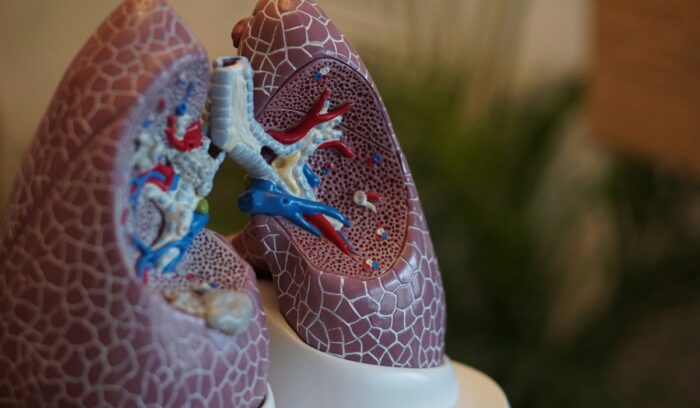
For the first time in half a century, doctors have a new tool for treating serious asthma and COPD attacks — and early results suggest it works far better than anything available today. A clinical trial found that a single injection of the monoclonal antibody benralizumab outperforms standard steroid tablets, cutting the need for further treatment by 30% and improving quality of life for patients over 90 days.
At a glance
- Benralizumab injection: A single high-dose injection at the point of an asthma or COPD attack proved more effective than the five-day steroid tablet regimen that has been the only standard treatment for decades.
- Eosinophilic exacerbations: These inflammation-driven attacks — caused by elevated white blood cells in the lungs — account for roughly 50% of asthma attacks and 30% of COPD episodes, making a large share of patients eligible for this approach.
- Treatment failure rate: After 90 days, patients who received the injection had four times fewer treatment failures compared with those on steroids alone, with fewer GP and hospital visits required.
Why this matters for millions of people
Asthma and COPD together cause an estimated 3.8 million deaths worldwide each year. COPD alone is the third leading cause of death globally. Despite that toll, the core emergency treatment — a short course of oral corticosteroids — has remained essentially unchanged since the 1970s.
Steroids work, but they carry serious risks. Long-term or repeated use raises the likelihood of diabetes, osteoporosis, and other complications. For patients who experience frequent flare-ups, the cumulative harm adds up quickly. A treatment that reduces the need for steroids altogether is not just a clinical improvement — it’s a meaningful quality-of-life shift.
The trial, led by Professor Mona Bafadhel of King’s College London and carried out at Oxford University Hospitals NHS Foundation Trust and Guy’s and St Thomas’ NHS Foundation Trust, enrolled 158 people who arrived at emergency departments during acute attacks. Patients received a rapid blood test to confirm the attack was eosinophilic, then were randomly assigned to receive the injection alone, steroids alone, or both.
The benralizumab groups showed measurably better respiratory symptoms — including coughing, wheezing, breathlessness, and sputum — at the 28-day mark, whether or not they also received steroids. By 90 days, the gap had widened significantly.
How benralizumab works
Benralizumab is already approved as a low-dose maintenance therapy for severe asthma. It works by targeting eosinophils, a type of white blood cell that drives inflammation in the lungs. What the trial demonstrated is that a higher single dose, delivered at the moment of a flare-up, can rapidly suppress that inflammation more effectively than steroids.
The results were published in The Lancet Respiratory Medicine in November 2024 C.E. The drug was supplied by AstraZeneca, which also funded the research — though the company had no role in trial design, analysis, or interpretation.
First author Dr. Sanjay Ramakrishnan, a clinical senior lecturer at the University of Western Australia, said the findings represent “massive promise” for patients whose condition has been managed with tools developed in the previous century. Researchers also noted that benralizumab could potentially be administered at home or in a GP’s office, reducing emergency department visits — a significant advantage for patients and health systems alike.
What still needs to happen
The trial was relatively small at 158 participants, and larger studies will be needed before benralizumab becomes a standard emergency treatment. Regulatory approval for this specific use — a high-dose injection during an acute attack — would also be required in each country before it could reach patients at scale.
The reaction from the lung health community has been cautiously enthusiastic but pointed. Dr. Samantha Walker, director of research and innovation at Asthma + Lung UK, welcomed the findings while noting that the 50-year gap in treatment progress reflects chronic underfunding of lung health research — a structural problem this single trial cannot fix on its own.
Still, for the millions of people who manage serious asthma or COPD and dread the next attack, the prospect of a safer, more effective emergency treatment is genuinely significant. The science is moving. The 50-year wait may finally be ending.
Read more
For more on this story, see: The Guardian
For more from Good News for Humankind, see:
- Alzheimer’s risk cut in half by drug in landmark prevention trial
- U.K. cancer death rates down to their lowest level on record
- The Good News for Humankind archive on global health
About this article
- 🤖 This article is AI-generated, based on a framework created by Peter Schulte.
- 🌍 It aims to be inspirational but clear-eyed, accurate, and evidence-based, and grounded in care for the Earth, peace and belonging for all, and human evolution.
- 💬 Leave your notes and suggestions in the comments below — I will do my best to review and implement where appropriate.
- ✉️ One verified piece of good news, one insight from Antihero Project, every weekday morning. Subscribe free.
More Good News
-

For the first time, human-caused extinction rate falls below 0.001%
For the first time in recorded history, the rate at which human activity drives species to extinction has dropped below 0.001% per year. Scientists call it the most consequential ecological recovery in human history — built on protected areas, Indigenous stewardship, and decades of coordinated global action.
-

Washington state enacts a millionaires tax to fund schools and families
Washington state millionaires tax marks one of the boldest state-level tax equity moves in recent U.S. history, imposing a surcharge on capital gains and investment income earned by the state’s wealthiest residents. The revenue will fund K-12 public schools, early childhood programs, and relief for small businesses long burdened by the state’s business and occupation tax structure. The law is especially significant because Washington has historically had one of the most regressive tax systems in the country, with lower-income residents paying a far higher share of their income in taxes than the wealthy. By targeting investment income, the state begins…
-

Detroit RxKids sends .4 million in free cash to new mothers in its first month
Detroit RxKids cash program distributed .4 million in its first month of citywide operation, reaching hundreds of pregnant women and new mothers across one of America’s most economically strained cities. The program, designed by Flint water crisis whistleblower Dr. Mona Hanna-Attisha, provides 00 monthly during pregnancy and 00 monthly through a child’s first year with no spending restrictions. Detroit has among the highest infant mortality rates of any major U.S. city, making the intervention urgent and overdue. Research consistently shows unconditional cash transfers improve maternal health, reduce food insecurity, and support early brain development without reducing workforce participation.