
Curated by Peter Schulte · Published 2026-08-25 · Last updated 2026-08-25
Freshwater is being reclaimed at a scale that would have seemed impossible a generation ago.
From the Klamath River in California — where salmon are swimming freely past demolished dams for the first time in a century — to China’s Yangtze, where a 10-year fishing ban is pulling endangered species back from the edge, bold action is reversing decades of destruction.
Rivers are gaining legal rights. Record numbers of barriers are being torn out across Europe. Indigenous nations are embedding nature’s rights into their constitutions. Communities long denied clean water access are winning enforceable protections.
The pattern is global and accelerating. What unites these breakthroughs is not luck but strategy: sustained political will, Indigenous leadership, binding legal frameworks, and communities refusing to accept pollution as inevitable.
Key takeaways
- The Klamath River dam removal is the largest in U.S. history, reopening 400+ miles of salmon habitat after a century of blockage
- Europe removed a record 603 river barriers in 2025, freeing 2,324 miles of river for migrating fish
- China demolished 300+ dams on a Yangtze tributary and enacted a 10-year fishing ban — endangered sturgeon are returning
- Ecuador’s Machángara River and Virginia’s Rappahannock River have both won enforceable legal rights, a growing global trend
- New Mexico, Illinois, and Hawaii are proving that state-level policy can deliver lasting clean water access protections
Recovery at a glance
| Subject | Recovery | Where |
|---|---|---|
| Klamath River (California) | 400+ miles of salmon habitat reopened after largest dam removal in U.S. history | United States |
| Yangtze River fish populations | Rising since 2021 commercial fishing ban; critically endangered species recovering | China |
| Chishui River (Yangtze tributary) | 300+ dams demolished, 342 hydropower stations shut down | China |
| Europe's rivers | Record 603 barriers removed in 2025, freeing 2,324 miles of waterway | Europe |
| Vjosa River | First wild river national park in Europe; 45 planned dams blocked across 118 miles | Albania |
| Machángara River | First river to win a pollution-rights court ruling in Ecuador | Ecuador |
| Rappahannock River | First U.S. tribal constitution to enshrine nine specific river rights | Virginia, USA |
| New Mexico rivers | 250 miles placed under strongest available pollution shield, 10-0 vote | New Mexico, USA |
| Jordan River | Israel and Jordan signed joint COP27 agreement to reduce pollution and restore flow | Middle East |
| Sacramento-San Joaquin Delta (Lookout Slough) | 3,400 acres restored in California's largest-ever tidal habitat project | California, USA |
| Lake Muskegon | Removed from EPA Areas of Concern list after 40 years; all 9 impairments resolved | Michigan, USA |
| Chicago River | First open-water swim in nearly 100 years planned, marking urban water quality recovery | Illinois, USA |
| Doce River waves (Linhares) | First ocean waves granted legal personhood anywhere in the world | Brazil |
| Illinois (nurdle pollution) | First Great Lakes state to hold plastic pellet makers legally liable for water pollution | Illinois, USA |
| Amazon rivers | Hundreds of illegal gold mining dredges destroyed in largest enforcement operation in region | Brazil |
| Lake Muskegon | One of the only Great Lakes sites to fully exit EPA's Areas of Concern in four decades | Michigan, USA |
On this page
- Why this matters
- What’s driving the comeback
- Dam removal and river restoration: undoing a century of blockage
- Clean water access and pollution protection: enforcing the right to clean rivers
- Rights of nature: rivers and waves winning legal personhood
- Wild rivers and tidal habitats: protecting what remains free-flowing
- Enforcement and illegal extraction: protecting rivers from criminal exploitation
- Climate funding and policy: paying for freshwater resilience
- Energy transitions: reducing the industrial footprint on freshwater
- The outlook
- Frequently asked questions
Why this matters
The world’s freshwater systems are in a documented crisis — but the stories collected here point to something the headlines rarely acknowledge: recovery is possible, and it is happening now.
The scale of the turnaround is striking. Salmon are returning to rivers blocked for a century. A Chinese river lost 300 dams in a single restoration push. Europe is removing obsolete barriers faster than ever recorded. These are not marginal improvements — they are structural reversals.
What makes this moment significant is that freshwater progress is now being locked in legally, not just ecologically. Rivers are winning rights in courts. Indigenous nations are encoding nature’s protections into constitutions. Pollution shields are being set at the highest available standard. The gains are becoming harder to undo.
By the numbers
- 400+ miles of California’s Klamath River reopened to salmon after dam removal
- 603 river barriers removed across Europe in 2025 alone, freeing 2,324 miles of waterway
- 300+ dams demolished on a single Yangtze tributary (Chishui River) in China
- 250 miles of New Mexico rivers placed under the strongest available pollution protections
- 3,400 acres of California tidal habitat restored at Lookout Slough
- Lake Muskegon resolved all 9 identified environmental impairments over 40 years of cleanup
- Linhares, Brazil, became the first government anywhere to grant legal personhood to ocean waves
What’s driving the comeback
The single most powerful driver across these stories is political commitment backed by legal force. China’s 10-year Yangtze fishing ban, New Mexico’s unanimous 10-0 pollution commission vote, and Ecuador’s court ruling on the Machángara River all show that when governments make binding decisions — not just voluntary targets — ecosystems respond.
Indigenous leadership is a second consistent thread. The Klamath River dam removal would not have happened without five years of tribal-led seed collection and habitat preparation by the Karuk, Yurok, and allied nations. The Rappahannock Tribe’s constitutional enshrinement of river rights creates a legal standard other nations can follow.
The rights-of-nature movement is quietly becoming a practical tool, not just a philosophical idea. Ecuador, Brazil, and the Rappahannock Tribe have each translated the concept into enforceable obligations — cleanup plans, legal standing, constitutional guarantees. That shift from aspiration to accountability is what separates symbolic gestures from durable progress.
Dam removal and river restoration: undoing a century of blockage
The defining freshwater story of this era is the deliberate dismantling of infrastructure that should never have been permanent. What links these projects is not just engineering but a recognition that rivers, given the chance, recover faster than expected — and that Indigenous nations and local communities are the most effective long-term stewards of that recovery.

Klamath River dam removal approved: 300 miles of salmon habitat unlocked
Federal regulators unanimously approved a $500 million plan to remove four dams on California’s Klamath River, reopening more than 300 miles of salmon habitat in what became the largest river restoration project ever attempted at the time. The approval capped decades of advocacy led by the Yurok, Karuk, and other tribal nations who had fought for the river’s revival.

Klamath dam removal begins: tribes spent years preparing the river to receive salmon
Work began on the largest dam removal effort in U.S. history along the California-Oregon border, with the project ultimately set to reopen more than 400 miles of river to salmon. The real story behind the engineering is the five years tribal members spent hand-collecting seeds and preparing habitat so the river could heal once the concrete came down.

Salmon swim freely in the Klamath River for the first time in over a century
Klamath River salmon are swimming past the sites of two demolished dams for the first time in over a century, arriving just in time for fall Chinook spawning season. The breakthrough completes the largest dam removal project in U.S. history — a victory the Karuk and Yurok Tribes spent generations working toward.

China tears out 300 dams on a Yangtze tributary to rescue endangered sturgeon
China demolished more than 300 dams and shut down 342 small hydropower stations along the Chishui River, a Yangtze tributary, in one of the largest dam removal efforts in history. The target is the critically endangered Yangtze sturgeon, a species that has survived for millions of years but was pushed to the brink by river fragmentation.

Europe removes a record 603 river barriers in 2025, freeing 2,324 miles of waterway
Europe tore out 603 river barriers in 2025 — the most ever recorded in a single year — freeing 2,324 miles of waterway for migratory fish and other freshwater species. Most of the structures removed were small and long obsolete, relics of an industrial past that still blocked fish passage despite serving no current purpose.
Clean water access and pollution protection: enforcing the right to clean rivers
Across three continents, governments and communities are moving beyond voluntary commitments to create enforceable clean water access standards — through court orders, unanimous commission votes, and constitutional guarantees. The common pattern is that pollution protections only stick when they carry legal teeth.

Ecuador’s Machángara River wins landmark pollution rights ruling
Ecuador’s Machángara River won a historic court case establishing that decades of pollution violated the river’s constitutional rights, obligating the city of Quito to draft a concrete cleanup plan. The ruling applies to a river running through a capital of 2.6 million people whose oxygen levels had been severely depleted.

New Mexico places 250 miles of rivers under the strongest available pollution shield
A unanimous 10-0 state commission vote placed 250 miles of New Mexico rivers and streams — including the Rio Grande — under the strongest pollution protections available, meaning water quality must stay the same or improve with no exceptions. The decision represents one of the most comprehensive state-level clean water access actions in recent U.S. history.

Shanghai recycles 98% of industrial waste, keeping factory pollution out of waterways
Shanghai’s six-year industrial waste sorting overhaul has pushed recycling to 98%, meaning almost nothing from the city’s factories ends up in a landfill — or washed into waterways. Companies have built entire businesses around treating scrap as raw material, fundamentally changing how industrial waste is managed in one of the world’s largest cities.

Illinois becomes first Great Lakes state to hold plastic pellet polluters accountable
Illinois passed the first law in any Great Lakes state to hold plastic pellet manufacturers legally liable for nurdle spills — the lentil-sized beads that escape during production and shipping and poison waterways. The legislation targets pollution at its industrial source rather than attempting cleanup after the fact.

Chicago River to host first open-water swim in nearly 100 years
Swimmers are set to enter the Chicago River in downtown Chicago for the first time in nearly a century, marking a milestone in one of America’s most remarkable urban water quality recoveries. The event celebrates decades of cleanup work that transformed a river once synonymous with industrial pollution.

Lake Muskegon exits EPA pollution watchlist after 40 years of Great Lakes cleanup
Lake Muskegon in Michigan has been officially removed from the U.S. EPA’s Areas of Concern list after resolving all nine of its identified environmental impairments — one of the few Great Lakes sites to fully achieve this designation in four decades. State and federal officials confirmed the milestone, reflecting the long timescales that serious water cleanup requires.
Rights of nature: rivers and waves winning legal personhood
A quiet legal revolution is giving rivers, waves, and ecosystems the standing to fight back against pollution and development — not as property to be protected by humans, but as rights-bearing entities in their own right. These cases are building a body of law that is already influencing enforceable cleanup obligations.

Rappahannock Tribe enshrines nine river rights in its constitution — a U.S. first
The Rappahannock Tribe of Virginia became the first tribal nation in the U.S. to enshrine the rights of nature directly into its constitution, granting the Rappahannock River nine specific rights including the right to flourish, regenerate, and flow with clean, unpolluted water. The constitutional move creates a durable legal standard that survives changes in leadership or politics.

Brazil’s Linhares grants legal personhood to ocean waves — a global first
The Brazilian city of Linhares became the first government anywhere to extend legal personhood to part of the ocean, recognizing the waves at the mouth of the Doce River as rights-bearing entities. The waves had been smothered by pollution, making the legal recognition an act of both ecological and symbolic restoration.

Israel and Jordan sign joint agreement to save the Jordan River
Israel and Jordan signed a declaration at COP27 committing to reduce pollution, upgrade wastewater treatment, and promote sustainable farming along the Jordan River’s banks. The agreement — brokered in part by EcoPeace Middle East — represents a rare moment of cross-border environmental cooperation in one of the world’s most politically complex regions.
Wild rivers and tidal habitats: protecting what remains free-flowing
Alongside the work of restoring damaged rivers, a parallel effort is racing to protect rivers that have not yet been fragmented — recognizing that preventing damage is faster and cheaper than reversing it. These stories share a sense of urgency: the window to protect intact ecosystems is closing.

Europe’s first wild river national park protects Albania’s Vjosa — and blocks 45 dams
Albania’s Vjosa River became Europe’s first wild river national park, locking 118 miles of one of the continent’s last large free-flowing rivers into permanent protection. The designation immediately blocked 45 proposed hydropower dams that would have fragmented habitat for otters, Egyptian vultures, and other species dependent on an uninterrupted river.
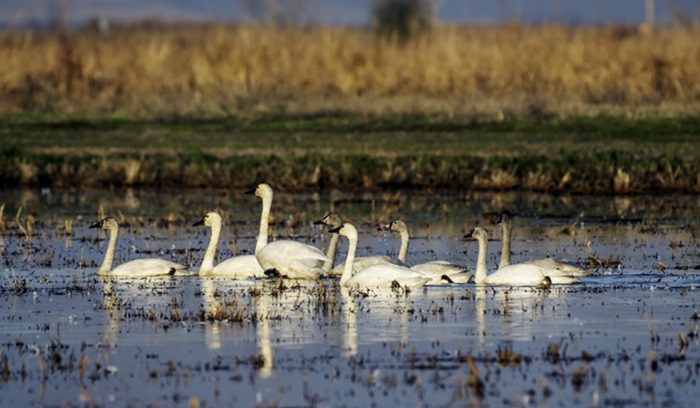
California’s largest tidal habitat restoration floods 3,400 acres in Sacramento-San Joaquin Delta
Crews cut a 600-foot gap through a century-old levee at Lookout Slough, allowing tidal waters to rush across 3,400 acres of California’s Sacramento-San Joaquin Delta in the first of nine planned breaches. Officials called it the largest tidal habitat restoration in state history, reconnecting wetlands that had been severed from tidal flows for generations.

China’s Yangtze fishing ban brings endangered species back from the edge
Since China’s 10-year commercial fishing moratorium took effect on the Yangtze in 2021, fish populations across the river basin have been rising and critically endangered species are recovering. The ban represents one of the boldest freshwater conservation interventions in history, demonstrating that even heavily degraded rivers can rebound when human pressure is removed.
Enforcement and illegal extraction: protecting rivers from criminal exploitation
Legal protections and restoration projects only hold if they are enforced — and in some of the world’s most vulnerable river systems, that means active operations against illegal extraction. These stories show what enforcement looks like on the ground, and how high the stakes are when it fails.

Brazil destroys hundreds of illegal gold mining dredges in the Amazon
Brazilian federal agents, military forces, and IBAMA officers destroyed hundreds of illegal gold mining dredges across remote Amazon rivers and protected Indigenous territories in one of the region’s largest environmental enforcement operations. The operation targeted criminal networks whose dredges had been poisoning waterways with mercury and sediment across Indigenous lands.
Climate funding and policy: paying for freshwater resilience
Protecting and restoring water systems requires sustained funding — and a new generation of policy tools is emerging to secure it. From visitor levies to green energy projects, these initiatives show how governments are building the financial architecture that clean water access depends on.

Hawaii becomes first U.S. state to charge visitors a climate resilience fee
Hawaii signed Senate Bill 1396 into law in May 2025, making it the first U.S. state to require visitors to pay a dedicated climate resilience fee — roughly $5 per trip — directed toward environmental protection. The levy creates a reliable funding stream tied directly to the tourism activity that puts pressure on the state’s coastal and freshwater ecosystems.

Africa’s TREES program restores 41,000 hectares of land that protects watersheds
The TREES program has quietly restored more than 41,000 hectares across nine African countries since 2015 — an area roughly seven times the size of Manhattan — by partnering with farmers over four-year cycles rather than running one-off planting days. Healthy forests are foundational to watershed protection, making reforestation a direct investment in freshwater security.

Texas’s Hydrogen City green energy hub aims to reduce fossil fuel pressure on water systems
Green Hydrogen International broke ground on Hydrogen City in South Texas, a facility designed to produce more than 2.5 billion kilograms of clean hydrogen per year using underground salt caverns for storage. The project represents the kind of large-scale clean energy infrastructure that reduces the fossil fuel extraction pressuring freshwater systems in energy-producing regions.
Energy transitions: reducing the industrial footprint on freshwater
Industrial energy production is one of the largest sources of freshwater stress — through thermal pollution, mining runoff, and the infrastructure that fragments rivers. These stories track the clean energy transition as a freshwater story, not just a climate one.

China’s supercritical CO2 power generator offers a cleaner alternative to water-cooled plants
China’s Harbin Electric Corporation became the first in the world to operate a commercial-scale supercritical CO2 turbine connected to a live national grid. The technology replaces conventional steam cycles that require enormous volumes of water for cooling, pointing toward power generation with a dramatically smaller freshwater footprint.

U.S. solar installations nearly triple in one year, reducing water-intensive energy production
The United States added roughly 14.6 gigawatts of new solar capacity in a single year, nearly tripling the previous year and outpacing every other energy source. Solar requires a fraction of the water that coal and gas plants consume, making the solar boom a significant if underappreciated freshwater protection story.

EU commits to climate neutrality by 2050, setting a course away from water-intensive fossil fuels
The European Union unveiled a strategy to become the first major economy to achieve full climate neutrality by 2050, built on scaling solar and wind to 80% of electricity generation. Replacing fossil fuel infrastructure at this scale would substantially reduce the thermal and chemical pollution that has degraded European freshwater systems for generations.

Australia installs 3.5 million rooftop solar panels in 2017, reducing industrial water demand
Australian homeowners, schools, and small businesses installed roughly 9,500 solar panels every single day in 2017, adding 1,057 megawatts of small-scale capacity — enough to rival a medium-sized coal plant. The scale of distributed solar adoption reduces reliance on water-cooled thermal generation at the household and community level.
The outlook
The trajectory is genuinely encouraging, but the wins remain fragile. Lake Muskegon took 40 years to exit the EPA’s pollution watchlist. The Klamath River dams were approved for removal decades after advocacy began. Durability requires the kind of sustained political will that is rarely guaranteed across election cycles.
The cases here also reveal a geography of momentum. The U.S., Europe, and parts of Latin America are moving fast; other regions face enforcement gaps that illegal mining operations in the Amazon illustrate starkly — progress requires not just laws but agents in the field destroying dredges.
If the drivers identified here — legal rights, Indigenous stewardship, binding pollution standards — continue to spread, the next decade could see freshwater recovery become the norm rather than the exception. The evidence from the Klamath to the Yangtze shows the biology works when humans step back and let it.
Frequently asked questions
What is the largest dam removal project in U.S. history?
The Klamath River dam removal on the California-Oregon border is the largest dam removal project in U.S. history. Removing the final dams reopened more than 400 miles of river to salmon — fish that had been blocked for over a century. The project was led in large part by the Karuk and Yurok Tribes, who spent years preparing the river to receive returning fish.
How are rivers getting legal rights, and does it actually work?
Several jurisdictions have now granted rivers legal personhood or specific enforceable rights. Ecuador’s court ruled that the Machángara River’s constitutional rights were violated by pollution, requiring Quito to produce a cleanup plan. The Rappahannock Tribe wrote nine specific river rights — including the right to flow clean and unpolluted — directly into its tribal constitution. Brazil’s Linhares went further, granting legal personhood to ocean waves. In each case, the legal status creates enforceable obligations rather than voluntary targets.
How many river barriers were removed in Europe in 2025?
Europe removed a record 603 river barriers in 2025, freeing 2,324 miles of waterway. Most of the structures removed were small and long obsolete — under 6.5 feet tall — but still blocking fish migration. The removals are part of a continent-wide movement to restore connectivity to rivers fragmented by industrial-era infrastructure.
What is China doing to restore the Yangtze River?
China has taken two major actions on the Yangtze. First, it enacted a 10-year commercial fishing ban starting in 2021; fish populations across the basin are rising and critically endangered species are recovering. Second, it demolished more than 300 dams and shut down 342 small hydropower stations on the Chishui River, a Yangtze tributary, specifically to help the critically endangered Yangtze sturgeon recover.
How is illegal gold mining being stopped to protect Amazon rivers?
Brazilian federal agents, military forces, and IBAMA environmental officers conducted one of the region’s largest enforcement operations, destroying hundreds of illegal gold mining dredges across remote Amazon rivers and protected Indigenous territories. The dredges had been poisoning waterways with mercury and sediment. The operation signals a shift toward active enforcement rather than regulatory action alone.
What state-level clean water policies have made the biggest difference recently?
Several U.S. states have passed significant clean water measures. New Mexico placed 250 miles of rivers under the strongest available pollution standard by a unanimous 10-0 commission vote. Illinois became the first Great Lakes state to hold plastic pellet manufacturers legally liable for nurdle spills that contaminate waterways. Hawaii created the first dedicated visitor climate resilience fee to fund environmental protection. Lake Muskegon in Michigan was removed from the EPA’s Areas of Concern list after resolving all nine of its identified pollution impairments.
About this article
🤖 This article is AI-generated, based on a framework created by Peter Schulte.
🌍 It aims to be inspirational but clear-eyed, accurate, and evidence-based, and grounded in care for the Earth, peace and belonging for all, and human evolution.
💬 Leave your notes and suggestions in the comments below — I will do my best to review and implement where appropriate.
✉️ One verified piece of good news, one insight from Antihero Project, every weekday morning. Subscribe free.
