Good News for Humankind Your daily spark of possibility
The world is changing — for the better, and in real, indisputable ways. Climate breakthroughs. Justice wins. Scientific discoveries. From people you’ve never heard of. In places you wouldn’t expect.
Every weekday, I send a piece of good news from around the world — not to sugarcoat reality, but to remind you that change is possible.
Every weekday morning at 7am. Or sign up for the weekly digest.
What Readers Are Saying
It restores my faith that homo sapiens sapiens, even if not in everything and always, deserves the name it has given itself.
Peter is all passion. He’s spent years working toward the greater good by helping his readership and community becoming the best version of themselves. His thoughtfully curated positive news stories stem from his genuine and effortless capacity to empathize. You’re an inspiration, Peter. Thank you!
Good News daily restores my faith in humanity and in Universal Source; I’ve shared this newsletter with family and friends and we love it! Hurray for Peter’s inspiration and generosity! So grateful.
I forward this to friends who need a remedy for despair.
Good News for Humankind has been a crack of light in my inbox for years
The Latest Good News
Topic All #Resist Abortion rights & access Activism & Protests Agriculture Air pollution Animal husbandry & domestication Animal rights & well-being Architecture & design Artificial intelligence Arts, music, literature & entertainment Astronomy & space exploration Athletics & sport Black Lives Matter Blockchain & cryptocurrency Capital punishment Caste abolition Child well-being Circular economy & zero waste Cities Civilization Clean & renewable energy Climate crisis Clothing Colonialism Communication & language Conscious management Consumer rights & well-being Corporate responsibility COVID-19 Crime Culture Death & Grief Debt Decolonization Democracy & voting Disabilities & special needs Discovery & exploration Drinking water; sanitation & hygiene Drugs & Entheogens Economic inequality Education Elections Electrification Environment Ethical sourcing Ethics Evolution Finance Flora & fauna Food & diet Free speech & censorship Fresh water conservation Gay rights Gender Genocide Government Green bonds Gun safety Hate speech Healthcare Houselessness Human rights Immigration Independence Indigenous rights & well-being Infrastructure International cooperation Internet rights Journalism Justice system Kingdoms & empire Law LGBTQ+ rights & well-being Life expectancy & mortality Literature Local resilience Marine conservation Medicine Men's health & well-being Mental health & addiction Migration & settlement Military Mindfulness & self-care Minimum wage Mythology & folklore Nations Natural gas & divestment News & media No coal No fracking Nuclear disarmament Numbers & math Ocean health Oil Oil, natural gas & divestment Parenting Paris Agreement Peace Philanthropy Philosophy Physics Plastic pollution Police reform Pollution Poverty alleviation Prison justice Privacy & security Public health & disease Public safety Racial justice Refugees Religion Reparations Reproductive rights Revolution Rights of nature Same-sex marriage Seniors' rights & well-being Sexual assault & domestic violence Shamanism & rituals Social media Sustainability Sustainable Development Goals Technology & innovation Tourism Trade Transgender rights & well-being Transportation Trees & reforestation Universal basic income Water pollution Wildlife & land conservation Women's rights & well-being Workers' rights & well-being Youth & student movements
Country All Afghanistan Albania Algeria Andorra Angola Antigua and Barbuda Argentina Armenia Australia Austria Azerbaijan Bangladesh Barbados Belgium Belize Benin Bermuda Bhutan Bolivia Bosnia-Herzegovina Botswana Brazil Brunei Bulgaria Burkina Faso Burundi Cambodia Cameroon Canada Cape Verde Chad Cherokee Nation Chile China Colombia Congo Cook Islands Costa Rica Croatia Cuba Cyprus Czech Republic Democratic Republic of Congo Denmark Djibouti Dominica Dominican Republic Ecuador Egypt El Salvador England Equatorial Guinea Eritrea Estonia Ethiopia European Union Faroe Islands Federated States of Micronesia Fiji Finland France French Polynesia Gabon Georgia Germany Ghana Greece Greenland Grenada Guadaloupe Guatemala Guyana Honduras Hong Kong Hungary Iceland India Indonesia Iran Iraq Ireland Israel Italy Jamaica Japan Jordan Kazakhstan Kenya Kiribati Kosovo Kuwait Laos Latvia Lebanon Lesotho Liberia Libya Lithuania Luxembourg Madagascar Malawi Malaysia Maldives Mali Malta Marshall Islands Martinique Mauritania Mauritius Mexico Micronesia Moldova Monaco Mongolia Montenegro Montserrat Morocco Mozambique Myanmar Namibia Nauru Nepal New Caledonia New Zealand / Aotearoa Nicaragua Niger Nigeria Niue North Korea North Macedonia Northern Ireland Norway Oman Pakistan Palau Palestine Panama Papua New Guinea Paraguay Peru Poland Portugal Qatar Romania Russia Rwanda Samoa San Marino Sao Tome and Principe Saudi Arabia Scotland Senegal Serbia Seychelles Sierra Leone Singapore Slovakia Slovenia Solomon Islands Somalia South Africa South America South Korea South Sudan Soviet Union Spain Sri Lanka St. Kitts & Nevis St. Lucia St. Vincent and the Grenadines Sudan Suriname Sweden Switzerland Syria Taiwan Tanzania Thailand The Bahamas The Gambia The Netherlands The Philippines Timor Leste Togo Tokelau Tonga Trinidad & Tobago Tristan da Cunha Tunisia Turkey Turkmenistan Tuvalu Uganda Ukraine United Arab Emirates United Kingdom United States Uruguay Uzbekistan Vanuatu Vatican City Venezuela Vietnam Wales Yemen Zambia Zimbabwe
Actor All Activists Artists & philosophers Athletes Business Cities Citizens Civil society Consumers Courts Early humans Engineers Finance Humanity Humankind Indigenous groups International organizations Inventors Kingdoms & empires Media & Journalists Military Nations Non-humans Regions Religious groups Science & academia Scientists & mathematicians Settlers & explorers States & provinces Utilities Workers World leaders
2025 C.E.
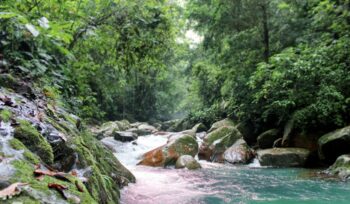
November 23 Colombia Amazon ban: Colombia has announced a complete ban on new oil, gas, and mining projects across its entire Amazon biome, covering roughly 42% of the country's national territory. The policy immediately blocks 43 oil blocks and 286 pending mining requests, making it one of the most sweeping conservation decisions any government has made in recent memory. Announced alongside COP30, the ban is framed as a binding national commitment rather than a voluntary pledge....
2025 C.E.
November 23 Colorado mental health funding got a major structural boost as voters approved Proposition MM, capping itemized tax deductions for high earners and directing roughly $100 million annually toward behavioral health services. The measure funds mental health treatment, substance use recovery, and crisis intervention programs, with dedicated resources for rural communities that face the state's most severe provider shortages. Unlike typical budget allocations, this protected revenue stream insulates behavioral health funding from year-to-year political volatility....
2025 C.E.
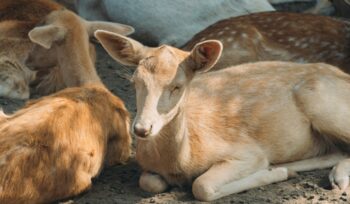
November 20 Milu deer recovery has reached a remarkable milestone, with an estimated 8,200 Père David's deer now living across protected reserves in China — a species that had completely vanished from the wild before 1895. The entire modern population descends from just 39 animals preserved on a private English estate, making this one of the most dramatic conservation rebounds ever recorded. A formal China-UK reintroduction program launched in the 1980s returned the deer to their...
2025 C.E.
November 19 The morning-after pill is now free at nearly 10,000 community pharmacies across England, removing a cost barrier that previously left many women unable to access time-sensitive emergency contraception. Starting October 2025, women can walk in without a GP appointment, prescription, or upfront fee — ending a system where a £30 price tag could close the window of effectiveness before many could afford it. Four in five people in England live within a 20-minute walk...
2025 C.E.
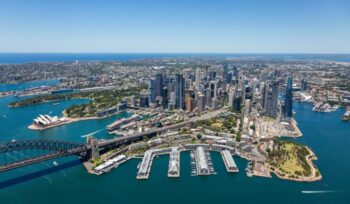
November 19 Sydney's gas appliance ban marks a turning point for urban housing policy in Australia. The City of Sydney council voted unanimously to prohibit gas cooking and heating in all new residential buildings from January 2026, making it the seventh New South Wales council to adopt such a measure. The decision matters because it addresses both climate emissions and indoor air quality, with research showing gas cooking can push nitrogen dioxide levels to five times...
Load More
Enjoying these stories? Get one delivered to your inbox every weekday morning — free.
Go to good news archives for specific countries, institutions, topics, etc.