Today (2017 C.E. - 2025 C.E.)

This archive spans the years 2017 through 2025, a period marked by rapid advances in clean energy, medicine, technology, and social equity. It collects documented breakthroughs, policy wins, and scientific achievements from the present era. If you want evidence that progress is real and ongoing, this is where to look.

Wind turbines amid clouds, for article on E.U. wind power, for article on renewable electricity generation

Wind power overtakes natural gas in the E.U. for first time ever

Wind energy outproduced natural gas across the European Union for the first time ever in 2023, according to an analysis from the energy think tank Ember. Renewables together supplied nearly half of Europe’s electricity that year, while coal generation fell by 26 percent — the steepest single-year drop the continent’s power sector has ever recorded. Analyst Sarah Brown called it a “monumental shift,” noting that wind and solar are now becoming the backbone of the grid rather than an add-on. What makes this especially hopeful is that it happened during an energy crisis, when many expected Europe to retreat to coal. Instead, the continent leaned harder into clean power — and showed the rest of the world what’s possible.

Assortment of pills

Novel AI model rapidly determines if an antidepressant will work

Amsterdam University Medical Center (UMC) and Radboud UMC researchers have developed an algorithm that, based on patient MRI scans and other data, can determine within a week if a particular antidepressant will, offering faster relief and minimizing often painful and damaging side effects. “This is important news for patients,” said Liesbeth Reneman, Professor of Neuroradiology at Amsterdam UMC. “Normally, it takes six to eight weeks before it is known whether an antidepressant will work.”

Mangrove forest, for article on Pakistan mangrove restoration

Pakistan has expanded mangroves nearly threefold between 1986 and 2020

Pakistan’s mangrove forests have nearly tripled since 1986, growing from about 48,000 hectares to 144,000 hectares — a striking reversal of the global pattern of mangrove loss. Most of that expansion sits in the Indus Delta, where roughly 100,000 people depend on healthy mangroves for fishing livelihoods. The recovery has been driven by an unusual mix: provincial forest departments, international scientific partnerships, carbon credit financing, and fishing villages whose residents work as nursery hands and patrol against illegal cutting. In one coastal town, a single nursery holds 50,000 saplings ready for planting. As coastlines worldwide face rising seas and intensifying storms, Pakistan’s quietly persistent restoration offers a real-world template for what sustained, community-rooted conservation can achieve.

Woman holding Turkish flags

Women in Turkey win right to keep surnames after marriage

Women in Turkey can use their own surnames after they marry, now that a rule forcing them to take their husband’s surname has been overturned. Article 187 of the Turkish civil code previously stated that a woman had to take her husband’s surname upon marriage, however she could use her own surname first “with a written application to the marriage officer or later to the civil registry office.” The new decision by the Turkish Constitutional Court came into effect on January 28, following a ruling in April 2023.

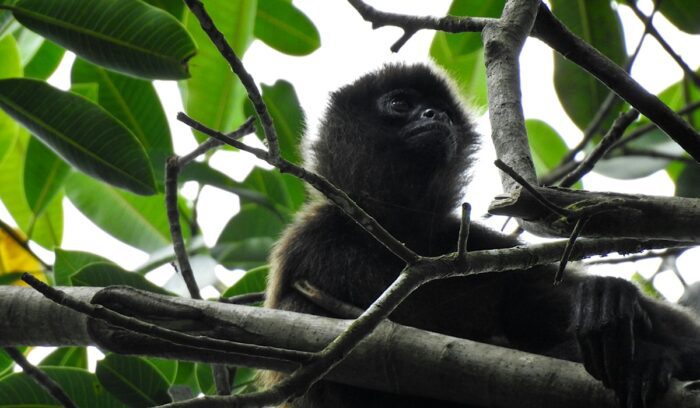
Squirrel monkey, for article on Indigenous-led land management

New fund supports Indigenous-led land management in biodiverse area of Bolivia

Indigenous communities in Bolivia’s Madidi Landscape just launched a dedicated conservation fund, opening with $650,000 from the Bezos Earth Fund to back work they’ve been doing for generations. Four nations — the Tacana, Lecos, T’simane Mosetene, and San José de Uchupiamonas — will direct the money themselves through an Indigenous-led board, finally putting resources behind territorial plans they first drafted twenty years ago. Madidi National Park is the most biodiverse protected area on land anywhere, home to more than 9,000 recorded species, from Andean condors to maned wolves. Globally, only a sliver of conservation funding reaches Indigenous hands directly, even though these communities steward most of the world’s remaining biodiversity. Funds like this one offer a hopeful blueprint for changing that.

Meskel Square traffic in Addis Ababa, for article on fossil fuel vehicle ban

Ethiopia becomes first country to ban combustion-powered vehicles

Ethiopia just became the first country anywhere to ban the import of gasoline and diesel cars, with the policy announced in late January 2025. What makes this remarkable is the foundation underneath it: every kilowatt powering an Ethiopian EV comes from renewable sources, mostly hydropower, so these vehicles are genuinely zero-emission from the moment they plug in. The shift is also deeply practical — Ethiopia has been spending around $6 billion a year on oil imports, with most of that fueling vehicles, money that can now flow into homegrown clean transport instead. Wealthier nations have led on EV adoption, but none have drawn this line. Ethiopia just showed the rest of the world a bolder version of what’s possible.

Woman putting organic waste in the compost bin

France implements compulsory composting

As of January 2024, municipalities in France must now provide residents with ways to sort bio-waste, which includes food scraps, vegetable peels, expired food and garden waste. Households and businesses are required to dispose of organic matter either in a dedicated small bin for home collection or at a municipal collection point. The waste will then be turned into biogas or compost to replace chemical fertilizers.

Traffic in a Chinese city, for article on China EV market share

25% of new car sales in China were fully electric in 2023 for the first time ever

China’s EV transition crossed a remarkable threshold in 2023, with one in four new cars sold being fully battery-electric — and plug-in vehicles of all types capturing 37% of the market. That’s a stunning leap from just three years earlier, when plug-ins held only 6.3% of sales. Affordable pricing from Chinese automakers like BYD, plus the rise of range-extended models that ease driver anxiety, are fueling the shift. Analysts note that once EV adoption passes roughly a quarter of a market, momentum tends to build on itself as charging networks grow and electric becomes the default choice. It’s a hopeful signal that the world’s biggest car market may be tipping toward clean transportation faster than anyone expected.

Empty office desk and chairs

Germany launches large four-day workweek trial

In February, 45 companies and organizations in Europe’s largest economy will introduce a 4-day workweek for half a year. Employees will continue to receive their full salary. Advocates argue that a 4-day workweek would increase worker productivity and, by consequence, help alleviate the country’s skilled labor shortage.