
Philippines shuts door on new coal power proposals
The Philippines has stopped accepting new proposals for coal-based power projects to encourage investment in other energy sources like natural gas and renewables, the government’s energy chief said.
This archive collects solutions-journalism stories and milestones from the Philippines — covering environmental recovery, public health gains, community-led initiatives, and other documented progress. Each entry focuses on what’s working and why.

The Philippines has stopped accepting new proposals for coal-based power projects to encourage investment in other energy sources like natural gas and renewables, the government’s energy chief said.
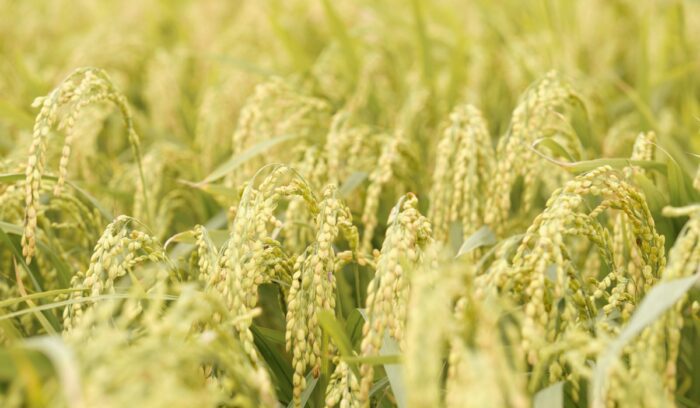
Like the “doomsday” seed vault in Norway, the purpose of the IRRI gene bank is to ensure we never find ourselves in a position where our food supply isn’t secure and diverse.

The Philippine city of Mandaluyong has approved an ordinance to protect the rights of lesbian, gay, bisexual, and transgender people from discrimination, the latest in a slew of local laws passed across the country.

The Philippines Senate has voted unanimously to ratify the Paris Agreement on climate change, four months earlier than previously expected.

The International Coral Reef Initiative launched in December 1994, when eight nations — from Jamaica to Japan — met in the Bahamas and pledged the first global partnership devoted entirely to coral reefs. Reefs cover less than 1% of the ocean floor but shelter roughly a quarter of marine species, and until then, no international body had spoken for them alone.

Philippine independence became official on July 4, 1946, when the United States and the new Republic of the Philippines signed the Treaty of Manila, formally ending nearly five decades of American colonial rule. The signing in Manila was the legal culmination of a struggle Filipinos had carried since declaring independence back in 1898.

The Maritime Jade Road linked island Southeast Asia for at least 3,000 years, with Filipino artisans shaping Taiwanese nephrite into prized ornaments that traveled by canoe from the Philippines to Vietnam, Cambodia, and beyond. Its peak production, beginning around 2000 B.C.E., predates the Silk Road by two millennia — a prehistoric economy built on skill, trust, and the open sea.

Ma-i, a maritime trading polity in what is now the Philippines, was busily exchanging beeswax, cotton, and blue-and-white cloth with Song Dynasty China by the 10th century. A 13th-century Chinese text noted its leaders could mobilize hundreds of vessels for trade — a reminder that the archipelago had centuries of organized commerce long before European ships arrived.

Tabon Cave on the island of Palawan holds the oldest known Homo sapiens remains in the Philippines, dated to roughly 47,000 years ago. The people who left those bones likely walked and paddled through Sundaland, a now-drowned landscape connecting Southeast Asia. Their living descendants, the Negrito peoples, still call the archipelago home.