
Mahatma Gandhi begins historic protest march against the British salt tax
The twenty four day march lasted from 12 March 1930 to 5 April 1930 as a direct action campaign of tax resistance and nonviolent protest against the British salt monopoly.

The twenty four day march lasted from 12 March 1930 to 5 April 1930 as a direct action campaign of tax resistance and nonviolent protest against the British salt monopoly.

The Bengali Renaissance was a cultural, social, intellectual and artistic movement in the eastern part of the Indian subcontinent during the period of the British Indian Empire, from the nineteenth century to the early twentieth century dominated by Bengalis.

The Taj Mahal complex is believed to have been completed in its entirety in 1653 at a cost estimated at the time to be around 32 million rupees, which in 2015 would be approximately 52.8 billion rupees (U.S. $827 million).
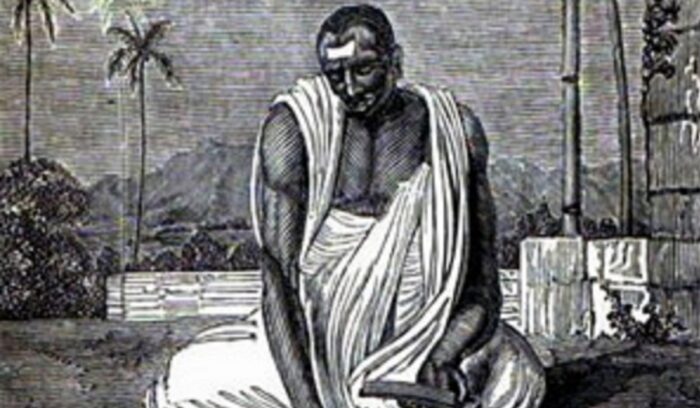
The Brāhmasphuṭasiddhānta is a text of mathematical astronomy contains significant mathematical content, including a good understanding of the role of zero, rules for manipulating both negative and positive numbers, a method for computing square roots, methods of solving linear and quadratic equations, and rules for summing series.

The first documentation of the cotton gin by contemporary scholars is found in the fifth century C.E., in the form of Buddhist paintings depicting a single-roller gin in the Ajanta Caves in western India.

The Chola dynasty was one of the longest-ruling dynasties in the history of southern India.

The Pandyan dynasty was an ancient Tamil dynasty, one of the three Tamil dynasties, the other two being the Chola and the Chera. The kings of the three dynasties were referred to as the Three Crowned Kings of Tamilakam.

Greek language introduced Greek literature into the former Persian Empire, thereby influencing the philosophical thought and writing of the region

The origin of Buddhism points to one man, Siddhartha Gautama, the historical Buddha, who was born in Lumbini (in present-day Nepal) during the 5th century B.C.E..

An ancient metropolis, the capital of the Republic of the Vaishali state and the capital of the Vajjian Confederacy (Vijji), Vaishali is prominently mentioned in Jain and Buddhist texts which emerged later.