International organizations

This archive collects milestones and solutions-focused stories involving international organizations — bodies such as the United Nations, World Health Organization, and regional alliances working across borders on global challenges. Read about the moments when coordinated international action produced measurable progress.

Alpine plants growing on a high-altitude mountain slope for an article about mercury emissions

Global mercury emissions have fallen 70% since the 1980s

Mercury pollution has dropped 70% since 1982, marking one of the most significant environmental reversals in recorded history. Researchers confirmed the decline by analyzing mercury levels trapped in alpine plant leaves collected from the Tibetan Plateau near Mount Everest, revealing a clear link to global policy action and the worldwide shift away from coal. The UN’s Minamata Convention, adopted in 2013, and stricter emissions standards — including US regulations that cut American power plant emissions by roughly 90% — drove much of the progress. The achievement demonstrates that sustained international cooperation can reverse even deeply entrenched industrial pollution.

A child sleeping under a mosquito net in a tropical setting for an article about malaria prevention saving 14 million lives

Global malaria prevention has saved 14 million lives since 2000 C.E.

Malaria prevention programs have saved an estimated 14 million lives and averted 2.3 billion cases of the disease since 2000, according to the WHO World Malaria Report. In 2024 alone, more than 170 million cases and 1 million deaths were prevented, while the number of countries reporting fewer than 1,000 annual cases nearly tripled to 37. Twenty-four countries have now introduced WHO-approved malaria vaccines into routine childhood immunization, a rollout achieved in under four years. Serious challenges remain, including rising drug resistance and a global funding gap that reached 58% in 2024, leaving the gains fragile but undeniable.

Rainforest canopy, for article on tropical forest reserve

The Democratic Republic of Congo to create the Earth’s largest protected tropical forest reserve

The Democratic Republic of Congo just passed legislation protecting 540,000 square kilometers of tropical forest — an area the size of France, and now the largest protected tropical forest reserve on Earth. At its heart is the Kivu-Kinshasa Green Corridor, which aims to create 500,000 jobs by linking renewable energy hubs, sustainable farming, and the communities that depend on the forest. The model is already working at smaller scale inside Virunga National Park, where a similar partnership has generated over 21,000 jobs in five years — 11% of them held by people who left armed militias. It’s a rare plan that treats conservation, poverty, and peace as the same problem, offering a blueprint the world badly needs.

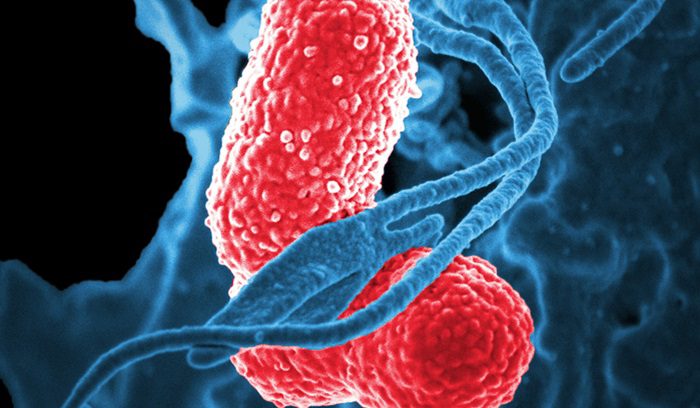
digitally colorized scanning electron microscopic (SEM) image, depicts a blue-colored, human white blood cell, (WBC) known specifically as a neutrophil, interacting with two pink-colored, rod shaped, multidrug-resistant (MDR), Klebsiella pneumoniae bacteria, for article on pneumococcal vaccine, for article on pneumococcal vaccines

Global child deaths from pneumonia have been cut in half since 2009

Childhood pneumonia deaths have been cut roughly in half since 2009, when a new kind of vaccine funding model launched and 438 million children across 64 countries received pneumococcal vaccines. The breakthrough wasn’t just the science — it was a $1.5 billion fund that guaranteed manufacturers a buyer, bringing prices down so lower-income countries could finally afford to protect their kids. In Kenya, invasive pneumococcal disease in young children dropped 92% within eight years of rollout. Now the vaccine is reaching fragile places like Chad, Somalia, and South Sudan, where a single dose can mean the difference between life and death. It’s a quiet reminder that when global health gets the funding right, millions of children grow up who otherwise wouldn’t.

image for article on mpox diagnostic test

World Health Organization approves first mpox diagnostic test for emergency use

The first mpox diagnostic test has been cleared through the World Health Organization’s Emergency Use Listing, opening a faster procurement route for the countries hit hardest by the outbreak. Abbott’s Alinity m MPXV assay detects both clades of the virus from rash samples, and UN agencies can now order it directly for places where national approval pathways would otherwise take months. That speed matters: in 2024, only 37% of suspected mpox cases in the Democratic Republic of the Congo were confirmed by testing, leaving outbreaks harder to trace. Three more tests are already under WHO review, with more manufacturers in talks. It’s a hopeful signal that the world is learning from past pandemics — building diverse, quality-assured tools before bottlenecks become catastrophes.

South Korean flags, for article on catch-up vaccination

‘Major milestone’ immunization campaign begins in North Korea with support of UNICEF

North Korea’s vaccination comeback is reaching every corner of the country — all 210 counties at once, with pregnant women included alongside children for the first time. Backed by UNICEF, more than four million doses arrived in July 2024 to jumpstart the effort, covering everything from measles to polio to hepatitis B. Over 7,200 health workers have been trained to deliver shots and respond to any reactions, and new freezers and cold boxes are keeping vaccines viable in remote areas. Before the pandemic, immunization coverage topped 96%, rivaling wealthy nations — a reminder that rebuilding what’s been lost is possible. Stories like this one show how patient, coordinated global health work can quietly restore protection for an entire generation.

Intersex Pride flag, for article on intersex rights resolution

U.N. makes history with first-ever resolution supporting intersex rights

Intersex rights just got their first-ever resolution from the U.N. Human Rights Council — a milestone for the roughly 1.7 percent of people born with variations in sex characteristics, about as common as having red hair. Brought forward by Australia, Chile, Finland, and South Africa, the measure pushes back on decades of “normalizing” surgeries performed on intersex children too young to consent. It also calls for a global report documenting where these violations are happening, giving advocates a shared map for reform. After generations of quiet, persistent work by intersex activists, this vote signals that bodily autonomy for every child — however they were born — is becoming a standard the world is willing to name out loud.

African girl sleeping on mother's shoulder, for article on global child mortality

‘Historic milestone’ as global child mortality hits record low of 4.9 million in 2022

Child deaths worldwide have fallen to 4.9 million in 2022 — the lowest number ever recorded, and roughly half the toll of the year 2000. Behind that drop is decades of unglamorous, working-everyday care: vaccines, bed nets, oral rehydration, skilled midwives, and community health workers showing up in their own neighborhoods. Rwanda offers a remarkable glimpse of what’s possible, having cut its under-five mortality rate by more than 80% since the aftermath of the 1994 genocide through community-based insurance and a serious investment in primary care. The number is still far too high, and newborns and children in conflict zones remain especially vulnerable. But the trend is one of humanity’s quiet, steady triumphs — proof that coordinated care, sustained over decades, saves millions of lives.

Golden mahseer fish swimming, for article on putitor mahseer recovery

Indigenous effort in Bangladesh helps reverse endangered fish’s slide to extinction

Endangered putitor mahseer are swimming again in the springs of Bangladesh’s Chittagong Hill Tracts, where scientists had nearly written the species off. The turnaround started when Indigenous communities revived their traditional Village Common Forests, protecting headwaters and banning fishing in restored springs — with a fine of 5,000 taka per fish to back it up. Within three years of forest protection, villagers like Lika Chakma watched long-silent springs run year-round again, and the fish followed. As global freshwater biodiversity declines faster than life on land or in the sea, this small comeback in eastern Bangladesh offers a hopeful blueprint: when Indigenous stewardship is trusted and resourced, ecosystems can heal themselves.