Citizens

This archive collects milestones and solutions-focused stories involving citizens — everyday people taking action in their communities, organizing locally, and driving change at the grassroots level. From civic participation to community-led initiatives, these stories highlight what ordinary people accomplish when they work together.

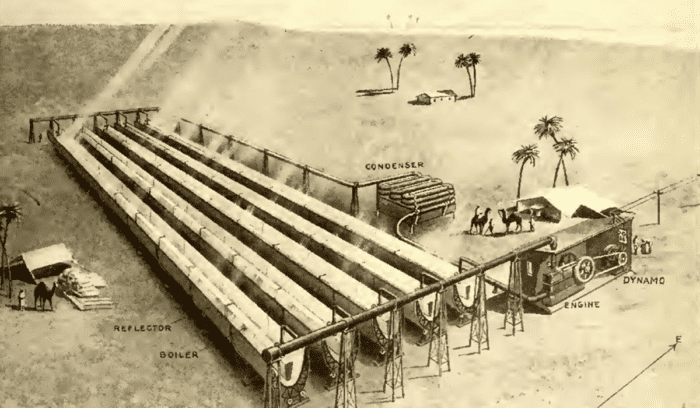
Frank Shuman thermal solar plant concept drawing, for article on solar thermal power

Frank Shuman’s solar thermal power plant proves the sun can run the world

Solar power ran industrial machinery in Egypt in 1913, when American inventor Frank Shuman built the world’s first solar thermal station beside the Nile. His parabolic mirrors pumped 6,000 gallons of water a minute onto cotton fields, no fuel required. Cheap oil buried the idea for sixty years — until engineers rediscovered his design after the 1973 oil crisis.

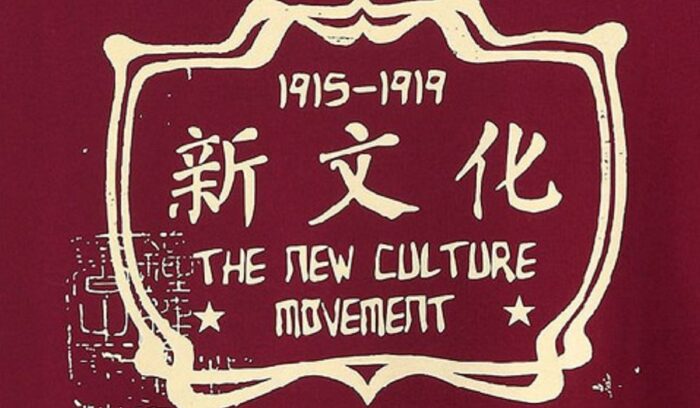
Poster for China's New Culture Movement, for article on New Culture Movement

China’s New Culture Movement challenges Confucianism, champions democracy

New Culture Movement thinkers in 1915 Shanghai launched a magazine that would reshape modern China. Chen Duxiu’s New Youth called for “Mr. Science” and “Mr. Democracy” to replace Confucian tradition, while Hu Shih urged writers to abandon classical Chinese for the language people actually spoke. Four years later, those ideas spilled into the streets.

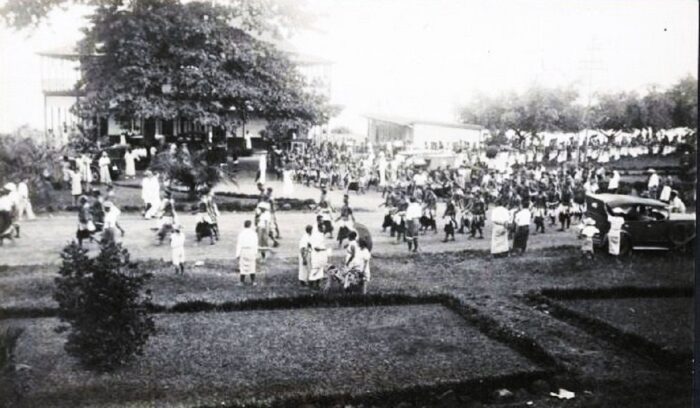
Mau demonstration in Apia, for article on mau movement samoa

Samoa’s Mau movement rises to demand self-rule from colonial powers

The Mau movement rose in Samoa in the early 1900s, a non-violent independence struggle rooted in traditional chiefly leadership and the motto “Samoa for the Samoans.” Even after Black Saturday in 1929, when New Zealand police killed up to 11 marchers in Apia, the movement held to peaceful resistance — a patience that helped carry Samoa to independence in 1962.

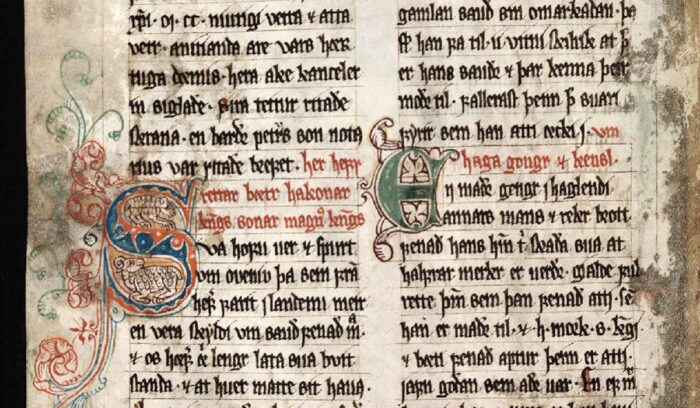
The Sheep letter from the Faroe Islands, for article on faroese language revival

Faroese gets a written standard after 300 years of silence

Faroese returned to the page in 1854, when scholar Venceslaus Ulricus Hammershaimb and Icelandic grammarian Jón Sigurðsson published a written standard after three centuries in which the language survived only in speech and song. They rooted the spelling in Old Norse so it could be read across every island dialect — a quiet act of linguistic democracy that still shapes a language spoken by around 69,000 people today.

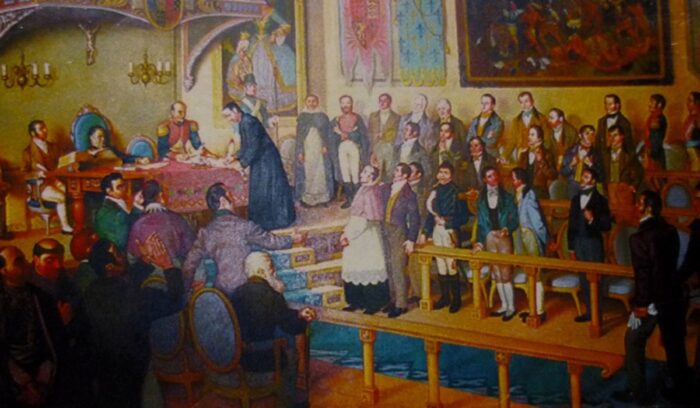
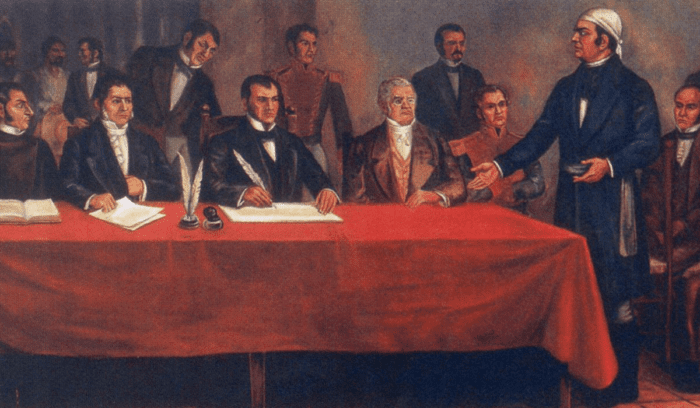
Congress of Chilpancingo painting, for article on Congress of Chilpancingo

Congress of Chilpancingo declares Mexico independent from Spain

The Congress of Chilpancingo convened in September 1813, gathering insurgent representatives in a small mountain town in what is now Guerrero, Mexico. Led by José María Morelos, they formally declared independence from Spain and drafted the Sentimientos de la Nación, abolishing slavery and racial castes. Eight years before Mexican independence arrived, they sketched its moral blueprint under fire.

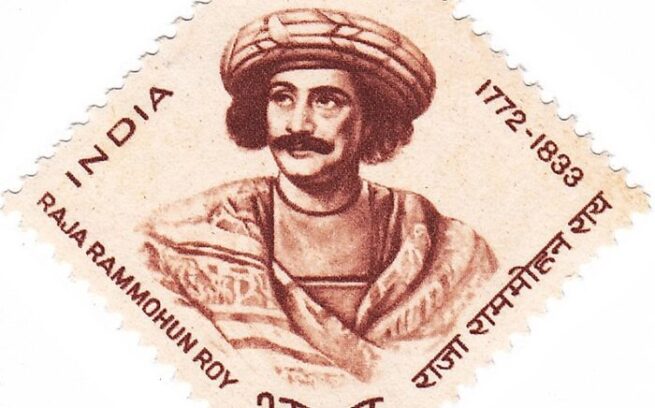
px Ram Mohan Roy stamp of India, for article on Bengali Renaissance

Ram Mohan Roy sparks the Bengali Renaissance in colonial India

Ram Mohan Roy, born in Bengal in 1772, spent his life weaving Vedantic philosophy, Islamic theology, and Enlightenment thought into a movement for human dignity. Haunted by watching his sister-in-law burned in sati as a child, he campaigned for decades until Britain banned the practice in 1829. His Bengali Renaissance opened doors that shaped Indian thought for generations.