
Artificial intelligence

Hollywood sign at sunset

California passes two new bills protecting actors and performers against AI

In a potentially precedent-setting moment for tech legislation across the country, the new laws not only bolster those existing protections but extend them to everyone in California — not just to people working in front of a camera in Hollywood, as IndieWire notes. Together, the bills make it illegal to use an AI-generated digital replica of an actor’s likeness or voice — or technically, any Californian’s — without their explicit consent. Studios will also be prohibited from cloning deceased actors unless they have permission from their estates.

U.N. building with national flags in foreground

U.N. General Assembly adopts landmark resolution on artificial intelligence

The Assembly called on all Member States and stakeholders “to refrain from or cease the use of artificial intelligence systems that are impossible to operate in compliance with international human rights law or that pose undue risks to the enjoyment of human rights.” The text was “co-sponsored” or backed by more than 120 other Member States. It represents the first time the Assembly has adopted a resolution on regulating the emerging field.

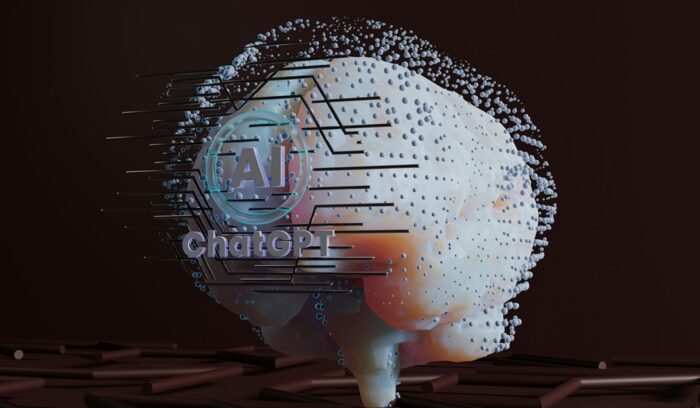
Illustration of the ChatGPT logo on a brain

E.U. regulators pass the world’s first sweeping artificial intelligence regulations

The E.U. says the regulations seek to “protect fundamental rights, democracy, the rule of law and environmental sustainability from high-risk AI, while boosting innovation and establishing Europe as a leader in the field.” Applications that will be banned include social scoring, emotion recognition in schools and workplaces, and “AI that manipulates human behavior or exploits people’s vulnerabilities.” The historic AI Act is likely to come into force in early June.

Assortment of pills

Novel AI model rapidly determines if an antidepressant will work

Amsterdam University Medical Center (UMC) and Radboud UMC researchers have developed an algorithm that, based on patient MRI scans and other data, can determine within a week if a particular antidepressant will, offering faster relief and minimizing often painful and damaging side effects. “This is important news for patients,” said Liesbeth Reneman, Professor of Neuroradiology at Amsterdam UMC. “Normally, it takes six to eight weeks before it is known whether an antidepressant will work.”

Virtual reality or cyberspace concept: digital human or robot head, for article on brain-computer interface

Paralyzed woman able to ‘speak’ through digital avatar in world first

A digital avatar has given a paralyzed woman her voice back — speaking at 78 words per minute, more than five times faster than the eye-tracking system she relied on before. Ann, who had a brainstem stroke 18 years ago, worked with UCSF researchers to train an AI to read brain signals from electrodes resting on her brain’s surface. The avatar speaks in a voice reconstructed from her wedding video, complete with facial expressions like smiles and frowns. There are real limits — the system still misreads words about a quarter of the time — but for millions living with ALS, locked-in syndrome, or severe stroke, this points toward a future where losing a voice no longer means losing a self.