
Curated by Peter Schulte · Published 2026-07-10 · Last updated 2026-07-10
Women’s rights are advancing at a pace and breadth rarely seen in a single generation.
In the span of just a few years, France became the first country to enshrine abortion rights in its constitution, Mexico elected its first female president by a historic 30-point margin, and India launched direct cash transfers to 118 million women in explicit recognition of unpaid domestic labor.
These aren’t isolated wins. Across six continents, child marriage bans are being enacted, female legislators are hitting record numbers, and medical breakthroughs are transforming how ovarian, cervical, and breast cancers are detected and treated.
The momentum is real — and the stories behind it reveal a clear pattern: sustained advocacy, legal reform, and political will can move even the most entrenched systems.
Key takeaways
- France is the first country in the world to constitutionally protect abortion rights, enshrined by a 780–72 parliamentary vote in 2024.
- Mexico, Namibia, North Macedonia, and Japan all elected or appointed their first-ever female heads of state within a two-year window.
- India’s direct cash transfer program — covering 118 million women — is one of the largest government recognitions of unpaid domestic labor in history.
- Child marriage has been banned or significantly restricted in Colombia, Sierra Leone, and Zambia following decades of advocacy.
- Medical science is catching up: new cervical cancer regimens cut mortality risk by 40%, breast cancer cure rates have nearly doubled in trials, and the world’s first ovarian cancer vaccine is in development.
Recovery at a glance
| Subject | Recovery | Where |
|---|---|---|
| France | First country to enshrine abortion rights in constitution (780–72 vote) | France |
| Claudia Sheinbaum | Mexico's first female president, elected by 30-point margin | Mexico |
| India cash transfers | Direct payments to 118 million women for unpaid domestic labor | India |
| Namibia | Netumbo Nandi-Ndaitwah elected first female president with 57% of vote | Namibia |
| Japan | Sanae Takaichi becomes first female prime minister after 70+ years of male leadership | Japan |
| New Mexico Legislature | 60 of 112 seats won by women — largest female legislative majority in U.S. history | USA |
| Britain's House of Commons | Record 242 women elected, exceeding 37% representation | UK |
| Colombia | Child marriage banned after 17-year campaign and 137-year-old loophole closed | Colombia |
| Sierra Leone | Child marriage criminalized; arrangers face minimum 15 years in prison | Sierra Leone |
| Finland | Free contraception reduced teen abortion rate by 66% over two decades | Finland |
| European Union | First continent-wide law criminalizing gender-based violence, covering all 27 member states | EU |
| Cervical cancer treatment | New chemo-timing regimen cuts risk of dying from disease by 40% | UK/Mexico/India/Italy/Brazil |
| Wisconsin | 175-year-old abortion ban struck down, restoring access up to 22 weeks | USA |
| Faroe Islands | Abortion legalized for the first time, ending one of Western Europe's last near-total bans | Faroe Islands |
| Chile maternity leave | Doubling postnatal leave boosted mothers' employment by 6.8 percentage points with no wage penalty | Chile |
| New York | Rape kit storage extended to 20 years, doubling previous limit | USA |
On this page
- Why this matters
- What’s driving the comeback
- Women’s rights in law: constitutional protections, abortion access, and gender violence
- Reproductive and maternal health: access, contraception, and medical breakthroughs
- Cancer breakthroughs: new tools for detection, prevention, and treatment
- Political leadership: women reaching the top of government and sport
- Ending child marriage and protecting Indigenous women: structural reforms worldwide
- Justice, evidence, and accountability: reforms that support survivors
- More wildlife comebacks
- The outlook
- Frequently asked questions
Why this matters
The scale of women’s rights progress documented here is genuinely historic. Multiple countries have crossed political thresholds — first female presidents, first female prime ministers, first gender-parity cabinets — within the same short window, signaling a cultural shift rather than a handful of anomalies.
Legal architecture is changing too. Constitutional protections for abortion, continent-wide gender violence laws, and child marriage bans enacted across three continents represent durable gains that outlast any single government. These are structural changes, not symbolic ones.
The health dimension is equally striking. Advances in breast, cervical, and ovarian cancer detection and treatment are arriving simultaneously, driven by trial data from multiple continents — a convergence that could reshape outcomes for hundreds of millions of women.
By the numbers
- 118 million women receiving direct cash transfers in India’s recognition of unpaid domestic labor
- 780–72: the French parliamentary vote to constitutionally protect abortion rights
- 66% reduction in Finland’s teen abortion rate after two decades of free contraception
- 40% reduction in cervical cancer mortality risk from a new treatment regimen trialed across five countries
- 242 women elected to Britain’s House of Commons in 2024 — a national record surpassing 37% representation
- 60 of 112 seats in New Mexico’s Legislature won by women — the largest female legislative majority in U.S. history
- 57% of the vote secured by Namibia’s first female president, Netumbo Nandi-Ndaitwah, in a single-round win
What’s driving the comeback
The most consistent driver across these stories is sustained advocacy translated into law. Colombia’s child marriage ban came after 17 years of campaigning and eight earlier defeats. France’s constitutional abortion guarantee followed decades of legal organizing. Sierra Leone’s prohibition emerged from a campaign led by the First Lady. In each case, civil society built the pressure that legislators ultimately could not ignore.
Access reform — removing cost, geographic, or logistical barriers — is a second clear thread. Finland’s free contraception reached teenagers through existing youth clinics, creating no new bureaucracy. England made the morning-after pill free at nearly 10,000 pharmacies. Alaska expanded who can provide medication abortion, reshaping clinic capacity overnight. The mechanism varies, but the principle is the same: reducing friction saves lives.
Political representation and legal accountability reinforce each other. New Zealand’s gender-parity cabinet, Britain’s record female Parliament, and New Mexico’s female legislative majority are not just symbolic — they change which policies advance and how fast. Meanwhile, landmark accountability moments like France’s Pelicot trial and the Inter-American Court ruling against El Salvador set new legal floors that reverberate across borders.
Women’s rights in law: constitutional protections, abortion access, and gender violence
The most durable progress in women’s rights comes when legal systems change, not just policies. The stories in this section document a wave of legal reforms — constitutional amendments, court rulings, and continent-wide frameworks — that create floors of protection rather than easily reversed program decisions. What’s striking is how many of these breakthroughs came after years or decades of failed attempts, finally breaking through in a compressed window.

France enshrines abortion rights in its constitution — a global first
France became the first country in the world to constitutionally protect abortion rights, with lawmakers voting 780 to 72 at Versailles to embed the guarantee in the nation’s founding document. The amendment protects a ‘freedom’ to abortion — a deliberate legal choice by drafters — making it significantly harder for any future government to restrict access. No other country has gone this far in constitutional terms.

Faroe Islands legalizes abortion, ending Western Europe’s last near-total ban
The Faroe Islands’ parliament voted to legalize abortion for the first time, ending one of the last near-total bans remaining in Western Europe. For years, residents had been forced to travel to Denmark to access the procedure, bearing significant personal cost. The vote closes a gap that had long set the islands apart from their Nordic neighbors.

Wisconsin Supreme Court strikes down a 175-year-old abortion ban
Wisconsin’s Supreme Court struck down an 1849 pre-Civil War abortion ban, restoring legal access to the procedure up to 22 weeks — the first restoration of abortion rights in the state since the 2022 Dobbs ruling. The court found that a 1985 statute regulating abortion care legally superseded the older prohibition. The ruling reshaped access for patients and providers across the state overnight.

Alaska court ruling expands who can provide medication abortion
A Superior Court ruling in Alaska allowed nurse practitioners and physician assistants to provide medication abortion for the first time, meaningfully expanding the provider base in a large, sparsely populated state. The change immediately reshaped operations at Planned Parenthood clinics in Anchorage and Fairbanks. It represents a model for states where geographic distance limits access to physician-only care.

Massachusetts Shield Act 2.0 protects abortion and gender-affirming care providers
Massachusetts passed Shield Act 2.0 through its Senate 37–3, strengthening legal protections for patients and providers seeking abortion care and gender-affirming care within the state. The updated law bars state agencies from cooperating with out-of-state or federal investigations targeting providers operating legally in Massachusetts. It represents one of the most robust state-level protective frameworks enacted in response to post-Dobbs legal pressure.
Inter-American Court rules El Salvador violated a woman’s rights by denying abortion
The Inter-American Court of Human Rights ruled that El Salvador violated a young woman’s fundamental rights when it denied her a life-saving abortion in 2013. Beatriz, who was 22 and gravely ill with lupus and kidney damage, was refused the procedure despite medical necessity. The ruling sets a new legal floor for reproductive rights across Latin America that national courts will be expected to follow.

The EU passes its first continent-wide law against gender-based violence
The European Union agreed to its first-ever law covering gender-based violence across all 27 member states, requiring every country to establish helplines, rape crisis centers, and survivor support services. The deal also criminalizes cyberstalking and online abuse — recognizing digital harm as part of the same continuum as physical violence. The framework creates binding obligations where previously there were only recommendations.

France’s Pelicot trial ends with all 51 defendants convicted
The trial of Dominique Pelicot concluded with all 51 defendants convicted on at least one charge — a result described as almost unprecedented in cases of drug-facilitated sexual violence. Pelicot, who drugged his wife and invited strangers to assault her over nearly a decade, received the maximum 20-year sentence. The case, which his wife insisted be made public, became a landmark moment in France’s reckoning with sexual violence law and culture.
Reproductive and maternal health: access, contraception, and medical breakthroughs
Reproductive health progress in this period has operated on two tracks simultaneously: expanding access to existing care, and developing new medical tools that didn’t previously exist. The most effective access reforms share a common design — they remove barriers quietly and systematically, using existing infrastructure rather than building new systems. The medical breakthroughs, meanwhile, suggest a pipeline of tools that could reshape maternal and reproductive health outcomes for decades.

Finland cuts teen abortion rate by 66% with free contraception
Finland reduced its teenage abortion rate by 66% over roughly two decades by making contraception free and integrating it into existing youth clinics — no separate appointment, no cost barrier. The program represents one of the steepest drops in teen abortion rates ever recorded in a high-income country. Its success rested on removing friction at the moment young people were already seeking other healthcare.

England makes the morning-after pill free at NHS pharmacies nationwide
England made emergency contraception free at nearly 10,000 community pharmacies starting in October 2025, removing the cost that had previously blocked many women from accessing time-sensitive care. Women can now walk in without a GP appointment, prescription, or payment. The policy directly addresses a gap that had persisted in a country with otherwise comprehensive public health coverage.

Japan approves its first abortion pill after being last among developed nations
Japan approved its first abortion pill in 2023, ending the country’s status as one of the last developed nations offering only surgical options for terminating a pregnancy. Clinical trials showed a 93% complete abortion rate within 24 hours using the two-pill combination. The approval marked a significant shift for a country that had restricted non-surgical reproductive options for decades.

UNICEF backs a mass immunization campaign in North Korea reaching all 210 counties
A UNICEF-backed immunization campaign launched in North Korea is reaching all 210 counties simultaneously, with pregnant women included alongside children as priority recipients for the first time. More than four million vaccine doses arrived in July 2024 to supply the effort. The scale and inclusion of pregnant women represent a meaningful expansion of maternal health infrastructure in one of the world’s most isolated countries.

Indonesia launches free meals program targeting 90 million children and pregnant women
Indonesia began a national free meal program in January 2025, serving nutritious meals to students and pregnant women as part of an effort that aims to reach nearly 90 million people by 2029. Pregnant women are among the explicit priority groups, recognizing maternal nutrition as a public health investment. The program’s opening day served 740 students outside Jakarta and is designed to scale rapidly.

Pope Francis gives women voting rights at bishops’ meeting for the first time
Women voted at the Vatican’s Synod of Bishops for the first time in October 2023, after Pope Francis rewrote the rules to include them as full participants. Five religious sisters joined priests as voting representatives for religious orders, and Francis appointed 70 non-bishop voting members. The change marked a historic expansion of women’s formal authority within the Catholic Church’s governance structure.

Chile’s maternity leave reform boosted mothers’ employment with no wage penalty
Chile doubled postnatal leave from 12 to 24 weeks in 2011, and researchers have now documented the sustained result: eligible mothers were 6.8 percentage points more likely to be employed afterward, with no corresponding wage penalty. The finding is significant because maternity leave expansions often face the objection that they reduce women’s earnings or employability. Chile’s data shows the opposite outcome is achievable with the right policy design.
Cancer breakthroughs: new tools for detection, prevention, and treatment
Women’s health has historically been underfunded in medical research — which makes the concentration of breakthroughs documented here all the more notable. Within a short window, researchers have produced a 40% mortality reduction in cervical cancer treatment, nearly doubled cure rates for the most common form of breast cancer, and moved the world’s first ovarian cancer vaccine into funded development. These advances are not incremental; they represent genuine step changes in what medicine can offer.

New cervical cancer treatment cuts risk of dying from disease by 40%
A multinational clinical trial found that adding a short course of chemotherapy before standard treatment reduced the risk of dying from cervical cancer by 40% — described as the biggest leap in cervical cancer treatment in 25 years. The trial ran across the U.K., Mexico, India, Italy, and Brazil, giving the finding broad applicability. The key innovation was timing, not new drugs.

Australian researchers nearly double cure rates for the most common breast cancer
Researchers in Australia achieved a breakthrough in treating hormone receptor-positive breast cancer — which represents roughly 70% of all breast cancer diagnoses worldwide — by combining immunotherapy with existing treatments to nearly double cure rates. The results from clinical trials represent a potential step change in outcomes for the most prevalent form of the disease. The finding is significant precisely because it targets the majority, not a rare subtype.

Blood test detects breast cancer recurrence 15 months before symptoms appear
A UK trial of 78 patients found that a new blood test correctly identified every woman who later relapsed — spotting returning breast cancer an average of 15 months before symptoms or scans could detect it, and in one case 41 months ahead. The test scans for traces of tumor DNA circulating in the bloodstream. Earlier detection at recurrence opens a wider window for effective intervention.

A $5 saliva test accurately screens for breast cancer in under five seconds
Researchers in the U.S. and Taiwan developed a handheld breast cancer screener that detects cancer biomarkers from a single drop of saliva in under five seconds, using a reusable $5 circuit board and disposable paper test strips. The device is modeled on the same basic technology as glucose monitors. Its low cost and speed make it potentially transformative for screening in low-resource settings.
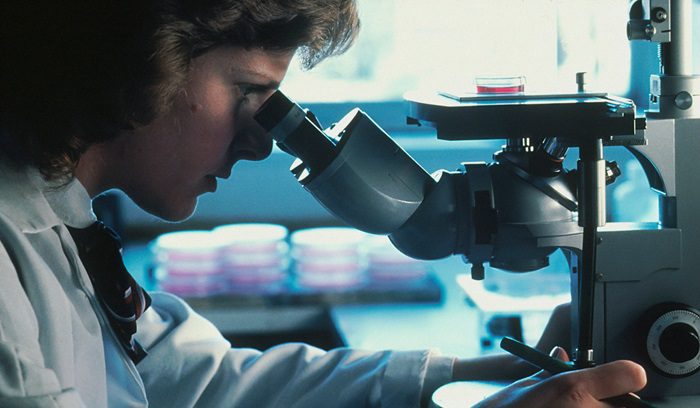
Oxford’s OvarianVax could become the world’s first ovarian cancer vaccine
The University of Oxford’s OvarianVax project has secured up to £600,000 from Cancer Research U.K. to develop the world’s first vaccine designed to prevent ovarian cancer before it starts. The approach trains the immune system to recognize more than 100 proteins associated with the disease. Ovarian cancer is particularly deadly because it is usually detected late — a vaccine would represent a paradigm shift in prevention.

Triple-negative breast cancer vaccine shows immune response in first human trial
A new vaccine targeting triple-negative breast cancer — an aggressive subtype that resists most standard treatments — sparked an immune response in three out of four patients during its first human safety trial, with no serious side effects reported. The trial was conducted at the Cleveland Clinic. The result is early-stage, but it opens a pathway for a preventive approach to one of breast cancer’s most difficult subtypes.
Political leadership: women reaching the top of government and sport
The election of first-ever female heads of state in Mexico, Namibia, and Japan — along with record female representation in legislatures from New Mexico to Westminster — signals something beyond symbolic progress. These breakthroughs are happening across very different political systems and cultures simultaneously, suggesting the barrier is structural rather than cultural in any single country. The sports firsts documented here follow the same logic: formal exclusion, not informal preference, was the obstacle.

Claudia Sheinbaum elected Mexico’s first female president by a historic margin
Claudia Sheinbaum won Mexico’s 2024 presidential election by roughly 30 percentage points — the largest margin in the country’s modern democratic era — becoming the first woman to lead a nation of 130 million, two centuries into the Mexican Republic’s history. A climate scientist with a doctorate in energy engineering, she took office as both the first woman and the first Jewish person to hold the position. The scale of her victory undercut any suggestion the result was narrow or contested.

Namibia elects Netumbo Nandi-Ndaitwah as its first female president
Netumbo Nandi-Ndaitwah won Namibia’s 2024 presidential election with 57% of the vote, becoming the country’s first female president and clinching the race in a single round. At 72, she brings five decades of public life to the role, including work in Namibia’s liberation movement from the 1970s onward. Her election added Namibia to a growing list of African nations that have elected women to their highest office.

Japan elects its first female prime minister after 70 years of male leadership
Japan’s parliament voted Sanae Takaichi into office as the country’s first female prime minister, ending more than 70 consecutive years of male leadership. The breakthrough is particularly significant for a country that ranked 113th out of 146 nations in the 2024 World Economic Forum’s gender equality index. Takaichi’s election represents a rupture with one of the most persistent gender gaps in democratic governance worldwide.

North Macedonia elects its first woman president
Gordana Siljanovska-Davkova was elected as North Macedonia’s first woman president, subsequently joining the Council of Women World Leaders — a network of current and former female heads of state. A constitutional law professor before entering politics, she brings an academic background in governance to the role. Her election adds North Macedonia to the list of European countries to have broken the presidential gender barrier.

Francia Márquez becomes Colombia’s first Black woman vice president
Francia Márquez was sworn in as Colombia’s first Black woman vice president on June 19, 2022, winning alongside Gustavo Petro with just over half the national vote. A former housekeeper and single mother from Cauca — one of Colombia’s poorest provinces — she rose to national office through years of environmental and human rights advocacy. Her election broke multiple simultaneous barriers in Colombian political history.

New Zealand’s cabinet reaches gender parity for the first time
New Zealand’s cabinet achieved a 10–10 gender split for the first time in the country’s history, after Prime Minister Chris Hipkins promoted Willow-Jean Prime to bring the number of women ministers to ten. The milestone came alongside an increase in Māori ministerial representation, making the cabinet more representative across multiple dimensions simultaneously. New Zealand became one of the few democracies to achieve full cabinet gender parity.

Britain elects a record 242 women to Parliament in 2024
The 2024 UK general election returned at least 242 women to the House of Commons — the most in the chamber’s history — pushing female representation past 37% of the 650-seat lower house. The previous record of 220 was set in 2019, and the new figure continues a decade-long trend of steady gains. At the current rate, gender parity in the Commons remains a generation away, but the directional trend is consistent.

New Mexico Legislature becomes the most female-majority legislature in U.S. history
New Mexico voters sent 60 women to the state’s 112-seat Legislature in 2024, creating the largest female legislative majority by seat count any U.S. state has ever achieved. The new class crosses party lines and includes members who campaigned on housing, healthcare, and public safety. The milestone sets a concrete benchmark for what gender representation in a state legislature can look like.

Abigail Spanberger inaugurated as Virginia’s first female governor in 400 years
Abigail Spanberger was sworn in on January 17, 2026, as Virginia’s 75th governor and its first female leader in more than four centuries of statehood. A former CIA officer and three-term congresswoman, she won by 15 points. The inauguration closed one of the longest-standing gender gaps in American gubernatorial history.

Miami swears in Eileen Higgins as its first female mayor in 128 years
Eileen Higgins became Miami’s first female mayor in the city’s 128-year history, winning a runoff election to lead a city that was itself founded by a woman. A city commissioner focused on public transit, housing affordability, and climate resilience, she brings a policy-focused profile to the role. The milestone is notable for a city that has been governed exclusively by men since its founding.

Admiral Lisa Franchetti nominated as the first woman on the U.S. Joint Chiefs of Staff
Admiral Lisa Franchetti’s nomination as the U.S. Navy’s top officer would make her the first woman ever to sit on the Joint Chiefs of Staff in the body’s history. A 38-year veteran who commissioned in 1985, she is already only the second woman to reach the rank of four-star admiral in the Navy. If confirmed, her seat on the Joint Chiefs would break the last all-male barrier in the U.S. military’s senior command structure.

Stéphanie Frappart becomes the first woman to referee a men’s FIFA World Cup match
Stéphanie Frappart made history on December 1, 2022, refereeing Costa Rica vs. Germany at the men’s FIFA World Cup — the first woman ever to officiate a match at the tournament. She led an all-female officiating team that day, joined by Brazil’s Neuza Back and Mexico’s Karen Díaz Medina. The appointment broke a barrier that had existed for 92 years of World Cup competition.

Marie-Louise Eta becomes the first female head coach in men’s top-five European soccer leagues
Marie-Louise Eta made history on April 11, 2026, when Union Berlin appointed her as interim head coach, making her the first woman ever to hold a head coaching position in any of men’s top-five European soccer leagues. The Bundesliga club appointed her after dismissing the previous coach, placing performance ahead of precedent. Her appointment represents the first crack in one of professional sport’s most enduring gender barriers.
Ending child marriage and protecting Indigenous women: structural reforms worldwide
Child marriage bans and Indigenous women’s safety alerts represent two very different kinds of structural reform — one dismantling a centuries-old legal institution, the other creating new infrastructure where none existed. What connects them is the recognition that formal legal equality means little if specific, targeted protections aren’t built for the women most excluded from it. The reforms documented here were all driven by advocates who identified precise gaps in existing law and pushed until those gaps were closed.

Zambia closes child marriage loophole that left girls in customary marriages unprotected
Zambia’s 2023 child marriage reform closed a loophole that had left girls married under customary law with no minimum age protection. Before the amendment, nearly one in three Zambian women aged 20–24 had married before turning 18. The new law voids any marriage involving someone under 18, setting a binding floor regardless of the legal framework under which the marriage was conducted.

Sierra Leone criminalizes child marriage with a minimum 15-year prison sentence
Sierra Leone enacted the Prohibition of Child Marriage Act, making the arrangement of a marriage involving a girl under 18 a serious crime carrying a minimum 15-year prison sentence. The law was signed by President Julius Maada Bio alongside First Lady Fatima Bio, who led the campaign. The penalty structure is among the most stringent enacted anywhere for this offense.

Colombia bans child marriage after 17 years of campaigning and 137-year-old loophole
Colombia passed a complete ban on marriage for anyone under 18, closing a loophole dating back 137 years that had allowed minors to marry with parental consent. The law — carried by the slogan ‘They are Girls, Not Wives’ — passed after 17 years of sustained advocacy and eight earlier legislative defeats. The campaign’s persistence through repeated failure makes it one of the most documented examples of civil society legal reform in Latin America.

Washington State creates the first missing Indigenous people alert system in the U.S.
Washington State launched the nation’s first dedicated alert system for missing Indigenous people, modeled on the Amber Alert and pushing notifications through highway billboards, radio, and social media the moment a family reports someone missing. The system directly addresses the disproportionate rates at which Indigenous women and girls go missing and the delays in law enforcement response that have historically compounded the harm. No equivalent system existed anywhere in the United States before this law.
Justice, evidence, and accountability: reforms that support survivors
Progress in justice for survivors of sexual violence has historically lagged behind changes in criminal law — protocols were inconsistent, evidence disappeared, and survivors who waited faced closed doors. The reforms in this section share a different logic: they invest in the infrastructure of accountability, ensuring that evidence is preserved long enough and gathered well enough to actually support prosecution. Taken together, they represent a quieter but equally important dimension of women’s rights progress.

How Martha Goddard’s rape kit became the global standard for sexual assault evidence
Rape kit history begins with Martha Goddard, a Chicago survivor-advocate who designed the standardized sexual assault evidence collection kit in the mid-1970s after recognizing that inconsistent evidence protocols were allowing offenders to escape prosecution. Her kit was first deployed across 26 hospitals in Illinois and became the model adopted worldwide. The story traces how one advocate’s practical insight reshaped the infrastructure of sexual assault accountability globally.

New York extends rape kit storage to 20 years, giving survivors more time to seek justice
New York now requires sexual assault evidence to be preserved for 20 years — double the previous 10-year limit — giving survivors significantly more time to decide whether to pursue charges. Research consistently shows that many survivors need years or even decades before they are ready to engage with the legal system. The extension directly addresses one of the most common procedural barriers to late-stage prosecution.

India’s cash transfer program pays 118 million women for unpaid domestic labor
India launched a direct cash transfer program delivering payments to 118 million women, making it one of the largest government-run initiatives of its kind in the world. The program explicitly frames unpaid domestic labor — cooking, cleaning, and caregiving — as economically valuable work deserving of formal recognition and compensation. The scale and the explicit framing together mark a significant shift in how the Indian state acknowledges women’s economic contribution.
More women’s rights stories

Mexico elects Claudia Sheinbaum as first female president
The outlook
The trajectory is unmistakably positive, but unevenly distributed. The countries making the fastest progress tend to share a combination of democratic accountability, organized civil society, and political will — and where those ingredients are absent, progress stalls or reverses.
Medical advances represent some of the most durable potential gains. A vaccine for ovarian cancer, a blood test that detects breast cancer recurrence 15 months early, and improved cervical cancer treatment don’t depend on political cycles — they depend on funding and distribution. Getting these tools to lower-income countries is the unfinished work.
What these stories collectively prove is that entrenched inequalities can move — sometimes faster than anyone expected. The question is whether the political coalitions and civil society networks that drove these wins can sustain the pressure needed to consolidate them.
Frequently asked questions
What country was the first to enshrine abortion rights in its constitution?
France is the first country in the world to constitutionally protect abortion rights. In March 2024, French lawmakers gathered at Versailles voted 780 to 72 to embed the guarantee in the nation’s founding document, protecting a ‘freedom’ to abortion that future governments cannot easily restrict.
What are the biggest women’s rights milestones of 2024 and 2025?
The period 2024–2025 produced an unusually dense set of milestones: France constitutionally protected abortion rights, Mexico and Namibia elected their first female presidents, Japan elected its first female prime minister, India launched cash transfers to 118 million women, and Colombia, Sierra Leone, and Zambia all enacted child marriage bans. In the U.S., Wisconsin struck down a 175-year-old abortion ban and New Mexico achieved the most female-majority state legislature in U.S. history.
Which countries have banned child marriage recently?
Colombia banned child marriage in 2024 after a 17-year campaign, closing a 137-year-old loophole. Sierra Leone criminalized it in the same year, with arrangers facing a minimum 15-year prison sentence. Zambia closed a customary marriage loophole in 2023 that had left girls with no minimum age protection. All three reforms came after sustained civil society advocacy.
How did Finland reduce its teen abortion rate?
Finland reduced its teenage abortion rate by 66% over roughly two decades by making contraception free and integrating it into existing youth clinics — removing both the cost barrier and the need for a separate appointment. The approach required no new infrastructure; it worked by embedding reproductive healthcare into services teenagers were already using.
What is the EU’s new law on violence against women?
In early 2024, the European Union agreed to its first-ever continent-wide law on gender-based violence, covering all 27 member states. The law requires every country to establish helplines, rape crisis centers, and survivor support services, and it criminalizes cyberstalking and online abuse. It creates binding obligations where previously only non-binding recommendations existed.
Which countries have elected their first female head of state recently?
Mexico elected Claudia Sheinbaum as its first female president in 2024, winning by roughly 30 percentage points. Namibia elected Netumbo Nandi-Ndaitwah with 57% of the vote in November 2024. Japan’s parliament elected Sanae Takaichi as the country’s first female prime minister in 2025, ending over 70 years of male leadership. North Macedonia also elected its first female president in 2024.
About this article
🤖 This article is AI-generated, based on a framework created by Peter Schulte.
🌍 It aims to be inspirational but clear-eyed, accurate, and evidence-based, and grounded in care for the Earth, peace and belonging for all, and human evolution.
💬 Leave your notes and suggestions in the comments below — I will do my best to review and implement where appropriate.
✉️ One verified piece of good news, one insight from Antihero Project, every weekday morning. Subscribe free.
