Transportation

Transportation shapes how people access jobs, healthcare, education, and each other. This archive tracks real progress in transit, infrastructure, electric vehicles, cycling, and more — from local wins to national policy shifts worth knowing about.

Lightyear One, for article on solar electric car

World’s first solar car goes into production

Solar-powered cars have moved from moonshot idea to manufacturing reality — and that shift matters more than any single vehicle rolling off the line. Lightyear’s debut model uses curved solar arrays across its roof and hood, harvesting enough sunlight to cover up to 40 miles daily — matching most people’s actual driving habits. At $255,000, it targets early adopters, though with solar panel costs having dropped over 99% since the 1970s, wider accessibility may follow. A car that generates its own fuel from sunlight quietly answers one of the strongest critiques of electric vehicles.

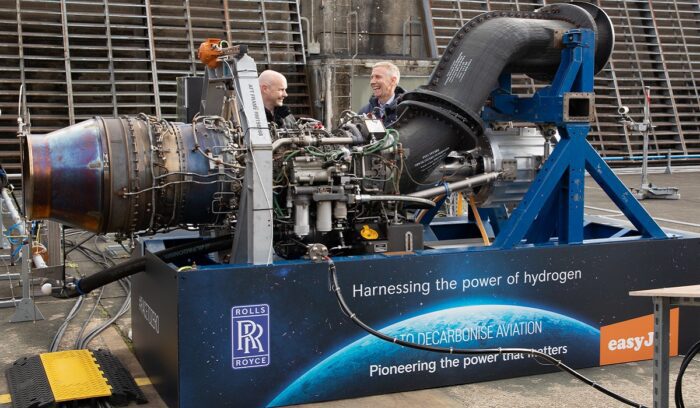
Rolls-Royce & easyJet hydrogen engine, for article on hydrogen jet engine

World’s first test run of a hydrogen jet engine proves a success

Hydrogen-powered flight moved from theory to reality when Rolls-Royce and easyJet successfully ran a modern jet engine on green hydrogen produced entirely from wind and tidal energy. Unlike battery-electric approaches, hydrogen burns clean — releasing water vapor instead of carbon dioxide — and this test proved a real engine can handle it. Aviation has been one of the hardest sectors to decarbonize, so a confirmed proof of concept opens a genuine path forward. Every major breakthrough in flight history started exactly here: on the ground, with an engine, and a question that finally got answered.

Hydrogen train, for article on hydrogen-powered trains

World’s first 100% hydrogen-powered trains begin operations in Germany

Hydrogen-powered passenger trains now cover an entire regional rail network in Lower Saxony, Germany — 14 Alstom Coradia iLint trains that have fully retired the diesel locomotives once used on the Cuxhaven-to-Buxtehude lines. Each train pulls oxygen from the air, combines it with hydrogen stored on the roof, and emits only water vapor, traveling roughly 1,000 kilometers between refuels. The regional operator has pledged to never buy another diesel train, citing both climate goals and the cleaner air passengers breathe at small-town platforms. It’s a modest fleet in a single corner of Germany, but it’s the first proof anywhere that diesel regional rail can be fully replaced — a template other countries with long, lightly used routes can now follow.

Canberra, for article on ICE vehicle ban

Australian Capitol Territory becomes first state in Australia to ban conventional cars

Australia’s Capital Territory is sending a clear signal to the rest of the country: the fossil-fuel car has an end date. The region surrounding Canberra wants at least 80% of new light vehicles sold there to be zero-emission by 2030, as a stepping stone to the full 2035 ban. Interest-free loans up to $15,000 and registration fee exemptions are already helping residents make the switch today. When a high-visibility jurisdiction at the heart of national politics demonstrates this transition is manageable, neighboring states face far less risk in following — and that ripple effect is exactly how national change begins.

Helicopter flying, for article on sustainable aviation fuel

Airbus flies first helicopter with both engines burning 100% green fuel for the first time ever

Sustainable aviation fuel just powered both engines of an Airbus H225 helicopter at the same time — a first for any rotorcraft, anywhere. Earlier tests had only run SAF in one engine at a time, so flying twin engines on 100% SAF marks a real leap toward proving the fuel works under the demanding, variable loads helicopters face. Airbus says SAF at full concentration can cut CO₂ emissions by up to 90% compared to conventional jet fuel, and the company is aiming to certify 100% SAF across its commercial aircraft and helicopters by 2030. For missions like search and rescue or medical evacuation, where batteries can’t yet deliver, this is one of the most promising paths to cleaner skies.