Humans invent lost-wax casting, perhaps in modern-day Pakistan
Lost-wax casting is the process by which a duplicate metal sculpture (often silver, gold, brass or bronze) is cast from an original sculpture.
Irrigation was used as a means of manipulation of water in the alluvial plains of the Indus valley civilization, the application of it is estimated to have begun around 4500 B.C.E. and drastically increased the size and prosperity of their agricultural settlements.
In the Indus Valley, archaeologists discovered evidence of meditation in wall art dating from approximately 5,000 to 3,500 B.C.E.
The historic origin of sesame was favored by its ability to grow in areas that do not support the growth of other crops. It is also a robust crop that needs little farming support and is resilient in extreme conditions.
Mehrgarh is one of the earliest sites with evidence of farming and herding in South Asia. It is seen as a precursor to the Indus Valley Civilization.
Prehistory Neolithic tools found in the Kathmandu Valley indicate that people have been living there for at least 9,000 years.
Cinnamon is native to Sri Lanka and has been found in Ancient Egypt as early as 1500 B.C.E., suggesting early trade between Egypt and the island’s inhabitants.
Neolithic tools found in Bhutan indicate that people have been living in the Himalayan region for at least 11,000 years.
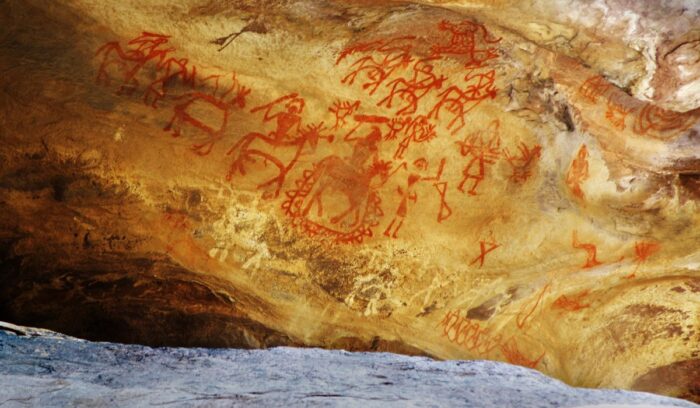
The Bhimbetka rock shelters are an archaeological site in central India that spans the prehistoric paleolithic and mesolithic periods, as well as the historic period. It exhibits the earliest traces of human life on the Indian subcontinent and evidence of Stone Age starting at the site in Acheulian times.
Balangoda Man arrived on the island about 34,000 years ago and has been identified as Mesolithic hunter-gatherers who lived in caves