North & Central America

Marina near Lake Muskegon and Lake Michigan

Michigan’s Lake Muskegon flourishing after years of pollution cleanup

A massive $84 million cleanup has led to the full ecological recovery of Lake Muskegon in Michigan. The lake was formally removed from the federal Areas of Concern list after decades of effort. This success restores the lake’s water quality and wildlife habitat, eliminating industrial contamination like sawdust and toxic sediment. The achievement is a powerful blueprint for environmental healing, proving that sustained public investment can fully revitalize damaged natural resources.

Jaguar

Mexico’s jaguar numbers up 30% since 2020 in conservation drive

Mexico is celebrating a major conservation success with a recent surge in its jaguar population, which increased by approximately 30% since 2010, according to the national census. This achievement is the result of strong national investment and strategic protection of habitat corridors. By reducing human-wildlife conflict through compensation schemes, organizations like the World Wildlife Fund and the Wildlife Conservation Society secured the future of this umbrella species.

View of Uber driver from backseat

Uber and Lyft drivers in California win the right to unionize

In a landmark moment for the gig economy, Governor Newsom signed a bill granting California’s ride-share and delivery drivers the right to organize and collectively negotiate. This historic law, a national first, empowers hundreds of thousands of workers to demand better wages and working conditions. The move creates a new model of sectoral bargaining, protecting labor rights within the digital economy while preserving the flexibility that platforms rely on.

Law enforcement officers in masks

California becomes first U.S. state to ban most law enforcement officers from wearing masks

California’s governor, Gavin Newsom, has signed a bill prohibiting most law enforcement officers, including federal immigration agents, from covering their faces while conducting official business. The legislation, which is the first of its kind in the nation, is a direct response to recent immigration raids in Los Angeles where masked federal agents made mass arrests. This new law is intended to increase transparency, boost public trust in law enforcement, and prevent people from impersonating officers to commit crimes. This is a progressive step that could serve as a model for other states, even as it faces legal challenges.

Palestinian flags

Britain, Australia, and Canada formally recognize a Palestinian state

In a landmark move, the United Kingdom, Canada, and Australia have formally recognized Palestine as an independent state.
This diplomatic action, hailed as a major step toward a two-state solution, is a powerful affirmation of the Palestinian people’s right to self-determination. The coordinated effort signals a growing international consensus that a stable and lasting peace requires a sovereign Palestinian state existing alongside Israel.
While this move is largely symbolic and does nothing to mitigate the suffering happening in Gaza every day, it is perhaps still a moment of hope, demonstrating that diplomacy and international law can be key tools in resolving long-standing conflicts and moving toward justice.

Illustration of two halves of the brain

Promising new epilepsy drug delivers 80% reduction in seizures

A new epilepsy drug candidate, RAP-219, is showing remarkable promise for people whose seizures have not responded to existing treatments. In a Phase 2a trial led by Rapport Therapeutics with support from NYU Langone Health, nearly one-quarter of participants became seizure-free, while most saw their seizures cut by more than half. Using advanced neurostimulation devices to track brain activity, researchers confirmed the drug’s targeted effects and manageable side-effect profile. If larger studies confirm these results, RAP-219 could offer new hope for patients living with drug-resistant epilepsy.

Children in preschool raising their hands

New Mexico to be first U.S. state to launch universal child care system

A groundbreaking new law in New Mexico is making history by guaranteeing no-cost childcare for all families. This initiative is a strategic investment in the state’s future, designed to boost the economy by enabling parents, particularly mothers, to enter or re-enter the workforce. It also ensures quality by increasing provider pay to a minimum of $18 an hour. This progressive move sets a new national standard, proving that investing in children and families is a powerful path to long-term prosperity.

Oil rig at sunset

Guatemala closes massive oil field

Guatemala has permanently closed the Xan oil field in Laguna del Tigre National Park, marking a major shift from fossil fuel extraction to forest protection. The site, once responsible for nearly 90% of the country’s oil production, will now serve as a security base to curb illegal logging, ranching, and trafficking in the Maya Biosphere Reserve. Conservation groups and local communities have welcomed the move, while the government is also investing in renewable energy and new conservation funds. The closure signals hope for safeguarding biodiversity, cultural heritage, and community resilience across Central America’s largest tropical forest.

Downtown Chicago and Chicago River

Chicago to hold first open water swim in Chicago River in nearly a century

The Chicago River, once devastated by pollution, has seen a remarkable turnaround, with cleaner water, expanding wildlife, and renewed public confidence. Conservation groups now report diverse fish species, turtles, and birds thriving along the river, while the city prepares for its first open-water swim in nearly a century. Years of effort—ranging from sewage treatment upgrades to floating wetlands and volunteer cleanups—have driven the transformation. Challenges like stormwater overflows remain, but the river’s revival demonstrates what persistent investment, advocacy, and collaboration can achieve.

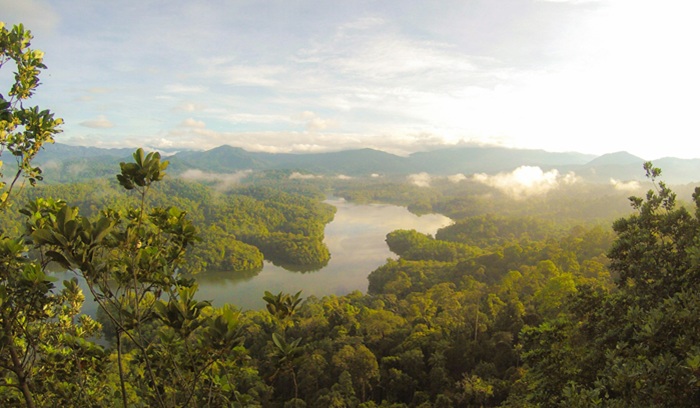
Forest scene

Washington State to conserve 77,000 acres of “legacy forests” on state lands

Washington has announced a landmark step in forest conservation, protecting 77,000 acres of legacy forests across the state. These ecologically rich areas provide critical wildlife habitat, store carbon, and build wildfire resilience. By conserving legacy forests while supporting rural economies, Washington is charting a path toward sustainable forestry and climate resilience.