
The Sami People emerge in modern-day Norway
About 1000 B.C.E., speakers of Uralic language arrived in the north and assimilated with the indigenous population, becoming the Sami people.

About 1000 B.C.E., speakers of Uralic language arrived in the north and assimilated with the indigenous population, becoming the Sami people.
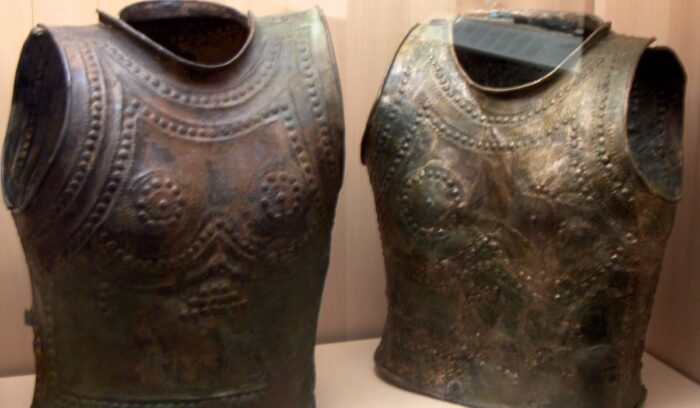
The Urnfield culture (c. 1300 B.C.E. – 750 B.C.E.) was a late Bronze Age culture of central Europe. The name comes from the custom of cremating the dead and placing their ashes in urns which were then buried in fields.

The Lusatian culture developed as the preceding Trzciniec culture experienced influences from the Tumulus culture of the Middle Bronze Age, essentially incorporating the local communities into the socio-political network of Iron Age Europe.

A flat wooden dish which stood on wooden legs and features many characteristics of lathes was found in a pit grave at Mycenae dated at 1100 to 1400 B.C.E.
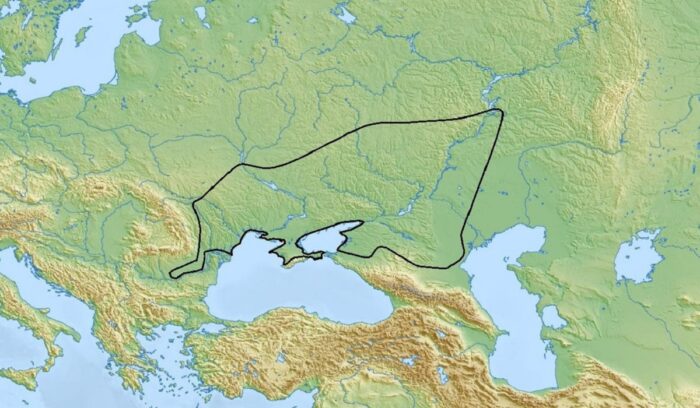
The Catacomb culture (c. 2800–2200 B.C.E.) is a group of related cultures in the early Bronze Age occupying essentially what is present-day eastern Ukraine and southern Russia.
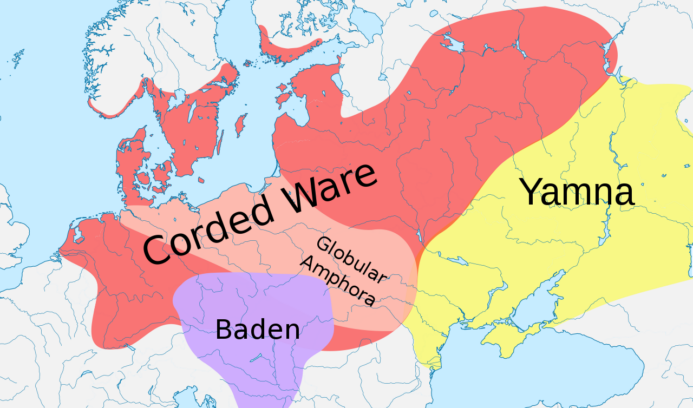
Corded Ware culture encompassed a vast area, from the contact zone between the Yamnaya culture and the Corded Ware culture in south Central Europe, to the Rhine on the west and the Volga in the east, occupying parts of Northern Europe, Central Europe and Eastern Europe.
,_Wiltshire,_UK_-_Diliff.jpg)
One of the best known prehistoric sites in Britain, Avebury contains the largest megalithic stone circle in the world.

Stonehenge is perhaps the world’s most famous prehistoric monument. It was built in several stages: the first monument was an early henge monument, built about 5,000 years ago.

These permanent designs — sometimes plain, sometimes elaborate, always personal — have served as amulets, status symbols, declarations of love, signs of religious beliefs, adornments and even forms of punishment.

Consisting of eight clustered houses, it was occupied from roughly 3180 B.C.E. to about 2500 B.C.E. Europe’s most complete Neolithic village, Skara Brae gained UNESCO World Heritage Site status.