
Hieronymus Bosch paints “The Garden of Earthly Delights”
The Garden of Earthly Delights is considered Bosch’s seminal masterpiece and the most successful and outstanding of his creations.

The Garden of Earthly Delights is considered Bosch’s seminal masterpiece and the most successful and outstanding of his creations.

On 15 March 1503, Vasco da Gama, crossing from India to East Africa, sighted what was almost certainly Silhouette Island and the next day, Desroches Island. The granitic islands began to appear on Portuguese charts as the Seven Sisters.

Perhaps the first written record we have of a mother and baby surviving a cesarean section comes from Switzerland in 1500 when sow gelder, Jacob Nufer, performed the operation on his wife. The mother lived and subsequently gave birth normally to five children, including twins. The cesarean baby lived to be 77 years old.

A printing press is a device for applying pressure to an inked surface resting upon a print medium (such as paper or cloth), thereby transferring the ink. This was a dramatic improvement on earlier printing methods.
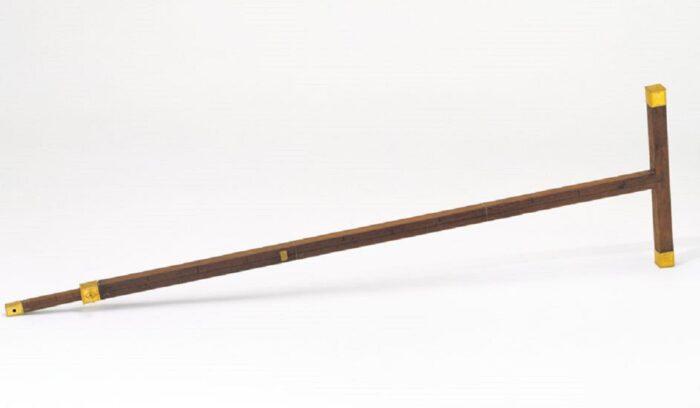
In its most basic form, a Jacob’s staff is a stick or pole with length markings; most staffs are much more complicated than that, and usually contain a number of measurement and stabilization features.

The Jagiellonian dynasty was a royal dynasty founded in 1386 that reigned in several Central European countries between the 14th and 16th centuries.

The Mabinogion are the earliest prose stories of the literature of Britain. They were created by various narrators over time.

Wooden clogs originated in Holland, eventually spreading to France, England and Scandinavia. The clog shoe became the most common work shoe in Europe throughout the Industrial Revolution era.

The Travels of Marco Polo, is a 13th-century travelogue describing Polo’s travels through Asia between 1271 and 1295, and his experiences at the court of Kublai Khan.

The Battle of Stirling Bridge was a battle of the First War of Scottish Independence. On 11 September 1297, the forces of Andrew Moray and William Wallacedefeated the combined English forces of John de Warenne, 6th Earl of Surrey, and Hugh de Cressingham near Stirling, on the River Forth.