
The Jiahu symbols of the Peiligang culture in China are created
A 2003 report in Antiquity interpreted them “not as writing itself, but as features of a lengthy period of sign-use which led eventually to a fully-fledged system of writing.

A 2003 report in Antiquity interpreted them “not as writing itself, but as features of a lengthy period of sign-use which led eventually to a fully-fledged system of writing.
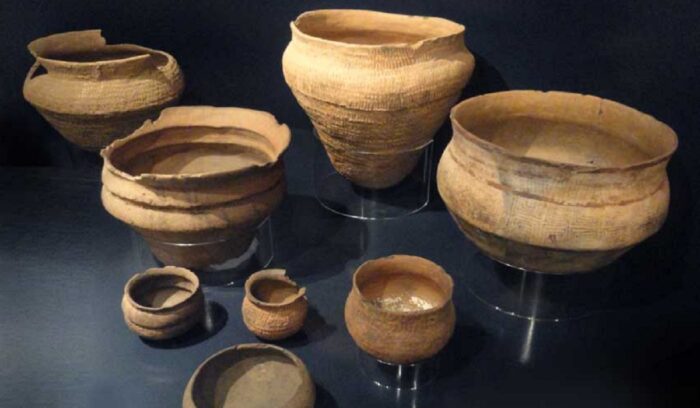
The earliest pottery ever found in the Western Hemisphere, radiocarbon-dated 8,000 years old, has been excavated in the Amazon basin of Brazil, near Santarém, providing evidence to overturn the assumption that the tropical forest region was too poor in resources to have supported a complex prehistoric culture.

Guitarrero Cave has evidence of human use around 8,000 B.C.E. In the 1960s, archeologists discovered artifacts in an extraordinary state of preservation at the site. Remarkably, textiles, wood and leather tools, and basketry have been preserved intact.

The oldest known fishing net is the net of Antrea, found with other fishing equipment in the Karelian town of Antrea, Finland, in 1913. The net was made from willow, and dates back to 8300 B.C.E.
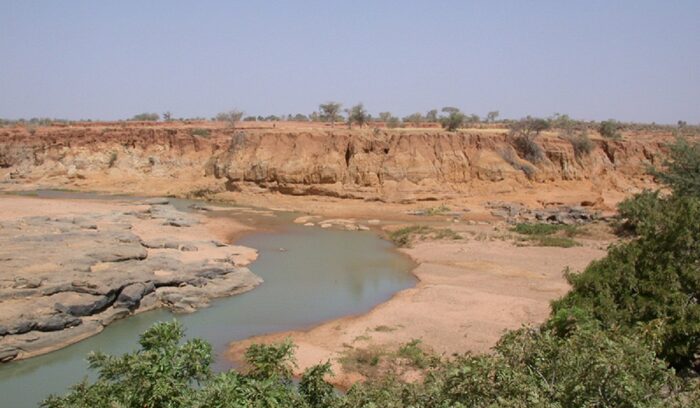
Ounjougou has yielded the earliest pottery found in Africa, and is believed to be one of the earliest regions (along with East Asia) in which the independent development of pottery occurred.

Dating to around c. 13,000 B.C.E., a cave painting in the Trois Frères cave in France depicts what some believe is a musical bow, a hunting bow used as a single-stringed musical instrument.
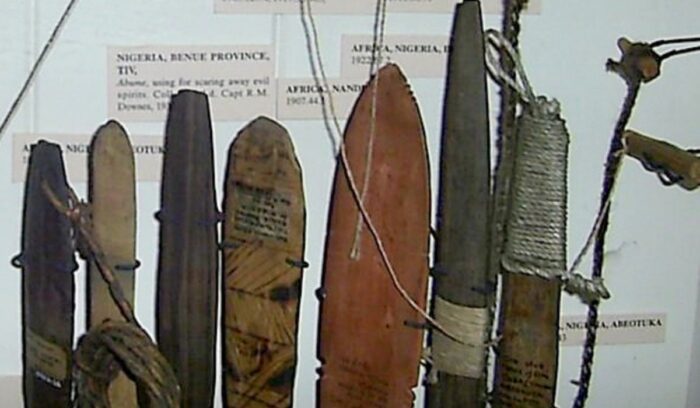
The bullroarer, rhombus, or turndun, is an ancient ritual musical instrument and a device historically used for communicating over great distances.

Constructed between 8200 and 7600 B.C.E., and found in the Netherlands, the Pesse canoe may be the oldest known canoe.

Xianrendong and Yuchanyan caves in northern China are the oldest of a growing number of sites which support the origins of pottery as having occurred not just in the Japanese island Jomon culture of 11,000-12,000 years ago, but earlier in the Russian Far East and South China some 18,000-20,000 years ago.

A map-like representation of a mountain, river, valleys and routes around Pavlov in the Czech Republic has been dated to 25,000 B.C.E.