
William Sturgeon invents the electromagnet
British scientist William Sturgeon invented the electromagnet in 1824. His first electromagnet was a horseshoe-shaped piece of iron that was wrapped with about 18 turns of bare copper wire.
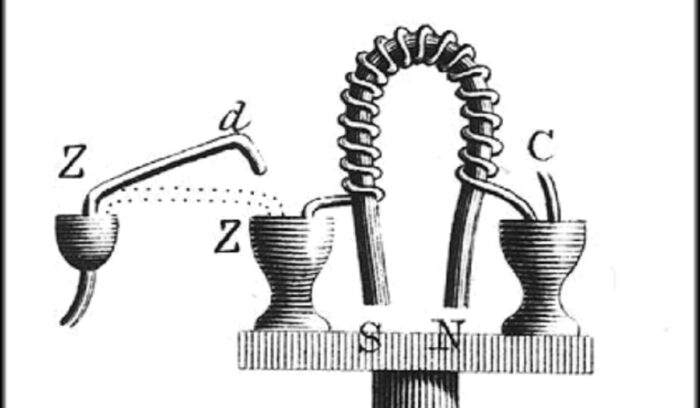
British scientist William Sturgeon invented the electromagnet in 1824. His first electromagnet was a horseshoe-shaped piece of iron that was wrapped with about 18 turns of bare copper wire.
In 1809, Nicolas Appert, a French confectioner and brewer, observed that food cooked inside a jar did not spoil unless the seals leaked, and developed a method of sealing food in glass jars.
In his patent applications, he described the concept of laminating several layers of veneer with glue to form a thicker piece — the first description of what we now call plywood.

In the West, Jenner is often called “the father of immunology”, and his work is said to have “saved more lives than the work of any other human”.

Hanaoka Seishū was a Japanese of the Edo period with a knowledge of Chinese herbal medicine, as well as Western surgical techniques he had learned through Rangaku.
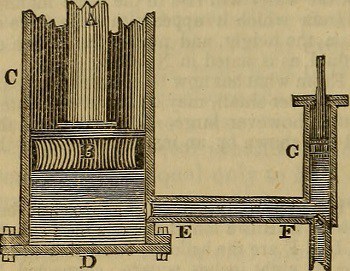
A hydraulic press is a machine press using a hydraulic cylinder to generate a compressive force.

In 1790, the English inventor Thomas Saint invented the first sewing machine design, but he did not successfully advertise or market his invention. His machine was meant to be used on leather and canvas material.

John “Iron-Mad” Wilkinson invented precision boring machine that could bore cast iron cylinders, such as those used in steam engines of James Watt.

Cullen used a pump to create a partial vacuum over a container of diethyl ether, which then boiled, absorbing heat from the surrounding air.

The piano is an acoustic, stringed musical instrument invented in Italy by Bartolomeo Cristofori around the year 1700 (the exact year is uncertain), in which the strings are struck by hammers.