Public health & disease

Indigenous person from Colombia

Landmark ruling protects Indigenous Colombians from mercury pollution

The Colombian Constitutional Court has issued a landmark ruling. It orders the government to protect 30 Indigenous Amazonian communities from illegal gold mining and its devastating mercury pollution. The court found that contamination poses a direct threat to the communities’ health, food sources, and cultural survival. The decision establishes a clear legal obligation for state action, setting a powerful precedent for Indigenous-led environmental justice.
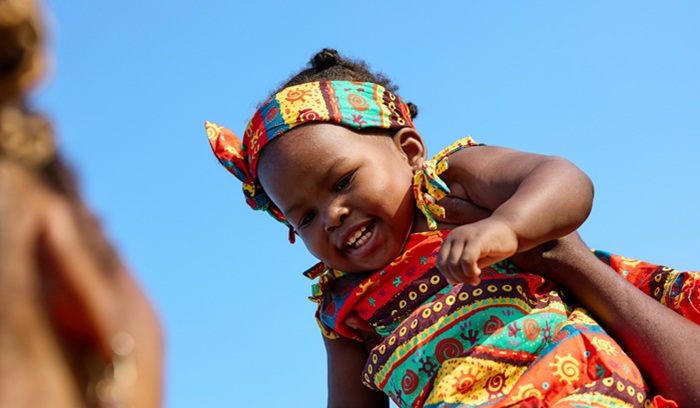
Holding a smiling baby

World’s first malaria treatment for newborn babies gets approval

Switzerland’s drug regulator has cleared the way for a new medicine to become available in parts of Africa where the life-threatening disease is endemic. In a late-stage clinical trial, pharmaceutical giant Novartis showed the drug was safe and effective for babies. The lack of specialized treatment – and the fact that babies are not vaccinated until they are around five months old – has left the youngest infants relatively unprotected against malaria, a mosquito-borne disease that kills about 597,000 people per year.

Air pollution from a coal plant

Global mercury emissions have fallen 70% over last four decades

Gold mining, coal burning, and cement and nonferrous metals production all release several thousand tons of mercury into the atmosphere every year, leading to tens of thousands of deaths worldwide. However, a team of Chinese scientists from schools in Tianjin, Beijing, Tibet, and Nanjing has found that mercury concentrations in the atmosphere have reduced by a staggering 70% since a peak in the year 2000.

Metal pipes

Flint, Michigan at last replaces corroded pipes after lead crisis

Flint’s lead crisis began in 2014, when the city began drawing water sourced from the Flint River instead of from Lake Huron. The river water was more corrosive than the lake water, and the city failed to take the additional steps needed to prevent lead from leaching into drinking water. In 2017, a federal court ordered the city to replace all lead pipes within three years. Eight years later is the project finally complete. State officials told a federal court this week that the city has excavated more than 28,000 properties in search of lead water lines and replaced nearly 11,000 pipes.

Mosquito on a leaf

Suriname becomes first country in the Amazon region to eliminate malaria

Suriname has officially been certified malaria-free by the World Health Organization (WHO). This certification marks the successful interruption of indigenous malaria transmission for at least three consecutive years – a major step forward in the global fight against one of humanity’s deadliest diseases. With today’s announcement, WHO has now certified 46 countries and one territory malaria-free – and each one has successfully prevented the re-establishment of the disease.

Midwife and mother

Virginia becomes first U.S. state to recognize autonomous midwifery practice

Autonomous midwifery practice enables midwives to conduct their professional work by providing evidence-based, high-quality, and ethical care across pregnancy, childbirth, and postpartum, as well as providing other reproductive health care. Now, Virginia midwives can not only practice autonomously but also receive 100% free schedule reimbursement from private insurance and Medicaid. They can also serve on a 24-hour on-call duty roster for nursery care when physicians are unavailable, addressing staffing shortages in rural areas.

Iboga plant

Texas passes largest state-funded psychedelic research initiative in history to study ibogaine

In a historic and bipartisan move, the State of Texas has approved $50 million in state funding for drug development trials for ibogaine, a powerful, naturally occurring medicine showing extraordinary promise as a breakthrough treatment for substance use disorder, trauma-related conditions, and traumatic brain injury. With the passage of House Bill 3717, Texas now leads the country—and the world—in psychedelic research investment.

Holding hands

Pancreatic cancer vaccine eradicates deadly disease in more than half of targets in early trials

The pioneering work from Cleveland’s Case Western Reserve University researchers targets pancreatic ductal adenocarcinoma, the most common cancer that plagues the organ. While not the most common form of cancer, pancreatic cancer is particularly insidious, often remaining undetected until it metastasizes. The five-year survival rate is just 13.3%. In preclinical trials, the vaccine eliminated the cancer in more than half of the targets.

Depiction of viruses

Breakthrough in search for HIV cure leaves Australian researchers ‘overwhelmed’

The virus’s ability to conceal itself inside white blood cells is a core challenge for scientists looking for a cure. It means there is a reservoir of HIV in the body, capable of reactivation, that neither the immune system nor drugs can access. Now, researchers from the Peter Doherty Institute for Infection & Immunity in Melbourne have found a way to make the virus visible, paving the way to fully clear it from the body. UNAids estimates that one person died of HIV every minute in 2023.

School meal

Free school meals to be extended to half a million more of England’s poorest children

Since 2018, children in England have only been eligible for free school meals if their household income is less than £7,400 per year, meaning hundreds of thousands of children living in poverty have been unable to access them. Now, from the start of the 2026 school year, every child whose household is on universal credit will be entitled to free school meals. The major policy expansion is expected to offer free meals to an additional 500,000 children across, lift 100,000 children out of poverty, and put an extra £500 in parents’ pockets.