
Japan approves first abortion pill
Japanese activists have been pushing for years for approval of the pills, with similar medications made available decades ago in other countries as Japan lagged ever further behind.

Japanese activists have been pushing for years for approval of the pills, with similar medications made available decades ago in other countries as Japan lagged ever further behind.

Scientists at Johns Hopkins University have developed a hydrogel that can be applied to the cavity in the brain left behind after a tumor is removed, slowly releasing medication to kill any cancer cells left behind.

Researchers from Carnegie Mellon, Florida International, and Santa Clara Universities have developed an automated screening tool using machine learning that can predict strokes with 84% accuracy, outperforming existing diagnostic models.

The pills showed promise in combating the substances that lead to the harmful tangles and plaques in the brain that contribute to the disease.

Malaria kills about 620,000 people each year, most of them young children. It has been a massive, century-long, scientific undertaking to develop a vaccine that protects the body from the malaria parasite.

A 10-milliliter vial of insulin will be available for no more than $30, cutting costs by 90% for many.

A single dose of this radioimmunotherapy was found to eliminate tumor cells and extend the life of mice injected with cancerous cells for more than 221 days (the trial endpoint), compared to just 19 days in untreated control mice.

The malaria vaccine – known as Mosquirix or RTS,s/AS01 – has seen a phased introduction in the country since a 2019 pilot program. This recent announcement represents a major step forward in the vaccine’s roll out.

Naloxone is a life-saving drug that rapidly reverses or blocks the effects of opioids, restoring normal respiration, especially when given within minutes of the first signs of an overdose. Narcan is now the first naloxone-based drug available without a prescription.
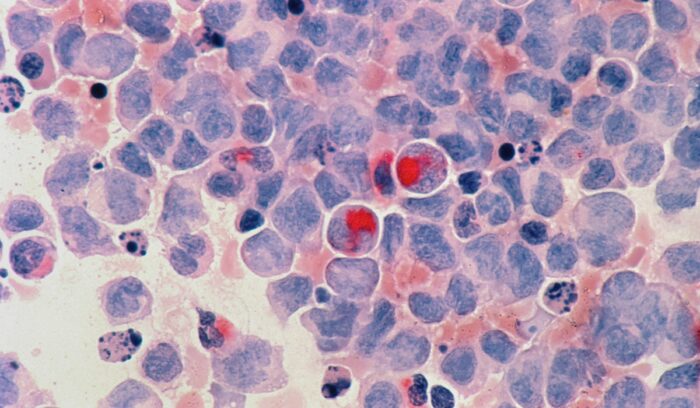
The new drug, called revumenib, has completely eliminated cancer in a third of the participants in a long-awaited clinical study from the University of Texas.